Tool Transfer
Tool Transfer Service | Move Your Injection Mold to JBRplas
Transfer your existing injection mold to JBRplas — tool audit, logistics, trial run, re-validation, and production ramp-up. For buyers who need a new production partner without building a new mold.
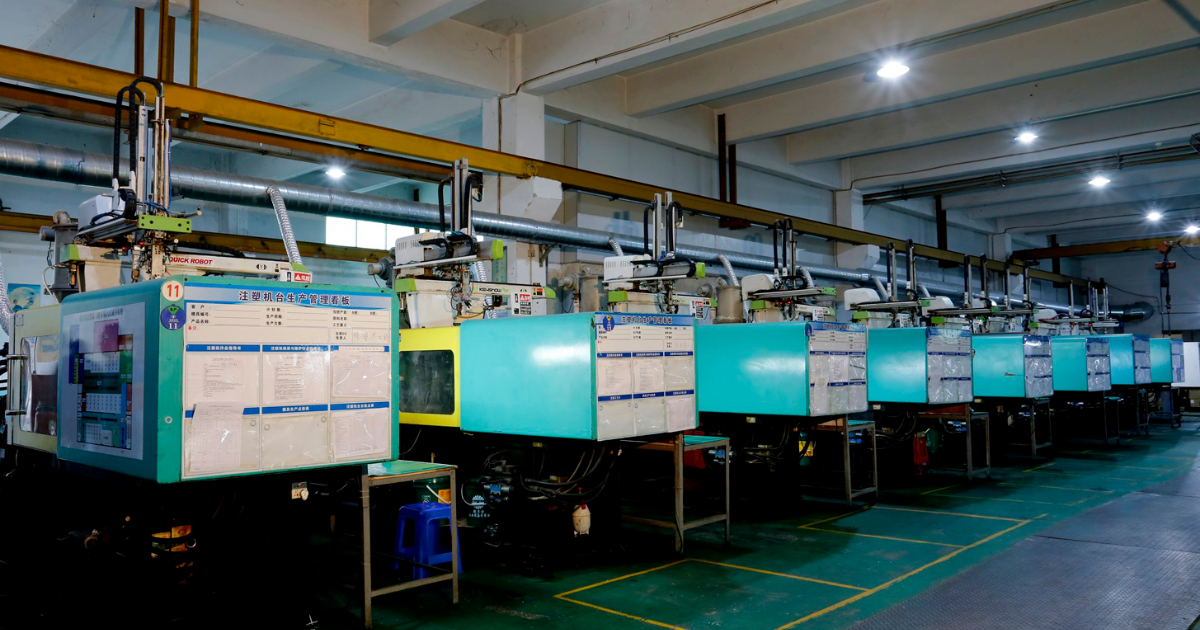
Buyers switch injection molding suppliers for good reasons — quality has drifted, delivery dates have slipped, the engineering support has disappeared, or the per-part cost no longer reflects the volume. The hesitation is rarely about the new supplier. It is about the mold: What happens to it during the move? Will it run the same after relocation? How long will production be down?
This page explains the tool transfer process at JBRplas — from the first mold audit through T1 re-sampling to full production ramp-up. It is written for buyers who have an existing mold and need a new production partner, without building a new tool.
1. The Transfer Process
Every mold transfer follows six documented phases. The timeline depends on mold complexity and validation requirements — a simple commercial mold can be running production in 3–4 weeks from arrival. An automotive mold requiring full PPAP re-validation takes 5–7 weeks.
Phase 1: Mold Audit (Before the Move)
Before the mold moves, we review everything available about the tool: 3D mold design files, 2D drawings, the last T1 or production sample report, current process parameters, and production history (shot count, maintenance records, known issues). If documentation is incomplete — which is common — we work with what exists and fill gaps during incoming inspection.
If the mold is still running at the current supplier, we review recent part samples and dimensional data to establish a quality baseline. If production has stopped and samples are unavailable, we establish the baseline from the mold itself during incoming inspection.
Deliverable: Transfer feasibility assessment — identifies risks, missing documentation, and estimated timeline. No charge.
Phase 2: Logistics
The mold is prepared for transport at the current facility. We coordinate: crating to ISPM 15 standard with VCI corrosion protection, export documentation, and freight (sea, air, or rail). If the mold requires disassembly for transport — large tools with protruding cylinders or core-pull mechanisms — we provide disassembly instructions or send a technician to supervise.
Full details: Shipping & Logistics →
Phase 3: Incoming Inspection
When the mold arrives at JBRplas, it undergoes a full incoming inspection before it enters the toolroom:
- Visual inspection of all parting lines, cavity surfaces, ejector pins, slides, and lifters
- Dimensional verification of the mold base against the mold drawing (if available)
- Ejector system function check and lubrication
- Cooling circuit pressure test and flow check
- Hot runner resistance and thermocouple check (if equipped)
- Comparison against any pre-shipment photos or reports
If damage or wear is found, we document it with photos and measurements, and provide a repair estimate before any work begins. Nothing is repaired without your approval.
Deliverable: Mold condition report with photos — within 2 working days of arrival.
Phase 4: Trial Run (T0 Re-sample)
The mold is installed in a press matched to its original specifications. The first trial uses the existing process parameters where available, or engineering-calculated starting parameters where not. The goal is to produce parts and compare them to the baseline:
- Dimensional comparison to the original part drawing or reference samples
- Fill balance check (multi-cavity tools: cavity-to-cavity weight variation)
- Visual inspection for surface finish, color, gate vestige, and cosmetic defects
- Process window evaluation — how robustly the mold produces acceptable parts
If the parts match the baseline within tolerance, the mold is cleared for production. If adjustments are needed — process tuning, minor cavity work, or component replacement — we provide a specific scope and cost before proceeding.
Deliverable: T0 samples + dimensional report + process recommendation — within 3–5 working days.
Phase 5: Re-validation
For commercial parts, a dimensional layout against the drawing is sufficient. For regulated industries, the re-validation follows the required standard:
| Requirement | What We Provide |
|---|---|
| PPAP Level 3 (automotive) | Full 18-element package: PFMEA, control plan, MSA, capability study, PSW |
| IQ/OQ/PQ (medical) | Installation Qualification, Operational Qualification, Performance Qualification per ISO 13485 |
| FAI per AS9102 | Dimensional report with ballooned drawing, material certs, Cpk data |
If the original PPAP or IQ/OQ/PQ documentation exists, it serves as the baseline and reduces re-validation time. If it does not exist, we build the documentation from the mold and process data.
Phase 6: Production Ramp-Up
The first production lot is monitored at an increased inspection frequency — typically 100% dimensional inspection for the first 500 parts, then transition to standard SPC sampling once Cpk ≥ 1.33 is demonstrated on all critical dimensions. The goal is to demonstrate process stability before we release the mold to standard production cadence.
2. What We Need From You
The more information you can provide, the faster and smoother the transfer. At minimum, we need:
| Required | Helpful but Not Essential |
|---|---|
| Part 3D file (STEP) or 2D drawing | Mold 3D design files |
| Reference part samples (5–10 parts) | Original T1 / T2 sample reports |
| Target annual volume | Current process parameters (fill time, pressures, temperatures) |
| Material specification | Mold maintenance records |
| Known issues or recent quality problems | Shot count / production history |
If you have none of the documentation, do not let that stop you. We have transferred molds with nothing more than the mold itself and a reference part. It takes longer — incoming inspection and process development do more of the heavy lifting — but it is entirely doable.
3. Costs and Timeline
| Phase | Typical Duration | Cost |
|---|---|---|
| Mold audit | 1–3 working days | No charge |
| Logistics | 2–4 weeks (sea) / 3–5 days (air) | See Shipping & Logistics |
| Incoming inspection | 2 working days | Included |
| Trial run | 3–5 working days | Press time + setup labour. Quoted per mold |
| PPAP / IQ-OQ-PQ re-validation | 2–4 weeks | Quoted per scope |
| Production ramp-up | 1–2 weeks | Per-part cost at quoted rate |
A straightforward commercial mold transfer with complete documentation typically adds $1,500–3,000 in transfer-specific costs beyond the standard per-part pricing. A complex transfer with missing documentation, mold repair, and full PPAP re-validation can range $3,000–8,000. Every transfer is quoted specifically after the mold audit.
Frequently Asked Questions
Can you produce parts during the transfer to avoid a production gap?
Yes. We recommend building a buffer stock at the current supplier before the mold ships. If that is not possible, we can quote bridge tooling — an aluminum prototype mold that produces limited quantities while the production tool is in transit and being re-validated. For an existing mold that must keep running, we can also phase the transfer: the current supplier runs one cavity set while we re-validate another, though this only applies to multi-cavity tools with replaceable inserts.
What if the mold arrives damaged?
Our incoming inspection catches damage on arrival. If the damage occurred during transit, the marine cargo insurance claim is filed immediately — we provide all documentation, including pre-shipment photos from the origin facility and arrival condition photos. If the mold had pre-existing wear or damage that was not disclosed before shipment, we document it and provide a repair quote. In either case, nothing is repaired without your sign-off.
What if we do not have any mold documentation?
We work from the mold itself and your reference parts. The mold is disassembled, measured, and documented. Process development starts from engineering first principles. It adds 1–2 weeks to the transfer timeline and is factored into the quote after the mold audit. Missing documentation is common and does not prevent a transfer.
Do you accept molds originally built by other tool shops?
Yes. The majority of transferred molds were built elsewhere. We have worked with molds from Chinese, European, North American, Japanese, and Korean tool shops. The incoming inspection is the same regardless of origin. If the mold was built to a standard we recognize — DME, Hasco, Misumi, Futaba, LKM — spare parts are likely in stock. If it was built to a proprietary standard, we identify equivalent components during inspection.
Transferring a mold is not as risky as it sounds. The key is doing it methodically: document before the move, inspect after arrival, trial before production, validate before ramp-up. Most transfers complete without mold modification — the process runs as it did before, or improves with fresh engineering attention. If you are considering moving a mold, send us what you have. We will tell you what the transfer looks like for your specific tool, with a timeline and cost estimate, before you commit to anything.