Supplier Audit Checklist
Injection Molding Supplier Audit Checklist | 5-Phase On-Site Audit
A practical 5-phase supplier audit checklist for injection molding — document review, on-site audit, FAI/PPAP samples, pilot run, and ongoing monitoring. Free PDF download.
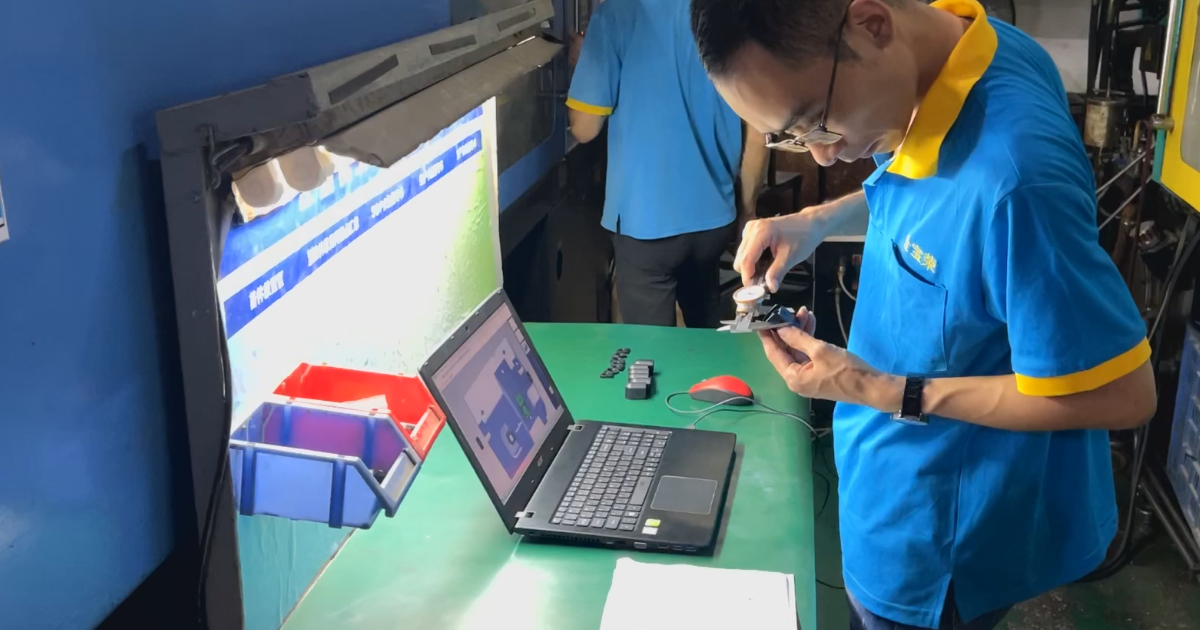
Qualifying a new injection molding supplier looks straightforward from the RFQ responses — every factory sends ISO certificates, capability lists, and “strict quality control” claims. The job is turning those claims into verified facts before a purchase order is issued. The cost of discovering the truth during production is a stopped assembly line and a failed product launch.
This page is the checklist, organized the way qualification actually runs — five phases, each with a pass standard. Use it as an audit plan, a document request list, or a scoring sheet for comparing suppliers. The full 4-page version with on-site checkpoints is available as a free PDF below.
What Qualification Verifies
Selection compares candidates against each other. Qualification verifies one candidate against three requirements:
- Capability — the supplier can make your part. Verified through engineering review, DFM, and sample measurement.
- Capacity — the supplier can make enough of your part, on time. Verified through machine time, tooling plans, and loading.
- Control — the supplier notices process drift before you do. Verified through SPC data, documentation discipline, and the audit itself.
Most failed qualifications fail on the third item, because it is the only one a sample cannot demonstrate. A beautiful T1 sample proves capability. Only process data proves control.
The Five Phases
| Phase | Key Item | Pass Standard |
|---|---|---|
| 1. Documents | ISO certs, equipment list, fresh sample docs | Scope covers molding; docs dated within 12 months |
| 2. Audit — facility | Machine count, maintenance, material handling | Floor matches equipment list |
| 2. Audit — quality | Calibration, SPC live on floor, traceability | Inspector demonstrates a live SPC chart |
| 2. Audit — engineering | DFM depth, Moldflow, tool records, ECN | Can explain gate position on a running tool |
| 2. Audit — process | Shot monitoring, sampling interval, setup sheets | Data flows machine → chart without transcription |
| 2. Audit — supply | Resin stock, secondary vendors, packaging | Names the resin-late contingency |
| 3. Samples | FAI, Cpk study, material cert, tool trial data | Cpk ≥ 1.33 (≥ 1.67 precision), data before approval |
| 4. Pilot | Ramp-up defect rate, documentation set | <1% in 90 days trending to <0.3% |
| 5. Ongoing | OTD, PPM, CAPA, calibration, change notice | Defined thresholds, reviewed monthly |
Phase Details
Phase 1 — Document review. Request ISO certificates (scope must explicitly cover injection molding and mold making), an equipment list with brands and tonnage, the quality manual, sample documentation from a recent program (FAI, CoC, material cert — dated within 12 months), tool ownership policy, NDA policy, and business registration. Two signals matter more than the documents: how fast they arrive, and whether they are fresh. A supplier whose documents take three weeks to collect will take three weeks to answer a CAPA.
Phase 2 — On-site audit. Walk the floor against the equipment list — count the presses. Check maintenance records, material handling, calibration certificates, live SPC charts, lot traceability from resin bag to finished carton, and toolroom capability (no in-house toolroom means no tool maintenance). Ask engineering to explain why the gate is where it is on a running tool. The full 20-point on-site checklist is in the PDF.
Phase 3 — Samples. Request the DFM report first — it is the supplier’s first technical artifact and sets the depth standard for everything after. Then T1 dimensional reports with measured values, full FAI layout, material certificates tied to the actual resin lot, tool trial data (cycle time, pressures, temperatures), and PPAP Level 3 for automotive programs with Cpk ≥ 1.33 on critical dimensions. One structural rule: request the sample data before approving the sample.
Phase 4 — Pilot. Define criteria before the run: ramp-up defect rate below 1% within 90 days, trending down; below 0.3% steady-state. Sign off the documentation set — Control Plan, PFMEA, work instructions, packaging spec, CoC template, inspection plan. Test the logistics path, not just the parts: packaging, labeling, export documentation, the actual shipping lane.
Phase 5 — Ongoing. Qualification is not a one-time event. Monitor on-time delivery (action below 95% for two months), defect PPM, CAPA responsiveness (14-day threshold), calibration status, tool maintenance records, and unreported material or process changes. Re-qualify when the program adds a material family, the tool is transferred, volume changes by more than 50%, or production idles for 12 months.
For the full engineering background, see our quality control in injection molding and supplier qualification articles. If you are still at the selection stage, start with how to choose a supplier in China.
If You’re Auditing Us
Every item on this checklist maps to information we publish openly — built for exactly this process:
- Certifications — ISO 9001:2015 and ISO 13485:2016, scope details, RoHS compliance
- Equipment list — 27 presses (90–650T), CNC, EDM, wire-cut, grinding, with brands and tonnage
- Quality system — SPC, CMM inspection, lot traceability, PPAP documentation
- Factory tour — the floor, before you book a visit
Download the full checklist below — it works as a scoring sheet for any supplier, including us.