Shipping & Logistics
Shipping & Logistics | Injection Mold & Plastic Parts Export from China
Sea freight, air freight, rail and Incoterms for mold and plastic part shipments from Shenzhen — transit times, packaging, customs and cost guidance.
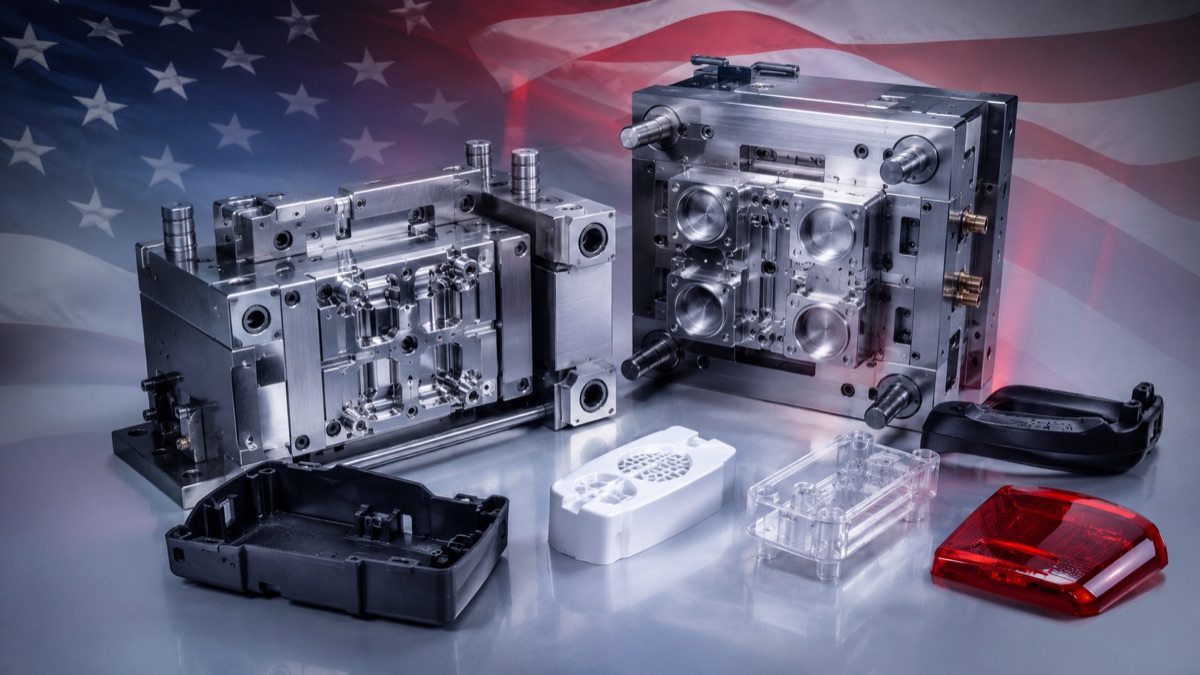
Buyers who have never imported an injection mold or a container of plastic parts from China have the same first three questions: how long, how much, and what do I need to do on my end. This page answers those questions with specific transit times, cost frameworks, and documentation requirements — so you can plan your inbound logistics before the mold is built, not after it is ready to ship.
1. Sea Freight
Sea freight is the default for production molds and volume part shipments. It is the lowest cost per kilogram and handles the weight and dimensions of crated tooling without special handling.
| Route | Transit (Port to Port) | Notes |
|---|---|---|
| Shenzhen → Los Angeles / Long Beach | 14–18 days | Fastest route. Most West Coast US shipments |
| Shenzhen → New York / Newark | 22–28 days | East Coast via Panama Canal |
| Shenzhen → Houston | 20–25 days | Gulf Coast |
| Shenzhen → Rotterdam / Hamburg | 22–28 days | Northern Europe. Rail option available for inland destinations |
| Shenzhen → Felixstowe / Southampton | 24–30 days | UK |
| Shenzhen → Sydney / Melbourne | 14–18 days | Australia |
Transit times are port-to-port. Door-to-door adds 3–7 days for trucking and customs clearance at destination.
LCL vs FCL
| LCL (Less than Container Load) | FCL (Full Container Load) | |
|---|---|---|
| What it is | Your crate shares a container with other cargo | You control the entire container |
| Best for | Single mold, small part orders (< 10 m³) | Multiple molds, production part shipments (> 15 m³) |
| Cost | Lower for small volumes | Lower cost per m³ for volumes above 15 m³ |
| Risk | Handled at consolidation and deconsolidation points — more touch points, more damage risk | Loaded once at origin, unloaded once at destination |
| Recommendation | Molds under 500 kg, one-off shipments | Molds over 500 kg, recurring production shipments |
For a production mold, the cost difference between LCL and FCL (20 ft container) ex-Shenzhen to a European port is typically $400–800. Given that a production mold costs $15,000–50,000, FCL is the correct choice for molds over 500 kg.
2. Air Freight
Air freight is for T1 samples, urgent mold deliveries, and low-volume part shipments where the production delay cost exceeds the freight premium.
| Route | Transit | Notes |
|---|---|---|
| Shenzhen → LAX / SFO | 2–4 days | US West Coast |
| Shenzhen → JFK / ORD | 3–5 days | US East Coast / Midwest |
| Shenzhen → LHR / FRA / AMS | 2–4 days | Europe major hubs |
| Shenzhen → SYD / MEL | 2–4 days | Australia |
Air freight costs 5–10× sea freight per kilogram. A 1,000 kg mold from Shenzhen to Frankfurt: approximately $400–600 by sea, $4,000–6,000 by air. Air freight is justified when a production line is stopped waiting for the tool, a regulatory submission deadline is approaching, or a customer launch date is at risk. For routine shipments, sea freight is the economic default.
T1 samples under 30 kg ship by express courier (DHL, FedEx, UPS) — 2–5 business days door-to-door, fully tracked, customs-cleared.
3. Rail Freight (China–Europe)
China–Europe rail freight is a middle ground between sea and air — faster than sea, cheaper than air. Transit time from Shenzhen (trucked to rail terminal in Chengdu/Chongqing/Xi’an) to European rail hubs (Duisburg, Hamburg, Warsaw) is 12–18 days.
| Sea (22–28 days) | Rail (12–18 days) | Air (3–5 days) | |
|---|---|---|---|
| Cost per kg | $1.50–3.00 | $3.00–5.00 | $5.00–8.00 |
| Door-to-door | 30–40 days | 20–25 days | 5–8 days |
| Best for | Production parts, large orders | Mid-volume EU orders, seasonal products | Urgent, low-volume |
Rail is available to most European destinations via truck from the rail terminal. Not available to North America or Asia-Pacific destinations.
4. Incoterms
Incoterms define who pays for what — transport, insurance, customs — and where responsibility transfers from seller to buyer.
| Incoterm | Seller Responsible For | Buyer Responsible For | Best For |
|---|---|---|---|
| EXW (Ex Works) | Goods made available at JBRplas facility | Everything — pickup, export clearance, freight, import clearance, delivery | Buyers with established China logistics |
| FOB (Free on Board) | Export clearance, delivery to port, loading onto vessel | Sea freight, insurance, import clearance, destination delivery | Most mold and part shipments |
| CIF (Cost, Insurance, Freight) | FOB + sea freight + marine insurance | Import clearance, destination delivery | Buyers who want a single delivered cost to port |
| DDP (Delivered Duty Paid) | Everything — door-to-door including import duties and taxes | Receiving only | Buyers who want a landed cost with no logistics involvement |
Standard recommendation: FOB Shenzhen for buyers with a freight forwarder relationship. CIF destination port for first-time importers who want cost certainty to the port of entry. DDP available on request for buyers who want a single invoice with no logistics management.
All export documentation — commercial invoice, packing list, certificate of origin, ISPM 15 compliance certificate — is prepared in-house at no additional charge.
5. Customs & Tariffs
HS Code Classification
We provide the correct HS code on every commercial invoice. Injection molds are classified under HS 8480.71 (molds for injection molding). Molded plastic parts are classified under the specific product HS code — for example, 3926.90 for plastic articles, or a more specific code depending on the product function. HS classification assistance is included with every shipment.
Section 301 Tariffs (US)
Injection molds (HS 8480.71) imported from China to the US are not subject to Section 301 tariffs — they enter duty-free under normal trade relations. Molded plastic parts may be subject to Section 301 duties depending on the current USTR list and specific HS code. We provide the correct HS code and country of origin documentation for your customs broker. We do not misrepresent origin, value, or classification to reduce duty exposure.
EU Import
Plastic injection molds enter the EU duty-free under HS 8480.71. Plastic parts carry standard MFN (Most Favoured Nation) duty rates, typically 0–6.5% depending on the material and product category. EU import requires an EORI number from the importer — this is the buyer’s responsibility to obtain.
Documentation Checklist
Every shipment includes:
- Commercial invoice (USD, with HS codes and country of origin)
- Packing list (crate dimensions, weights, contents)
- Certificate of origin (Form A or generic, as required)
- ISPM 15 compliance stamp on all wood packaging
- Bill of lading (sea) or airway bill (air)
Additional documentation on request: Fumigation certificate, material safety data sheets, IMDS submission data, PPAP documentation package (automotive customers).
6. Packaging
All molds are packed to survive international transit without corrosion or mechanical damage. The standard is ISPM 15 treated plywood for molds under 500 kg, and welded steel frame crates with treated wood panels for molds over 500 kg. Moisture protection — VCI film wrap, silica gel desiccant, and rust-preventative oil on exposed steel — is standard on every mold shipment. Parts are packed per specification: bulk in double-wall export cartons, layer-packed with PE foam, or retail-ready with printed boxes and barcodes.
For a detailed breakdown of crating specifications, VCI protection layers, container loading configurations, and parts packaging options, read the full guide:
Export Packaging for Injection Molds and Plastic Parts →
Frequently Asked Questions
How much does shipping cost?
Sea freight for a single mold in an LCL shipment: $200–600 depending on destination and crate volume. FCL 20 ft container to a US or European port: $1,500–3,000. Air freight for a 1,000 kg mold: $4,000–6,000. Express courier for T1 samples under 30 kg: $80–250. All figures are indicative — every shipment is quoted specifically based on weight, dimensions, destination, and current freight rates.
How long does door-to-door delivery take?
Plan 30–40 days door-to-door by sea (14–28 days at sea + 3–7 days trucking each end + 2–5 days customs clearance). Express courier: 2–5 days door-to-door. Air freight: 5–8 days door-to-door. Rail to Europe: 20–25 days door-to-door.
Can you ship to my freight forwarder?
Yes. FOB Shenzhen is our most common incoterm — we deliver to the forwarder you nominate at Yantian or Shekou port. If you do not have a forwarder, we can recommend one from our network, or quote CIF/DDP through our logistics partners.
What if the mold arrives damaged?
Molds packed to our standard (steel frame crate, VCI wrap, desiccant, bolt-down blocking) have an effectively zero damage rate in transit. If damage occurs — typically from container handling incidents — the claim is filed against the marine cargo insurance policy. We provide photos of the crated mold before shipment and all documentation required for claim processing.
Every mold and part shipment from JBRplas includes export documentation prepared in-house, HS code classification, ISPM 15 compliant crating with VCI corrosion protection, and a nominated freight forwarder or your own logistics provider. The logistics are not an afterthought — they are part of the manufacturing deliverable, planned at the RFQ stage, and executed with the same attention to detail as the mold build itself.
Sea freight routes, customs procedures, and landed costs vary by destination. For country-specific logistics — transit times, tariff guidance, and port-of-entry requirements — see our regional buying guides for the US, Germany, UK, and other markets.
Submit your part file for a free DFM review and logistics estimate →