Precision Injection Molding | High-Tolerance Parts | JBRplas
High-precision plastic injection molding in Shenzhen — tolerances to ±0.02mm, Cpk ≥ 1.67, servo-hydraulic presses, SPC process control. Automotive connectors, medical components, optical parts. ISO 9001 & 13485 certified.
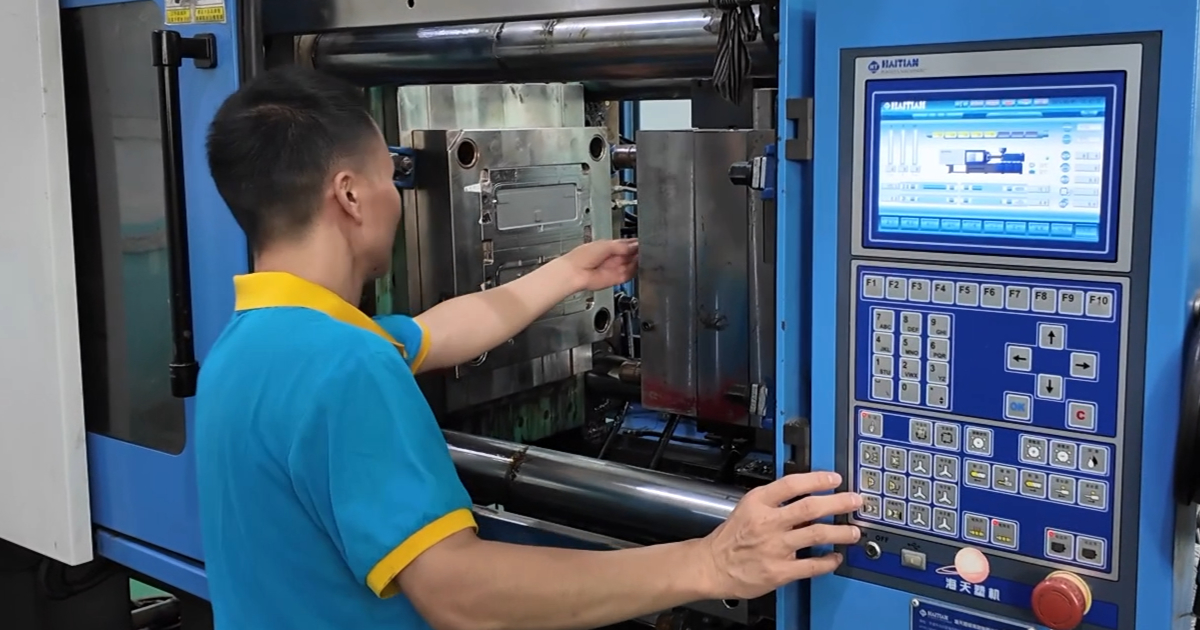
Precision Plastic Injection Molding
Precision injection molding is not a separate process from standard molding — it is a standard molding process controlled to tolerances an order of magnitude tighter. Where a general industrial part might accept ±0.15mm on a critical dimension, a precision part demands ±0.05mm or ±0.02mm — and the difference is not made up by inspection. It is built into the mold steel, the press capability, the material control, and the process discipline from the very first shot.
JBRplas has been producing precision injection-molded components for over 30 years. Our approach to precision is systematic: four elements, all controlled, none negotiable.
Dimensional Tolerances
| Tolerance Class | Linear Dimension | Hole Diameter | Flatness | Concentricity | Typical Cpk |
|---|---|---|---|---|---|
| Standard | ±0.15mm | ±0.10mm | 0.10mm | ±0.10mm | ≥1.00 |
| Precision | ±0.05mm | ±0.03mm | 0.05mm | ±0.05mm | ≥1.33 |
| High precision | ±0.02mm | ±0.01mm | 0.03mm | ±0.03mm | ≥1.67 |
These are production tolerances — not laboratory measurements on a single hand-selected sample. They are held across production runs of 50,000, 500,000, or 5,000,000 parts, verified by SPC monitoring with Cpk reporting.
What These Tolerances Mean in Practice
| Feature | Standard (±0.15mm) | High Precision (±0.02mm) |
|---|---|---|
| Snap-fit clip engagement | May fit loosely — function OK, feel variable | Consistent snap force, uniform tactile response |
| Connector pin alignment | May require insertion force variation | Uniform insertion, zero-contact-wipe failures |
| Bearing bore diameter | Acceptable for low-speed, low-load | Press-fit consistency, no post-mold reaming |
| Optical lens mount | Vignetting possible at tolerance extremes | Consistent optical alignment across production |
| Seal groove depth | Gasket compression varies | Uniform seal compression, predictable IP rating |
| Gear tooth profile | Functional but noisy at speed | Quiet running, uniform backlash |
Four Elements of Precision
1. Mold Precision
Precision molding begins in the toolroom. If the mold cavity is not machined to precision, no amount of process control can recover part accuracy.
- Steel grade: H13 hardened to 48–52 HRC or S136 to 50 HRC. Soft P20 (28–34 HRC) wears measurably within 100,000 shots on precision features — cavity dimensions drift as the steel erodes.
- Machining tolerance: Core and cavity finished to ±0.005mm on CNC; critical features cut by wire-EDM to ±0.003mm.
- CMM verification: 100% of critical cavity dimensions measured on CMM before mold assembly. Cavity measurement data is retained with the mold record.
- Thermal stability: Precision molds run with mold temperature controllers (not just water lines) that hold cavity surface temperature within ±1°C. Temperature variation of 2°C changes a 50mm dimension by approximately 0.01mm in ABS.
- Runner balance: On multi-cavity precision tools, runner balance is validated — all cavities must fill within 0.05 seconds of each other. Unbalanced fill produces cavity-to-cavity dimensional variation through differential packing.
2. Press Capability
The injection press must deliver repeatable shot weight, consistent injection speed, and uniform hold pressure — shot after shot, shift after shift.
- Servo-hydraulic presses: All JBRplas presses are servo-hydraulic — more precise injection speed control than fixed-displacement hydraulic pumps. Shot weight repeatability is within 0.1% on servo presses versus 0.3–0.5% on conventional hydraulic.
- Real-time process monitoring: Injection pressure, fill time, cushion position, and cycle time are monitored shot-by-shot. Deviation alarms alert the operator before a single out-of-spec part is produced.
- Press selection: Precision parts are assigned to presses where the shot weight falls within 30–70% of the barrel capacity — the range where plastication and metering are most consistent.
3. Material Control
Material variation is dimensional variation. Two lots of the same resin grade from the same manufacturer can differ in melt flow rate by 10–15% — and a 10% MFR shift changes fill behaviour, packing, and final dimensions.
- Single-lot resin allocation: For precision programs, a single resin lot is allocated and held for the production run. If a second lot is required, a new process validation is performed.
- Drying protocol: Hygroscopic resins (PA, PC, PBT) are dried to the manufacturer’s specified moisture content — typically <0.02% — and verified with a moisture analyzer before processing.
- Regrind control: Precision programs use 0% regrind unless the customer specifically approves a controlled percentage. Variable regrind particle size and heat history introduce process variation.
4. Process Control
Precision molding requires process discipline — locked parameters, statistical monitoring, and real-time response.
- Locked process sheet: Injection pressure, hold pressure, injection speed, melt temperature, mold temperature, cooling time, and cushion position are locked per the validated process. No operator adjustment without documented change control.
- SPC monitoring: Critical dimensions are measured on sample parts every 50–100 shots (automated gauging or CMM depending on feature). Data is plotted on control charts with Cpk trending. If Cpk drops below the control limit, production is paused and root cause is investigated.
- First-off / last-off: Every precision production run starts with a first-off dimensional check and ends with a last-off check — confirming that dimensions did not drift during the run.
- Environmental control: The production floor is not actively climate-controlled, but precision molds use mold temperature controllers that eliminate ambient temperature as a variable at the cavity surface.
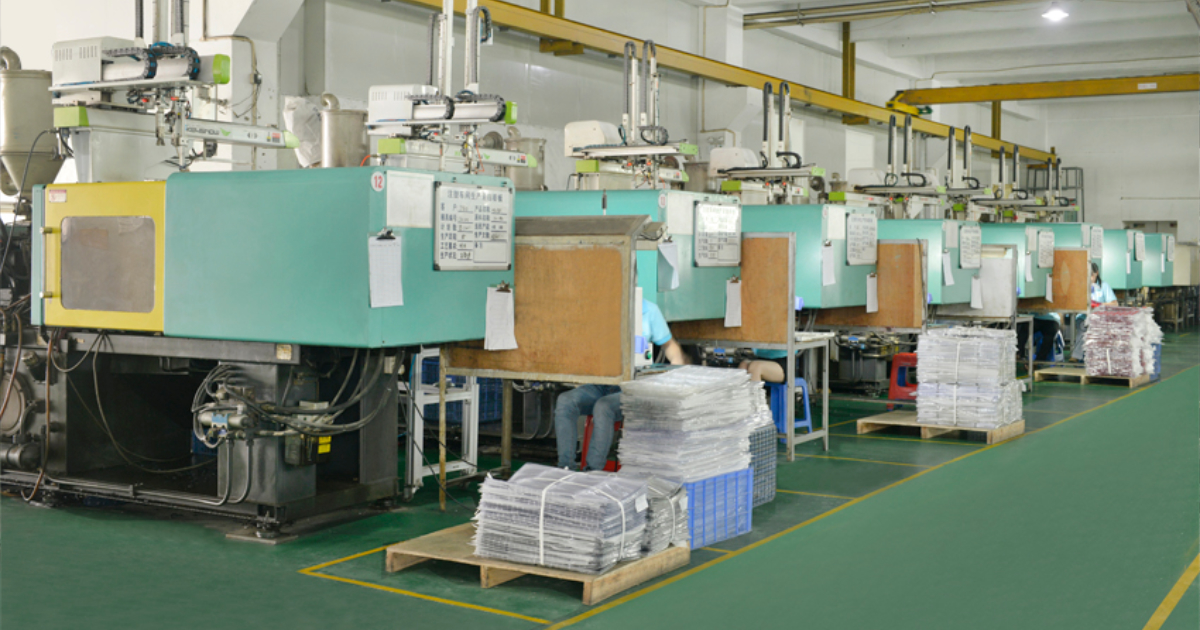
Precision Parts by Industry
| Industry | Typical Parts | Key Tolerances | Material |
|---|---|---|---|
| Automotive | ADAS sensor housings, connector bodies, fuel system clips | ±0.03mm on connector pitch | PA66-GF30, PBT-GF30, POM |
| Medical device | Diagnostic cartridge housings, lancing device bodies, inhaler dose chambers | ±0.02mm on fluid channel depth | PC (medical), ABS (medical) |
| Electronics | Fine-pitch connector housings, switch bodies, relay bases | ±0.03mm on pin pitch, ±0.02mm on contact apertures | PA66 FR, PBT-GF30, LCP |
| Optical | Lens holders, light pipe housings, camera module frames | ±0.02mm on lens seat diameter | PC (optical), PMMA |
| Industrial | Precision gear bodies, bearing housings, flow meter chambers | ±0.03mm on bore diameter, ±0.05mm on gear tooth profile | POM, PA66, PEEK |
| Financial / Payment | EMV card reader slots, PIN pad key apertures, tamper-evident enclosures | ±0.05mm on card slot width | PC/ABS FR, ABS FR |
Measurement and Verification
Precision parts require measurement capability that exceeds the tolerance being verified. A ±0.02mm tolerance cannot be verified with a caliper.
| Instrument | Resolution | Application |
|---|---|---|
| CMM (SEREIN) | ±0.001mm | 3D dimensional verification, GD&T feature control frames |
| Optical comparator | ±0.005mm | Profile and contour measurement, gear tooth form |
| Surface roughness tester | Ra 0.001μm resolution | Sealing surface finish, bearing surface finish |
| Digital height gauge | ±0.001mm | Linear dimensions, step heights |
| Pin gauge set | 0.01mm increments | Go/No-Go for holes and bores |
| Micrometer set | ±0.001mm | External dimensions, thickness |
All instruments are calibrated on schedule with certificates traceable to national standards. For customer programs requiring specific measurement methods or third-party metrology verification, we coordinate with accredited measurement laboratories in Shenzhen.
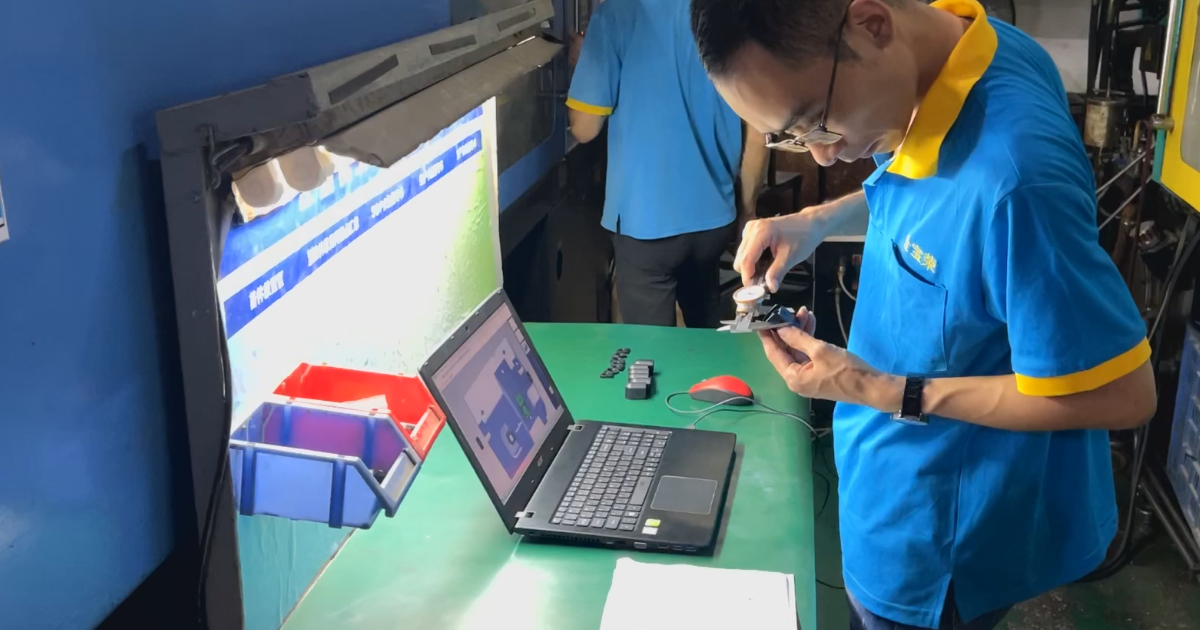
Process Documentation
Precision programs at JBRplas are supported by a documentation package:
| Document | Content |
|---|---|
| Process Validation Record | IQ/OQ/PQ for the production mold |
| Control Plan | All inspection points, methods, frequencies, acceptance criteria |
| SPC Control Charts | Critical dimension trending with Cpk, per production lot |
| First Article Inspection | All drawing dimensions, measured and recorded |
| Dimensional Report | CMM measurement data per AQL sample |
Frequently Asked Questions
What is the difference between precision molding and standard molding?
The mold, the press, and the process control. Precision molds are machined to ±0.005mm in H13 or S136 steel with mold temperature controllers. Precision presses are servo-hydraulic with shot-by-shot monitoring. Precision process control includes locked parameters, SPC, and first-off/last-off verification. Standard molding uses P20 steel, wider tolerances, and AQL-based inspection. The difference in per-part cost is 10–25% — the difference in capability is a factor of 5× on critical tolerances.
Can any part be precision-molded?
No. The part design must be compatible with precision tolerances. A part with a 200mm unsupported span and 1.5mm wall thickness in PP will not hold ±0.05mm flatness regardless of mold quality — the material shrinks 1.0–2.5% and the geometry is not stiff enough to resist warpage. Our DFM review identifies which tolerances are achievable and which are not, before tooling begins.
How do you validate that precision tolerances are being held?
SPC monitoring of critical dimensions throughout the production run. Dimensions are measured every 50–100 shots on CMM or automated gauging. Data is plotted on control charts with Cpk. If Cpk trends downward, production is paused and the root cause is investigated before a single out-of-spec part is produced. We do not rely on final inspection alone — by the time a bad part is found at final inspection, a shift’s worth of production may already be affected.
What materials are suitable for precision molding?
Low-shrinkage, dimensionally stable materials produce the best precision results: POM (acetal), PC, PBT-GF30, PA66-GF30, PMMA, and PEEK. High-shrinkage materials (PP, unfilled PA, PE) are more challenging for tight tolerances but can be precision-molded with appropriate shrinkage compensation and process control. Amorphous materials (PC, ABS, PMMA) generally produce more predictable shrinkage than semi-crystalline materials (PA, POM, PBT).
Do you charge more for precision molding?
Precision molding typically adds 10–25% to the per-part cost versus standard molding. The cost driver is not the material — it is the process control: SPC monitoring, first-off/last-off inspection, locked process parameters, dedicated press allocation, and increased inspection frequency. Programs that require Cpk ≥ 1.67 and full SPC documentation are quoted accordingly during the RFQ phase.
Related
- Industries: Medical, Automotive, Electronics & Appliances, Financial Devices
- Related services: Mold Manufacturing, Clean Room Molding, Injection Molding
- Further reading: Quality System, Manufacturing Capabilities
You may also be interested in
Custom Plastic Injection Molding Services
JBRplas operates a 24/7 injection molding …
High Volume Plastic Injection Molding
At 100,000 pieces per year, a molding program …
Rapid Tooling & Prototype Injection Molding
When you need injection-molded parts for …