Overmolding & Insert Molding | Multi-Material Injection | JBRplas
Overmolding, insert molding, and two-shot (2K) injection molding from JBRplas — TPE over PC, metal insert encapsulation, multi-material parts. ISO 9001 & 13485 certified, Shenzhen factory.
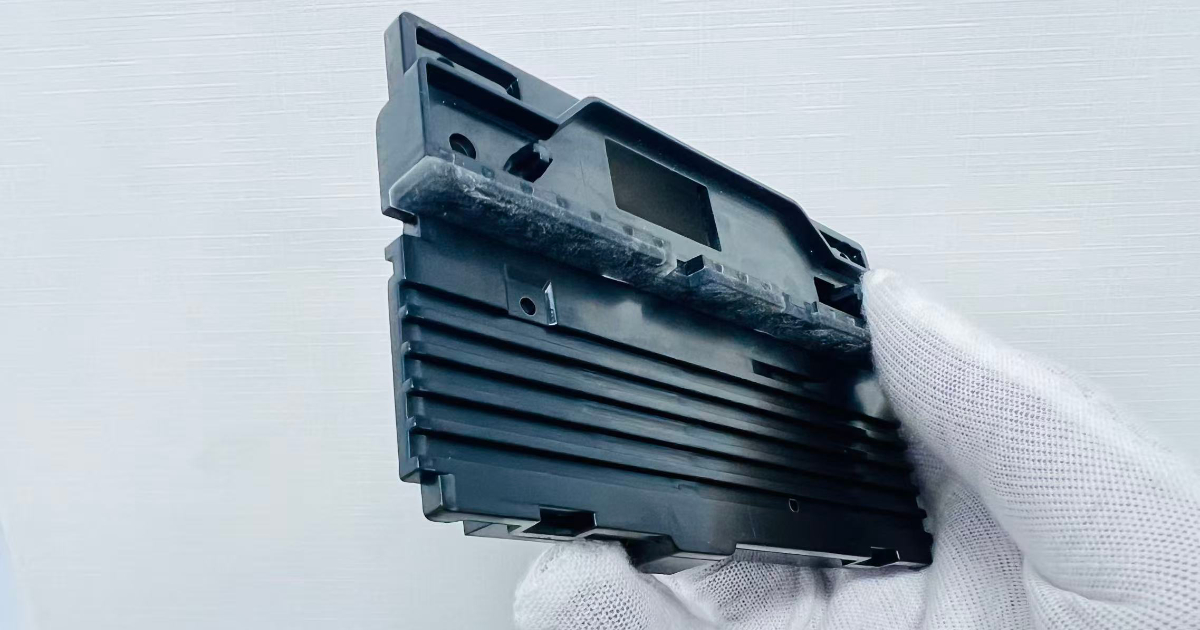
Multi-Material & Multi-Component Injection Molding
Not every plastic part is made from a single material. Grips need soft-touch surfaces on rigid bodies. Connectors need metal threads encapsulated in plastic. Seals need flexible lips bonded to structural frames. JBRplas provides three multi-material molding processes — overmolding, insert molding, and two-shot (2K) molding — from a single Shenzhen facility.
The right process depends on materials, volumes, and geometry. This page explains the differences, the capabilities, and how to choose.
Overmolding
Overmolding bonds a second material — typically a soft TPE or TPU — onto a previously molded rigid substrate (PC, ABS, PP, PA). The two materials form a chemical or mechanical bond at the interface, producing a single integrated part.
Typical Applications
- Soft-touch grips on power tools, medical devices, and consumer electronics
- Integrated gaskets and seals for IP-rated enclosures (IPX4–IPX7)
- Wearable device bands — rigid structure with skin-contact TPE layer
- Overmolded buttons and keypads — soft actuation surface on rigid housing
- Anti-slip feet and bumpers on industrial equipment housings
- Dental and surgical instrument handles — rigid core + soft grip
Compatible Material Pairs
Overmolding requires chemical compatibility between the substrate and overmold material. Not every TPE bonds to every substrate. The table below lists the pairs JBRplas processes regularly:
| Substrate | Overmold | Bond Type | Typical Peel Strength |
|---|---|---|---|
| PC | TPE (medical grade) | Chemical | >10 N/mm |
| PC | TPU | Chemical | >8 N/mm |
| ABS | TPE | Chemical | >8 N/mm |
| ABS | TPU | Chemical | >7 N/mm |
| PP | TPE | Mechanical (textured interface) | >5 N/mm |
| PA6 / PA66 | TPE | Chemical (with primer) | >6 N/mm |
| PC/ABS | TPE / TPU | Chemical | >8 N/mm |
Bond strength is validated per production batch using peel testing per ISO 813. For medical applications, only ISO 10993 certified TPE grades are used.
Process Requirements
- Substrate temperature control: The overmold bond relies on the substrate surface being at the correct temperature when the overmold material is injected. The process window is typically 10–15°C — too cold and the bond fails; too hot and the substrate deforms.
- Substrate mold design: The substrate mold must produce parts that fit precisely into the overmold cavity. Dimensional tolerances on the substrate at the overmold interface are held to ±0.05mm.
- Overmold tool design: Shut-off surfaces along the substrate edges must be machined to prevent flash on the overmold boundary. This is manual die-spotting work that requires experienced toolmakers.
- Cycle time: Overmolding adds 15–25 seconds to the total cycle versus single-material molding, depending on part size and material pair.
Insert Molding
Insert molding encapsulates a pre-formed component — typically a metal threaded insert, bushing, electrical contact, or PCB — inside an injection-molded plastic body. The insert is placed into the mold before each shot and the plastic flows around it, locking it in place during solidification.
Typical Applications
- Threaded brass inserts in plastic housings for screw assembly
- Stainless steel bushings in bearing housings and pivot points
- Electrical contacts and terminals in connector bodies
- PCB encapsulation for sensor housings and electronic modules
- Magnet inserts in sensor trigger components
- Metal reinforcement plates in structural plastic brackets
Insert Types and Tolerances
| Insert Type | Material | Positioning Tolerance | Pre-Mold Treatment |
|---|---|---|---|
| Threaded insert | Brass, stainless steel | ±0.05mm | Degreased, preheated to 80–120°C |
| Plain bushing | Stainless steel, bronze | ±0.03mm | Degreased, preheated |
| Electrical terminal | Brass, phosphor bronze | ±0.08mm | Degreased only (no preheat for plated contacts) |
| PCB | FR4 | ±0.10mm | Conformal coating if specified |
| Magnet | NdFeB, ferrite | ±0.05mm | Preheated to 80°C to reduce thermal shock |
Process Requirements
- Insert positioning: Inserts are placed into the mold manually or via automated pick-and-place. Positioning tolerance is maintained by machined insert pockets in the mold — the insert fits into a precision-machined recess that holds it in place during injection.
- Insert preheating: Metal inserts are preheated to 80–120°C before loading. A cold insert causes the melt to freeze prematurely around it, creating a weak interfacial bond and sink marks on the opposite face.
- Cycle time impact: Manual insert loading adds 10–20 seconds per cycle versus an unloaded mold. Automated loading reduces this to 5–8 seconds, suitable for volumes above 100,000 parts per year.
- Tooling requirements: P20 steel minimum for insert molding due to the wear from metal-on-steel contact during insert placement. H13 recommended for volumes exceeding 100,000 cycles.
Overmolding vs Insert Molding
| Overmolding | Insert Molding | |
|---|---|---|
| What is added | A second plastic material | A metal or non-plastic component |
| How it bonds | Chemical adhesion or mechanical interlock | Mechanical encapsulation (plastic shrinks around insert) |
| Typical cycle time | 15–25s added | 10–20s added |
| Tooling complexity | Two molds (substrate + overmold) | One mold with insert loading system |
| Low volume? | Yes — insert-overmold method | Yes — manual loading |
2K Molding (Two-Shot Molding)
2K molding injects two different materials or colours into the same mold in a single machine cycle. The first material is injected into the primary cavity; the mold then rotates (rotary platen) or the part is transferred (core-back) to a second cavity where the second material is injected. The result is a single integrated part with two materials — produced in one cycle.
Typical Applications
- Two-colour keycaps and buttons (symbol in one colour, body in another)
- Automotive tail light lenses — clear PC lens + black ABS housing in one part
- Toothbrush handles — rigid PP core + soft TPE grip in one shot
- Rotary knobs with soft-touch outer ring and rigid inner hub
- Medical device housings with integrated soft seals
2K vs Overmolding
| 2K Molding | Overmolding | |
|---|---|---|
| Process | One machine, one cycle, two injection units | Two separate molds, two cycles |
| Cycle time | Faster — both materials molded in one cycle | Slower — substrate molded first, then overmolded |
| Tooling cost | Higher — dedicated 2K rotary mold required | Lower — two standard molds |
| Minimum volume | Typically >200,000 parts/year for economics | Viable from 5,000 parts |
| Bond strength | Optimal — second material injected while first is still hot | Good — substrate re-heated by overmold melt |
| Best for | High-volume consumer products | Low-to-medium volume, medical, industrial |
JBRplas Approach
For programs under 200,000 parts per year, JBRplas recommends the insert-overmold method — mold the substrate, transfer it manually or robotically to the overmold tool, and inject the second material. Process parameters, bond strength, and dimensional results are identical to 2K. The difference is cycle time and labour — 2K is faster but the tooling investment only pays back at high volumes.
For programs above 200,000 parts per year, JBRplas can manufacture dedicated 2K rotary tools with hot runner systems for both materials. We quote both approaches and let the production economics decide.
For the tool itself — rotary and core-back structures, material pairing, and validation — see 2K mold manufacturing.
Choosing the Right Process
| Your Part | Recommended Process | Why |
|---|---|---|
| Rigid housing + soft grip surface | Overmolding | TPE over PC/ABS, standard process |
| Plastic body + metal threaded insert | Insert molding | Brass insert encapsulated during molding |
| Two colours in one part (no soft material) | 2K molding | Two-colour keycaps, badges, trim |
| Rigid + flexible seal (low volume, <100K) | Overmolding (insert-overmold) | Lower tooling cost than 2K |
| Rigid + flexible seal (high volume, >200K) | 2K molding | One cycle, lower per-part cost at volume |
| Plastic body + embedded PCB | Insert molding | PCB loaded into tool, encapsulated |
| Metal reinforcement in structural bracket | Insert molding | Steel or brass insert for load-bearing |
| Soft wearable band + rigid clasp | Overmolding | TPE over PC, medical-grade materials available |
Frequently Asked Questions
What is the minimum order quantity for overmolding or insert molding?
No formal MOQ. We run overmolding and insert molding from 500 pieces for prototyping and validation. For insert molding, insert supply is typically the limiting factor — we can source inserts or work with customer-supplied components.
Can you do overmolding with medical-grade materials?
Yes. Our ISO 13485 certification covers overmolding programs. We use ISO 10993 certified TPE grades (Kraiburg THERMOLAST M, etc.) for skin-contact medical applications. Full lot traceability and USP Class VI material certificates are provided as standard for medical programs.
Do you source inserts or do I supply them?
Both. We can source standard threaded inserts (brass, stainless steel) and bushings from our approved supplier network. Custom or proprietary inserts are supplied by the customer. We recommend providing a dimensional specification and tolerance for any customer-supplied inserts.
How do you validate bond strength for overmolded parts?
Peel strength testing per ISO 813 on 3 sample parts from every production batch. Target bond strength is specified at the DFM stage based on the material pair. For medical and automotive programs, additional durability testing (thermal cycling, chemical exposure) is available.
Can you do overmolding at low volume?
Yes. For programs under 100,000 parts, we use the insert-overmold method — mold the substrate on one press, transfer to a second press for overmolding. This avoids the cost of a dedicated 2K rotary tool while producing identical part quality. Learn more →
Related
- Industries: Medical, Electronics & Appliances, Smart Home
- Related services: 2K Mold Manufacturing, Injection Molding, Precision Molding, Assembly & Packaging
You may also be interested in
Custom Plastic Injection Molding Services
JBRplas operates a 24/7 injection molding …
High Volume Plastic Injection Molding
At 100,000 pieces per year, a molding program …
Rapid Tooling & Prototype Injection Molding
When you need injection-molded parts for …