Low Volume Injection Molding | Small Batch Manufacturing | JBRplas
Low volume plastic injection molding from 500 to 100,000 parts per year — rapid tooling, bridge tooling, and small batch production in Shenzhen. No MOQ, T1 samples in 2–3 weeks.
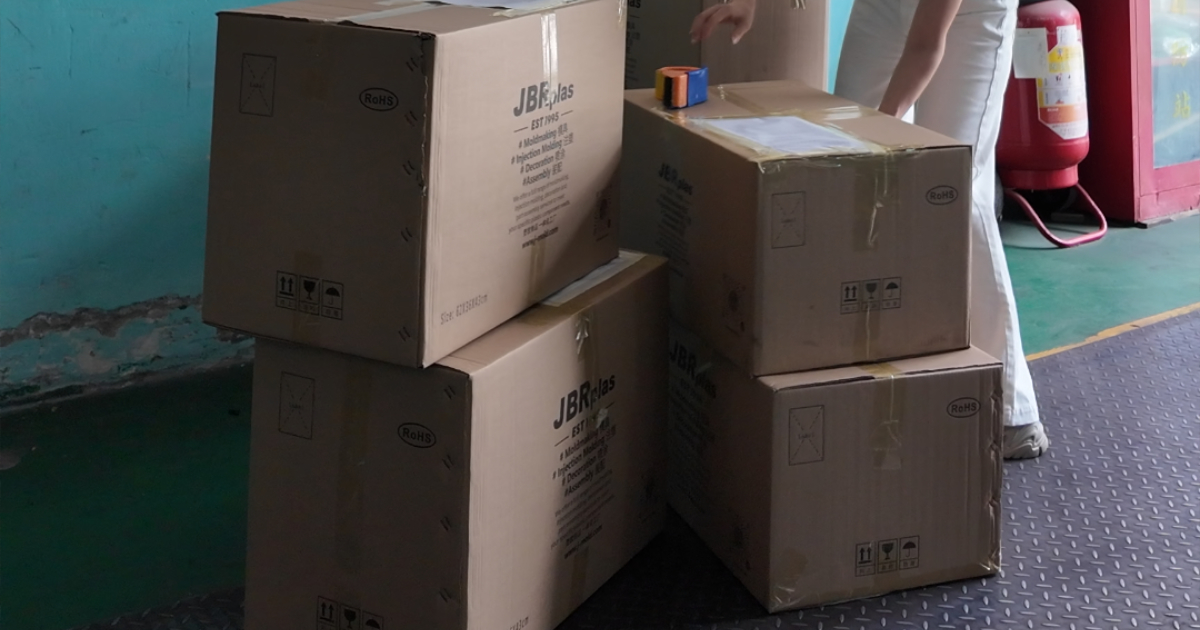
Low Volume Plastic Injection Molding
Not every plastic part program starts at a million pieces per year. Product validation runs, clinical trials, field testing, limited-edition products, and industrial equipment all require production-quality parts in quantities that don’t justify a full H13 hardened production tool.
JBRplas provides dedicated low volume injection molding services from our Shenzhen facility — combining rapid aluminum tooling or P20 soft tooling with production-grade molding to deliver small batches of parts that match the quality of full production, at a fraction of the upfront tooling investment.
When Low Volume Manufacturing Makes Sense
| Scenario | Typical Volume | Why Low Volume |
|---|---|---|
| Product validation / beta testing | 500 – 5,000 | Test market fit before committing to production tooling |
| Medical device clinical trials | 1,000 – 10,000 | ISO 13485-compliant parts for trial use |
| Bridge to production | 5,000 – 50,000 | Keep supply flowing while production tooling is built |
| Industrial equipment / machinery | 500 – 20,000/yr | Annual volumes too low for multi-cavity hardened tooling |
| Aftermarket / service parts | 1,000 – 30,000 | Replacement parts for discontinued product lines |
| Limited edition consumer products | 10,000 – 100,000 | One production run, no ongoing supply needed |
| Pre-production PPAP samples | 300 – 3,000 | Production-intent parts for automotive PPAP submission |
Tooling Options for Low Volume
The key to cost-effective low volume manufacturing is matching the tooling to the volume requirement. JBRplas offers three tooling tiers:
Aluminum Tooling (500 – 5,000 shots)
For prototype builds, concept validation, and very small production runs:
- Material: 7075-T6 or 6061-T6 aluminum
- Lead time: 12–18 business days to T1
- Cavities: Single cavity standard
- Surface finish: SPI B2 to A3
- Best for: ABS, PP, PC, PA (non-abrasive, non-corrosive)
- Limitations: Not suitable for glass-filled or corrosive resins
- Shot life: 1,000 – 5,000 shots (adequate for validation and pilot runs)
P20 Soft Tooling (5,000 – 100,000 shots)
The workhorse of low volume production — production-quality parts without the cost of hardened tooling:
- Material: P20 (718H) pre-hardened steel, 28–34 HRC
- Lead time: 18–22 business days to T1
- Cavities: Single or 2-cavity
- Surface finish: SPI A3 to VDI texture range
- Best for: All commodity and most engineering resins
- Shot life: 50,000 – 300,000 shots
- Advantage: Part quality identical to full production tooling
Bridge Tooling (Transition to Production)
When you need production parts now while the high-volume H13 tool is still being built:
- Material: P20 or H13 pre-hardened
- Strategy: Single-cavity tool designed to mirror the gating, cooling, and ejection of the planned multi-cavity production tool
- Benefit: Parts produced during the bridge phase are representative of final production quality
- Timeline: Bridge tool operational in 3–4 weeks; production tool follows in 6–8 weeks
Low Volume Molding Capabilities
Press Capacity for Small Batches
| Clamping Force | Presses | Best For |
|---|---|---|
| 90 – 120 T | 10 | Small connectors, clips, electronic housings (up to 100g) |
| 128 – 168 T | 12 | Medium enclosures, brackets, consumer product housings (50–200g) |
| 200 – 250 T | 2 | Larger parts, thicker walls, multi-cavity options (150–400g) |
| 320 – 650 T | 3 | Large structural parts, automotive components (300 g–3,188 g) |
All presses are servo-hydraulic with real-time process monitoring. Short-run changeovers are performed by experienced setup technicians — not automated, because at low volume the human judgment on shot-to-shot consistency matters more.
Dimensional Tolerances
| Volume Category | Achievable Tolerance | Inspection Method |
|---|---|---|
| Prototype (500–5,000) | ±0.10mm | CMM on critical dimensions, visual 100% |
| Low volume (5,000–100,000) | ±0.05mm | CMM full dimensional, SPC on critical features |
Tolerances are the same as our full production molding. Low volume does not mean lower precision — it means a different tooling investment profile.
Materials for Low Volume Programs
All standard engineering and commodity thermoplastics are available for low volume programs. We stock over 500 resin grades in small-quantity formats specifically for short-run production:
| Material Category | Available Grades | Low Volume Considerations |
|---|---|---|
| ABS | General purpose, FR, high-impact | Excellent in aluminum tooling; wide process window |
| PC | General purpose, optical, FR | Requires steel tooling for best surface finish |
| PC/ABS | Standard, FR V-0 | Good flow characteristics; forgiving in low cavitation |
| PP | Homopolymer, copolymer, GF, talc-filled | Available in small-bag quantities (25kg) |
| PA6 / PA66 | Unfilled, GF15/30/50 | Use P20 minimum for glass-filled grades |
| POM | Homopolymer, copolymer | Processes well in aluminum and P20 |
| PMMA (Acrylic) | General purpose, impact-modified | Steel tooling recommended for optical clarity |
| TPE / TPU | Shore 30A – 80D | Overmold grades available |
| PEEK, PPS, PEI | Medical and high-temp grades | Small-quantity lots available; steel tooling required |
Specialty grades (FDA-compliant, USP Class VI, UL94 V-0, UV-stabilized, ESD) are available for low volume programs. Minimum resin order is typically one 25kg bag — we do not impose minimum purchase quantities on material.
Quality Control at Low Volume
Small batches require a different quality approach than high-volume SPC. When you are producing 2,000 pieces rather than 200,000, you cannot rely on statistical sampling alone — the sample size is too small to be meaningful.
Quality Approach by Volume
| Volume | Inspection Method | Documentation |
|---|---|---|
| 500 – 2,000 pcs | 100% visual inspection + CMM on critical dimensions (all parts measured on key features) | Dimensional report + material cert |
| 2,000 – 10,000 pcs | 100% visual + AQL Level II sampling + CMM on 10–20 parts per batch | Dimensional report + CoC + material cert |
| 10,000 – 100,000 pcs | AQL Level II + SPC on critical dimensions + in-process checks every 50–100 shots | Full FAI + SPC data + CoC + material cert |
Documentation Standard (All Volumes)
- First Article Inspection (FAI) report on first production run
- Material certificate with resin lot traceability
- Certificate of Conformance (CoC) per shipment
- Dimensional report on critical-to-function features
- PPAP Level 3 available on request (automotive customers)
Lead Times
| Phase | Aluminum Tool | P20 Soft Tool |
|---|---|---|
| DFM report | 1–2 business days | 2–3 business days |
| Mold design | 3–5 business days | 5–7 business days |
| Mold manufacture | 7–10 business days | 12–16 business days |
| T1 samples | 12–18 business days | 18–22 business days |
| Production parts (from T1 approval) | 3–5 business days | 5–7 business days |
| Repeat orders (tool stored) | 5–10 business days | 5–10 business days |
Transitioning from Low Volume to Production
One of the most common paths we manage: a client starts with 2,000 prototype parts for field testing, scales to 20,000 bridge-tool parts for initial market entry, then commissions a multi-cavity H13 production tool for full-volume supply.
Because all three phases happen under one roof:
- No data loss — process parameters, material behavior, and dimensional data transfer directly from prototype to production
- No re-validation — the production tool replicates the gating and cooling validated during prototype and bridge phases
- No new supplier qualification — one quality system, one point of contact, one audit
Typical Scale-Up Timeline
| Phase | Tooling | Volume | Timeline |
|---|---|---|---|
| Prototype | Aluminum, single cavity | 500–5,000 pcs | Weeks 1–4 |
| Bridge | P20, 1–2 cavity | 5,000–50,000 pcs | Weeks 5–16 |
| Production | H13, multi-cavity | 100,000+ pcs/yr | Weeks 12–20 (overlaps with bridge) |
Frequently Asked Questions
What is your minimum order quantity? We have no formal MOQ. We regularly produce batches of 500 pieces for prototyping and validation. For aluminum tooling, 500 pieces is a practical minimum to cover setup and material changeover costs.
How does low volume compare on per-part cost? Per-part cost is higher than high-volume production because the tooling cost is amortized over fewer parts and cycle times are longer (single-cavity vs multi-cavity). However, the total program cost is significantly lower — you invest $3,000–$12,000 in aluminum or P20 tooling rather than $30,000–$100,000+ in a hardened multi-cavity production tool. For programs under 100,000 total parts, low volume tooling is almost always the more economical choice.
Can I upgrade from aluminum to P20 or H13 tooling later? Yes. This is a common path. Because we retain all process data, mold designs, and dimensional records, the transition to production tooling is efficient. The production tool design incorporates everything learned during the low volume phase.
Is part quality the same as high-volume production? Yes. P20 soft tooling produces parts that are dimensionally and cosmetically identical to those from a hardened production tool. The tool steel is the same grade used for many production tools globally — the difference is hardness (28–34 HRC vs 48–52 HRC), which primarily affects shot life, not part quality. Aluminum tooling can match production quality for non-abrasive, non-corrosive resins.
Do you offer insert molding and overmolding at low volume? Yes. Both are available. Insert molding requires P20 tooling minimum due to the additional complexity of insert loading. Overmolding (2K / two-shot) at low volume is typically done via insert-overmold or two-step molding rather than a dedicated 2K rotary tool.
Can you do low volume with glass-filled or abrasive materials? Glass-filled materials (PA66-GF30, PBT-GF30, etc.) require P20 steel tooling minimum. Aluminum tooling wears too quickly with glass-filled or mineral-filled grades. We advise on tooling material selection during the DFM phase based on your material specification.
What file formats do you accept? STEP (.stp/.step), IGES (.igs), SolidWorks (.sldprt/.sldasm), UG NX (.prt), Pro/E (.prt). 2D drawings in PDF or DWG format.
Related
- Industries: Medical, Automotive, Financial Devices
- Related services: Rapid Tooling, Injection Molding, Mold Design
- Further reading: How We Work, Why Choose JBRplas
You may also be interested in
Custom Plastic Injection Molding Services
JBRplas operates a 24/7 injection molding …
High Volume Plastic Injection Molding
At 100,000 pieces per year, a molding program …
Rapid Tooling & Prototype Injection Molding
When you need injection-molded parts for …