Clean Room Injection Molding | ISO 8 Class 100,000 | JBRplas
ISO 8 (Class 100,000) clean room injection molding in Shenzhen — dedicated clean room presses from 90T to 250T, HEPA filtration, positive pressure, full lot traceability. Medical device and precision electronics molding under ISO 13485.
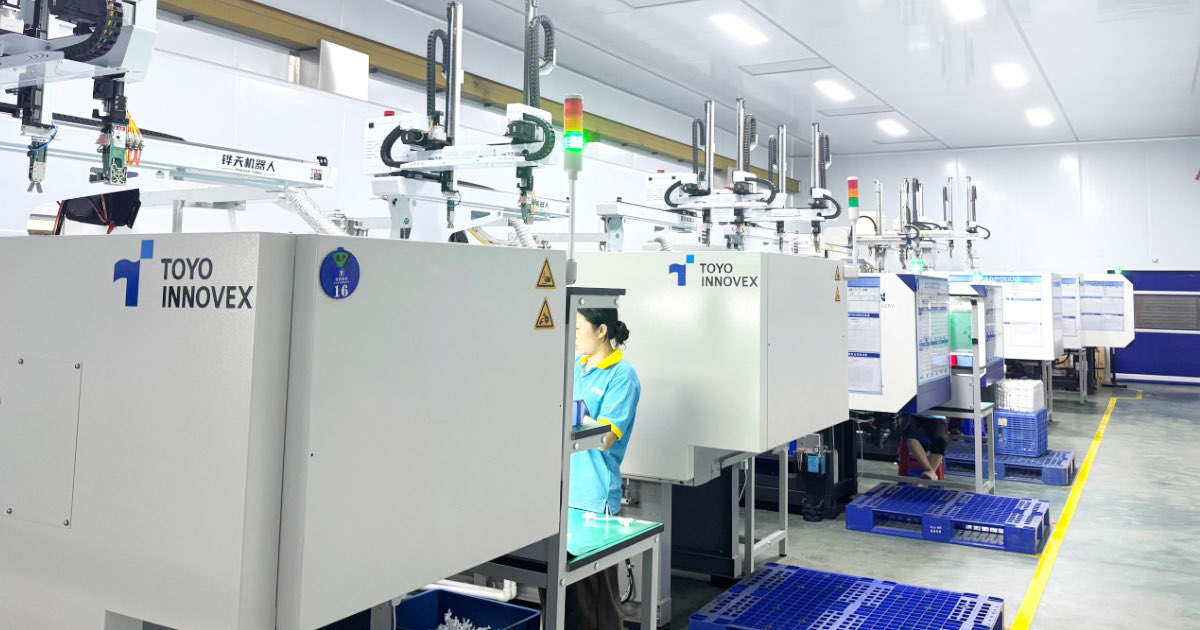
Clean Room Injection Molding
Some parts cannot be molded on an open factory floor. Medical device components that contact patient tissue. Optical lenses where a single dust speck is a reject. Diagnostic cartridge housings where particulate contamination invalidates test results. Sensor enclosures where outgassing or particle shedding causes field failures.
JBRplas operates a dedicated ISO 8 (Class 100,000) clean room molding cell within our Shenzhen facility — separately zoned, HEPA-filtered, positive-pressure, with documented environmental monitoring and full lot traceability. It is not a partitioned corner of the main production floor. It is a purpose-built controlled environment with dedicated presses, dedicated personnel, and dedicated quality protocols.
Clean Room Specifications
| Parameter | Specification |
|---|---|
| Cleanliness class | ISO 8 / Class 100,000 (ISO 14644-1) |
| Particle limit (≥0.5μm) | 3,520,000 particles/m³ |
| Particle limit (≥5.0μm) | 29,300 particles/m³ |
| Filtration | HEPA, 99.97% at 0.3μm |
| Air pressure | Positive — outward flow prevents contaminant ingress |
| Temperature | 20–24°C ±2°C |
| Relative humidity | 40–60% RH |
| Air changes | Minimum 20 per hour |
| Monitoring | Particle counter, temperature, RH — logged per shift |
Personnel Protocol
- Full gowning: cleanroom suit, hairnet, beard cover (if applicable), gloves, shoe covers
- Gowning area with air shower at entry
- No personal items, food, or cardboard inside the clean room
- Dedicated clean room tools and equipment — not shared with the main production floor
- Personnel training documented per ISO 13485 requirements
Clean Room Equipment
| Equipment | Specification | Notes |
|---|---|---|
| Injection presses | 90T–250T, servo-hydraulic | Dedicated to clean room — not rotated to main floor |
| Automation | Robot part removal on all presses | Eliminates operator contact with parts post-ejection |
| Material handling | Sealed resin hoppers, dedicated dryer | Prevents cross-contamination from main floor resins |
| Packaging station | Inside clean room | Parts bagged and sealed within the controlled environment |
| Tool storage | Temperature and humidity controlled | Dedicated clean room mold storage |
Medical Device Applications
The clean room molding cell operates under JBRplas’s ISO 13485:2016 Quality Management System — the international standard for medical device manufacturing. This is not a bolt-on certification. It is a fully documented quality system covering design, manufacturing, inspection, traceability, and change control.
Products We Mold in the Clean Room
- Diagnostic cartridge and cassette housings
- Lateral flow assay frames and holders
- Sample collection device components
- Pipette tips and tube caps
- Drug delivery device housings (inhaler, pen injector bodies)
- Surgical instrument handles and grips
- Patient monitoring device enclosures
- Respiratory device components (mask frames, connectors)
- Centrifuge tube bodies
- Hearing aid outer shells
Quality Documentation for Medical Programs
Every clean room production lot is supported by a complete traceability package:
| Document | Content |
|---|---|
| Lot Traveller | Complete production record — date, shift, machine, operator, material lot, quantity |
| Clean Room Production Log | Particle counts, temperature, humidity — per shift |
| Material Certificate | USP Class VI or ISO 10993 certificate per resin lot |
| First Article Inspection | All drawing dimensions, measured and recorded |
| Dimensional Report | CMM data, Cp/Cpk for critical dimensions |
| Certificate of Conformance | Per shipment, signed by Quality Manager |
This documentation package supports FDA 510(k) submissions, CE marking technical files, and ISO 13485 external audits. Records are retained for a minimum of 10 years.
Electronics & Precision Applications
Clean room molding is not only for medical devices. Precision electronics, optical components, and semiconductor-adjacent parts benefit from controlled-environment production:
- Optical lenses and light guides — dust-free surfaces without post-mold cleaning
- Sensor enclosures (LiDAR, IR, ultrasonic) — no particle contamination affecting signal
- Connector bodies with fine-pitch contacts — no dust bridging between terminals
- Semiconductor test socket housings — ESD-safe materials in a controlled environment
- Camera module housings — no particulate on internal surfaces
- Precision fluidic and microfluidic components
ESD Control
For electronics applications, static discharge is a contamination risk and a component-damage risk. The clean room includes:
- Conductive flooring with grounding straps
- Ionizing air blowers at assembly stations
- ESD-safe packaging (anti-static bags, conductive trays)
- Carbon-filled ESD-safe material grades available
Materials Available
All clean room production uses certified resins with documented compliance:
| Material | Compliance | Typical Clean Room Application |
|---|---|---|
| ABS (medical grade) | USP Class VI | Diagnostic housings, device enclosures |
| PC (medical grade) | USP Class VI / ISO 10993 | Clear enclosures, fluidic components |
| PP (medical grade) | USP Class VI / FDA | Tube caps, sample containers |
| PE (medical grade) | USP Class VI / FDA | Pipette tips, reagent bottles |
| PC/ABS (medical grade) | USP Class VI | Durable device housings |
| PMMA (Acrylic) | USP Class VI available | Optical lenses, light guides |
| TPE / TPU (medical) | ISO 10993 | Seals, soft-touch surfaces, connectors |
| PEEK | ISO 10993, USP Class VI | High-temp, sterilizable components |
All materials are supplied with manufacturer compliance certificates. Resin lot numbers are traceable to finished part lots per ISO 13485 requirements.
Quality Control in the Clean Room
In-Process
- First-off inspection at the start of every production run — 500 lux directional lighting
- 100% visual inspection on all clean room parts at the press
- Automated part removal to anti-static packaging — no operator hand contact
- Particle count verification at the start of each shift
- Environmental monitoring logged and retained
Outgoing
- Dimensional verification on CMM for critical dimensions
- AQL sampling per ANSI/ASQ Z1.4 Level II, AQL 1.0
- Material certificates traceable to resin lot numbers
- Clean room production log included in shipment documentation
Frequently Asked Questions
When do I need clean room molding?
You need clean room molding when particulate contamination on the part surface causes a functional failure, a regulatory non-compliance, or a cosmetic reject. Common triggers: your part contacts patient tissue or fluid path (medical), your part is an optical surface where dust is visible (lenses, displays), or your part is assembled into a device where foreign material causes electrical or fluidic failure (diagnostics, sensors). If your quality specification does not reference particle limits or controlled-environment production, you likely do not need clean room molding.
Does clean room molding cost more?
Yes. Clean room production adds approximately 15–25% to the per-part cost versus standard molding, driven by gowning time, environmental monitoring, restricted press access, and additional documentation. The cost is justified when the alternative — a contaminated lot, a regulatory finding, or a field failure — costs more.
Can you do overmolding or insert molding in the clean room?
Yes. Both are available in the clean room. Overmolding of medical-grade TPE onto PC or ABS substrates is a common clean room process for device seals and soft-touch surfaces. Insert molding of metal components is performed with the same cleanliness protocols — inserts are cleaned and handled under clean room conditions before loading.
Are you certified to ISO 14644?
Our clean room is designed and operated to ISO 14644-1 Class 8 standards. Environmental monitoring data (particle counts, temperature, humidity, pressure differential) is logged per shift and retained. We are certified to ISO 13485:2016 — the medical device quality management system standard that governs our clean room operations. If your program requires third-party ISO 14644 clean room certification, we can arrange this through an accredited testing body.
What documentation do you provide for clean room production?
Every clean room lot includes: Lot Traveller (complete production record), Clean Room Production Log (particle counts, temperature, humidity per shift), Material Certificate with lot traceability, First Article Inspection report, Certificate of Conformance. This package is structured to support FDA 510(k) and CE marking technical file submissions.
Related
- Industries: Medical, Health Care
- Related services: Precision Molding, Overmolding, Injection Molding
- Further reading: Quality System, Manufacturing Capabilities
You may also be interested in
Custom Plastic Injection Molding Services
JBRplas operates a 24/7 injection molding …
High Volume Plastic Injection Molding
At 100,000 pieces per year, a molding program …
Rapid Tooling & Prototype Injection Molding
When you need injection-molded parts for …