2K Mold Manufacturing | Two-Shot Injection Molds | JBRplas
2K (two-shot) injection mold manufacturing — 1+1 rotary molds, verified PC+PC and PC+TPE pairings, dual hot runner systems. T1 in 25–35 days.
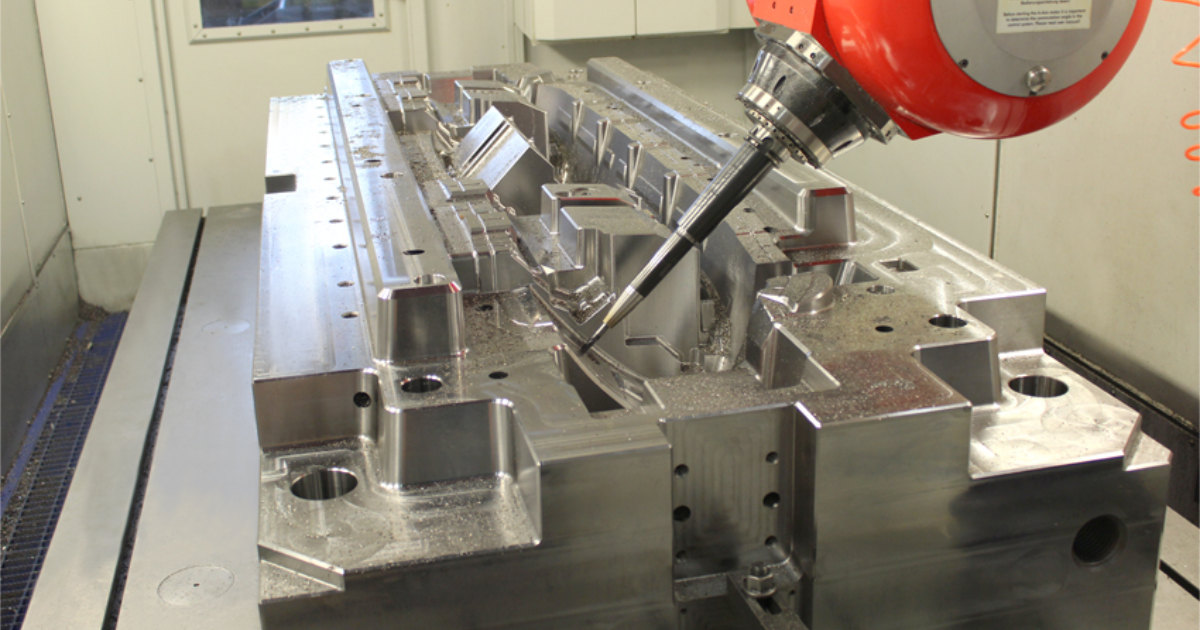
2K Mold Manufacturing
A 2K mold — also called a two-shot or bi-material mold — injects two different materials or colors into the same tool in a single machine cycle. The first material fills the primary cavity; the mold then rotates on a rotary platen or transfers the part via core-back to a second station, where the second material is injected over and around the first. The part leaves the machine as one integrated component: no assembly, no adhesives, no secondary operation.
JBRplas designs, builds, and validates 2K injection molds in our Shenzhen toolroom. This page covers the tool side: rotary and core-back structures, material pairing, dual runner systems, machining, and validation. For the process decision — when 2K beats two separate molds — see overmolding and 2K molding.
When 2K Tooling Makes Sense
2K tooling is an economic decision, not a default choice. The comparison against the two-mold alternative:
| 2K Molding | Two Separate Molds | |
|---|---|---|
| Process | One machine, one cycle, two injection units | Substrate molded, then overmolded in a second cycle |
| Cycle time | Faster — both materials in one cycle | Slower — two cycles, plus transfer |
| Tooling cost | Higher — dedicated rotary or core-back mold | Lower — two standard molds |
| Minimum volume | Typically above 200,000 parts per year | Viable from 5,000 parts |
| Bond strength | Optimal — second material injected while the first is still hot | Good — substrate re-heated by overmold melt |
Below roughly 200,000 parts per year, the insert-overmold route usually wins: mold the substrate, transfer it to an overmold tool, inject the second material. The part results are equivalent; the difference is cycle time and tooling investment. We quote both approaches and let the arithmetic decide.
Typical 2K applications: two-color keycaps and buttons, automotive tail light lenses (clear lens + black housing in one part), toothbrush handles (rigid core + soft grip), rotary knobs with soft-touch rings, and medical device housings with integrated soft seals.
2K Mold Design
A 2K mold is two molds in one frame. The design work concentrates in three areas:
- Rotary structure: On a rotary platen machine, the mold indexes 180° between stations — first shot in station one, second shot in station two. On core-back machines, the core retracts to open the second-material cavity instead. The structure is chosen against the customer’s press, not against the moldmaker’s preference.
- Material pairing: The two materials must bond at the interface — melt temperatures, shrinkage rates, and polymer chemistry all matter. Our published POS terminal program pairs PC black with PC white UL V-0; the two shots bond molecularly, which is what makes the part tamper-evident. Pairings that ignore melt temperature or shrinkage compatibility delaminate under thermal cycling — the pairing is verified in DFM, before steel is cut.
- Dual runner systems: Each material needs its own gate and runner layout. For production tools we configure hot runner systems for both materials, sized independently for the two melt viscosities.
Verified Material Pairings
Material pairs we have run in production 2K tools:
| First Shot | Second Shot | Typical Application |
|---|---|---|
| PC black | PC white UL V-0 | Financial terminal housings (published program) |
| PC / ABS rigid | TPE / TPU soft | Soft-touch grips, seals, wearable bands |
| PP rigid | TPE soft | Toothbrush handles, rotary knobs |
Pairing is decided against the part requirement — bond strength, thermal cycling, chemical exposure — not against what is convenient to mold.
In-House Toolroom
2K molds multiply the machining work: two cavity sets, two runner systems, and a rotary or sliding mechanism, all cut to the same standard as our single-material tools.
| Equipment | Quantity | Accuracy |
|---|---|---|
| CNC machining centers | 9 | ±0.003–0.02 mm |
| EDM sinkers | 10 | ±0.005–0.01 mm |
| Wire-cut EDM | 7 | ±0.003 mm |
| Surface grinders | 6 | ±0.0015 mm |
Full inventory in the equipment list. Steel selection matches the resin and shot-life requirement:
| Steel | Hardness | Best For | Shot Life |
|---|---|---|---|
| P20 (718H) | 28–34 HRC | General purpose, PP, ABS, PC | 300K–500K |
| H13 | 48–52 HRC | High-temp resins, PA, POM, PEEK | 500K–1M |
| S136 (420SS) | 48–52 HRC | Corrosive resins, PVC, PC optical | 500K–1M |
| 2344 | 44–52 HRC | High-pressure, automotive | 800K–1M+ |
Rotary molds add one maintenance dimension: the indexing mechanism. Spare inserts and rotary components are machined in the same toolroom that built the mold. See mold manufacturing for the full tooling scope.
Mold Validation
A 2K mold ships only after validation of both materials:
- T1 trial with the production-grade resins for both shots.
- Dimensional inspection of the two-shot part against the drawing, including the interface geometry between the two materials.
- Bond verification at the material interface — the published POS terminal program required the black track and white shell to behave as one part under PCI PTS tamper testing.
- FAI and PPAP — First Article Inspection; PPAP Level 3 documentation available for automotive and financial programs.
- Warranty — guaranteed shot life: 300,000 shots for P20 tools, 1,000,000 for H13/S136. Workmanship defects are repaired or replaced at no charge.
Published 2K Program
POS payment terminal housing — a 1+1 two-shot rotary mold for a UK payment terminal manufacturer. First shot: black PC card-reader track. Second shot: white PC UL V-0 shell, partition, and ribs. One 106 × 146 × 56 mm, 110 g part replaces what would otherwise be a two-component assembly.
The two-shot approach eliminated three assembly interfaces and their tolerance stack-up on the ±0.2 mm card path, closed the moisture ingress path between track and shell, and made separation of the two materials visibly destructive — satisfying PCI PTS tamper-evidence requirements at the mechanical design level. T1 delivered in 28 business days. Tool life 300,000 shots.
Lead Times
| Phase | Duration |
|---|---|
| RFQ response | Within 24 hours |
| DFM report | 2–3 business days |
| Mold design (2K / hot runner) | 8–15 business days |
| T1 samples (2K mold) | 25–35 business days — 28 days achieved on the POS terminal program |
| T1 samples (single-material reference) | 18–22 business days |
Frequently Asked Questions
Should I buy a 2K mold or two separate molds? Above roughly 200,000 parts per year, the 2K tool usually wins on total cost: one cycle instead of two, no transfer handling, and stronger bonding. Below that volume, we recommend the insert-overmold route — two standard molds with equivalent part results. We quote both approaches on every multi-material RFQ.
Can you build rotary platen molds? Yes. Our published POS terminal program runs a 1+1 rotary mold with 180° indexing on a rotary platen machine. Core-back structures are available for presses without a rotary platen.
How do you decide which materials can pair in a 2K mold? Melt temperature, shrinkage rate, and polymer chemistry are checked in DFM. Compatible pairs — PC+PC, rigid+TPE — bond while the first shot is still hot. Incompatible pairs delaminate under thermal cycling or load; we flag the risk before steel is cut.
Do both materials get hot runners? For production 2K tools, yes — hot runner systems are configured for both materials and sized independently for the two melt viscosities. See overmolding and 2K molding for the process-side comparison.
What is the T1 lead time for a 2K mold? 25–35 business days from design approval; our POS terminal program delivered T1 in 28 days. We commit a specific date at order, not a range at delivery.
Does a 2K mold cost more than two single-material molds? A 2K mold is typically less expensive than two full production molds but more expensive than one. The saving is in the process: one cycle, no assembly, no tolerance stack-up at the interface. We show the 2K tool cost against the two-mold alternative in the quote.
Related
- Industries: Automotive, Medical, Electronics & Appliances, Financial Devices, Smart Home
- Related services: Overmolding & Insert Molding, Mold Manufacturing, Mold Design, Multi-Cavity Mold Manufacturing, Injection Molding
- Further reading: Overmolding and Insert Molding — A Technical Guide for Product Designers, Equipment List, Manufacturing Capabilities
You may also be interested in
Custom Plastic Injection Molding Services
JBRplas operates a 24/7 injection molding …
High Volume Plastic Injection Molding
At 100,000 pieces per year, a molding program …
Rapid Tooling & Prototype Injection Molding
When you need injection-molded parts for …