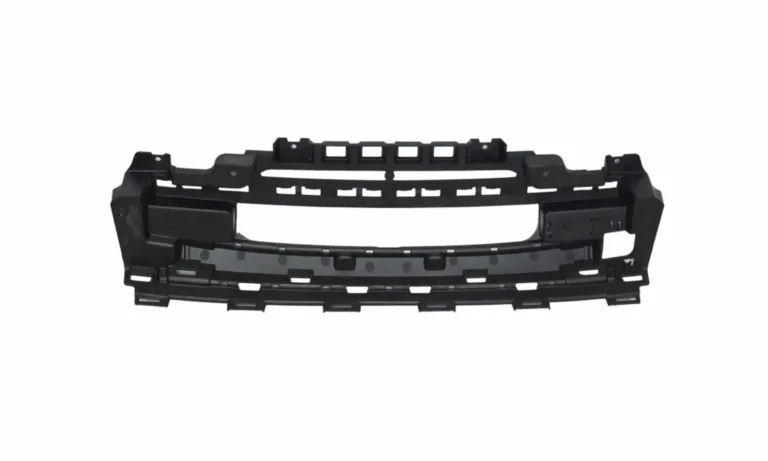


| Procesul de fabricație | Plastic Injection Molding Service & Plastic Mold Making Service & Turnare prin injecție a spumei |
| Piese Material | ABS + PC |
| Tip mucegai | Scule rapide |
| Industria de aplicare | Automobile |
| Tratarea suprafeței | vopsea spray |
| Toleranță (acuratețe) | Piese: ±0.1mm (±0.004″) Mold: ± 0.05mm (± 0.002″) |
Note: Avem acorduri de confidențialitate înainte de comercializare cu toți clienții noștri. Toate cazurile pe care le vedeți au fost comunicate cu clienții noștri. Am mozaicat unele informații sensibile. Toate imaginile sunt preluate din filmările interne ale JBRplas, vă mulțumim pentru sprijin și cooperare~
The automotive inside handle is a critical interior component designed for frequent use, requiring a balance of ergonomic comfort, structural integrity, and aesthetic integration. Its design typically includes ergonomic curves, reinforced mounting points, and concealed clip mechanisms to ensure seamless assembly with door panels. The handle may also feature textured or glossy surfaces to match interior styling, while internal ribs and bosses enhance strength without adding bulk. Mold design must address undercuts for clip retention and ensure consistent surface quality on visible areas.
Customer Requirements for Automotive Inside Handle Production
- Functional Requirements:
- High mechanical durability to withstand repeated pulling forces.
- Precise alignment with door panels and electronic components (e.g., power window switches).
- Aesthetic Requirements:
- Flawless surface finish on visible areas, free of defects like flow marks or sink marks.
- Volume Requirements:
- Medium to high production volumes with cost-effective tooling solutions.
Solutions to Manufacturing Challenges of Inside Handles
- Multi-Slider Systems: Address undercuts for clip retention and complex geometries.
- Replicarea texturii: Laser-etched mold surfaces replicate leather-grain or gloss finishes directly during molding.
- Răcire conformă: Optimized cooling channels reduce cycle time and prevent warpage in thick-to-thin transitions.
- 5-Axis CNC Machining: Achieve ±0.05 mm tolerance for critical features like mounting bosses and clip slots.
- Lustruirea suprafeței mucegaiului: Mirror finishes on Class-A surfaces to eliminate flow lines.
- Selectarea materialului: Glass-fiber-reinforced nylon (PA6-GF) or PC/ABS for strength, heat resistance, and surface finish.
- Parametrii de injectare: Balanced packing pressure and controlled melt temperature to minimize internal stress.
Standarde de funcționalitate
- Mechanical Strength:
- Withstand pull forces up to 500 N without deformation or failure.
- Fatigue testing over 50,000 cycles to simulate real-world usage.
- Precizia asamblării:
- Clip and mounting hole tolerances held within ±0.15 mm for seamless integration.
- Calitatea suprafeței:
- No visible defects on Class-A surfaces; roughness average (Ra) ≤ 1.0 µm.
Standarde privind defectele de turnare prin injecție
- Sink Mark Control:
- Sink depth ≤ 0.3% in reinforced rib areas.
- Warpage Prevention:
- Flatness deviation ≤ 0.5 mm across the entire part.
- Precizia dimensională:
- Critical features (e.g., clip slots) within ±0.1 mm tolerance.
- Material Choice: Glass-fiber-reinforced nylon (PA6-GF) offers high tensile strength and fatigue resistance.
- Reinforced Design: Internal ribs and bosses distribute stress evenly.
- Process Control: Optimized holding pressure and cooling time to prevent voids or weak spots.
- Testing: Mechanical pull tests (up to 500 N) and cyclic fatigue validation.
- Proiectarea matrițelor: Multi-slider systems and collapsible cores form undercuts for clips.
- Simulation Software: Mold flow analysis ensures even filling of thin-walled ergonomic sections.
- High-Precision Machining: 5-axis CNC creates smooth curves and precise clip slots (±0.05 mm).
- Costuri materiale: Reinforced engineering plastics (e.g., PA6-GF) are costlier but essential for durability.
- Mold Complexity: Multi-slide molds increase upfront tooling costs.
- Surface Finishing: Textured or glossy finishes require additional mold etching or post-processing.
- PA6-GF (Nylon with Glass Fiber): High strength, heat resistance, and dimensional stability.
- PC/ABS: Balanced aesthetics and impact resistance for visible handles.
- TPE (Thermoplastic Elastomer): Used for soft-touch overmolded grips.
- Lustruirea mucegaiului: Class-A surfaces polished to Ra ≤ 0.4 µm.
- Gate Optimization: Sub-gates or hot runner systems minimize flow lines.
- Process Tuning: Lower injection speed and higher melt temperature ensure smooth material flow.