PC vs ABS vs PC+ABS — How to Choose the Right Material for Electronics Housings and Consumer Products
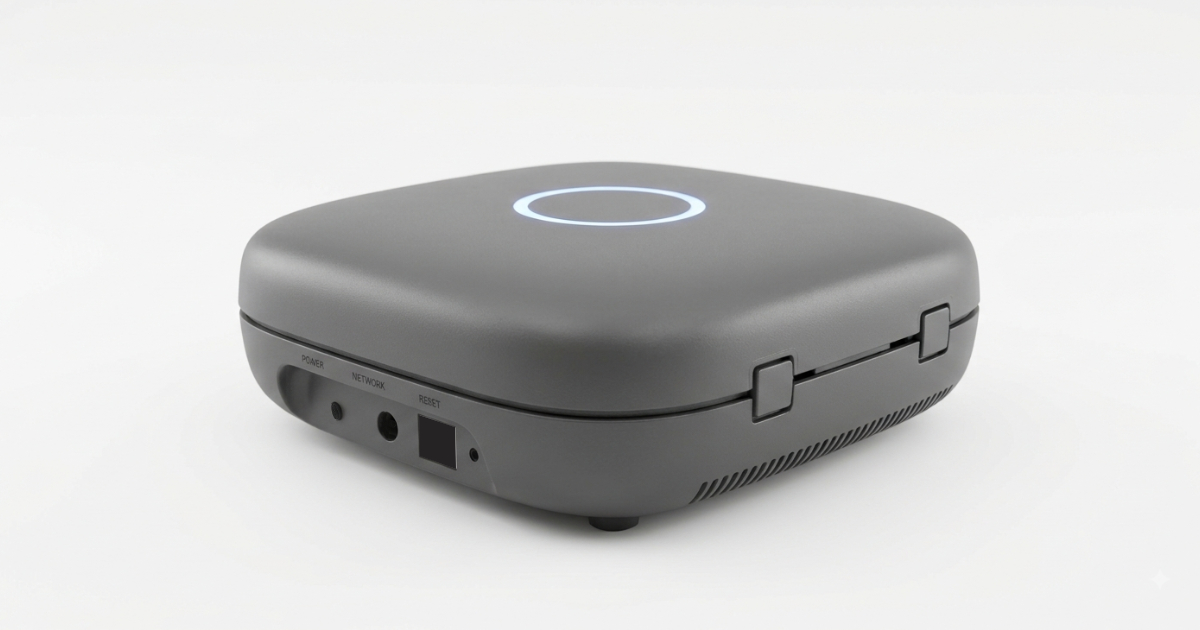
A product engineer at a consumer electronics brand is designing the housing for a smart home hub that will sit on a living room shelf — visible, touched, and expected to look flawless for five years. The design calls for a matte-textured two-piece clamshell with snap-fit assembly, an LED light pipe window, and UL94 V-0 flame retardancy. Annual volume is 200,000 units. Three materials are on the shortlist: PC, ABS, and PC+ABS. The wrong choice produces a housing that cracks at the snap-fit during assembly, yellows under UV exposure from the window, or costs 30% more than it should.
A different engineer — at an automotive Tier 1 supplier — is specifying the material for an OBD diagnostic device housing. The part combines a black PC+ABS connector body with a translucent blue PC section. The connector body must survive 85°C under-dash temperature, resist automotive fluids, and maintain dimensional stability across a −40°C to +85°C thermal range. The translucent section must pass light through for an internal LED indicator without haze or yellowing after 2,000 hours of thermal aging.
PC, ABS, and PC+ABS are the three most commonly specified materials for injection-molded electronics housings, consumer product enclosures, and appliance components. Together they account for roughly 30–35% of all injection-molded plastic parts by volume. They overlap in application space but differ in ways that determine whether a part passes qualification or fails in the field.
This guide provides the engineering comparison — not just the datasheet numbers, but the process behavior, the design implications, and the decision framework that determines which material makes sense for which part.
What Each Material Is
PC (Polycarbonate)
Polycarbonate is an amorphous engineering thermoplastic produced from bisphenol A (BPA) and phosgene. Its defining characteristic is impact resistance — PC is the material that made “bulletproof glass” in polycarbonate sheet form and the material that survives a 2-meter drop test in a power tool housing. Unfilled PC has a notched Izod impact strength that is effectively unmeasurable — the test specimen bends but does not break under standard test conditions.
PC is naturally transparent with 88–90% light transmission, making it the standard material for lenses, light pipes, transparent covers, and any application where optical clarity is required. Colored and opaque grades are achieved with pigment and additive packages.
The trade-offs: PC is the most expensive of the three at $3.50–5.50/kg. It has higher melt viscosity than ABS, requiring higher injection pressures and larger gates. It is notch-sensitive in thick sections — a sharp internal corner that ABS would tolerate without issue can initiate a crack in PC under sustained load. And it is susceptible to environmental stress cracking (ESC) when exposed to certain chemicals — aromatic hydrocarbons, ketones, esters, and some plasticizers — while under mechanical stress.
ABS (Acrylonitrile Butadiene Styrene)
ABS is an amorphous terpolymer — acrylonitrile provides chemical resistance and thermal stability, butadiene provides impact resistance through dispersed rubber particles, and styrene provides rigidity and a glossy surface. This three-component structure is what gives ABS its balance of properties: the butadiene rubber particles absorb impact energy by cavitation (forming microscopic voids that arrest crack propagation), the styrene-acrylonitrile matrix provides stiffness and surface hardness, and the acrylonitrile contributes chemical resistance and heat stability.
ABS is the workhorse of consumer product housings — it flows easily, fills complex geometries with fine surface detail, produces a naturally glossy surface that can be textured to any SPI standard, and costs $2.50–3.50/kg. It processes at lower temperatures than PC and requires lower injection pressures, making it compatible with simpler, lower-cost tooling.
The trade-offs: ABS has lower impact strength than PC, particularly at low temperatures — the butadiene rubber particles lose their energy-absorbing capability as temperature drops, and ABS becomes brittle below approximately −20°C. ABS has lower heat resistance (HDT 85–95°C vs PC’s 125–135°C). It is not naturally flame-retardant — V-0 grades require additive packages that increase cost and reduce impact strength. And it has poor UV resistance — unstabilized ABS exposed to outdoor UV will yellow, chalk, and embrittle within 12–18 months.
ABS is covered in detail alongside PP in the PP vs ABS comparison. This guide focuses on ABS in the context of PC and PC+ABS for electronics and consumer applications.
PC+ABS (Polycarbonate + ABS Blend)
PC+ABS is exactly what the name implies — a physical blend of polycarbonate and ABS, typically in ratios of 50:50 to 70:30 (PC:ABS). The blend is not a random mixture — the PC and ABS phases form a co-continuous morphology at roughly equal proportions, and the PC-rich phase dominates the mechanical and thermal properties at higher PC ratios.
PC+ABS is the pragmatic compromise. It offers roughly 80% of PC’s impact strength at 60–70% of PC’s cost. It processes more easily than pure PC because the ABS component reduces melt viscosity. It has better low-temperature impact than pure ABS because the PC phase remains ductile at temperatures where the butadiene rubber in ABS has lost its toughness. And it has better chemical resistance than pure PC because the ABS phase is less susceptible to environmental stress cracking.
The trade-off: PC+ABS is opaque — the blend is naturally beige to light gray, and while it can be colored to any opaque shade, it cannot be made transparent. If the application requires optical clarity, PC+ABS is not an option. The blend is also slightly more expensive than pure ABS ($2.80–4.00/kg vs $2.50–3.50/kg), though less expensive than pure PC.
Property Comparison
| Property | PC | ABS | PC+ABS (65:35) |
|---|---|---|---|
| Density | 1.19–1.22 g/cm³ | 1.04–1.06 g/cm³ | 1.12–1.16 g/cm³ |
| Tensile strength (yield) | 60–70 MPa | 40–55 MPa | 50–60 MPa |
| Flexural modulus | 2.2–2.5 GPa | 2.0–2.5 GPa | 2.2–2.6 GPa |
| Notched Izod (23°C) | 60–90 kJ/m² (NB) | 15–35 kJ/m² | 35–55 kJ/m² |
| Notched Izod (−20°C) | 10–15 kJ/m² | 8–15 kJ/m² | 15–25 kJ/m² |
| Notched Izod (−40°C) | 8–12 kJ/m² | 3–5 kJ/m² | 8–15 kJ/m² |
| HDT at 1.8 MPa | 125–135°C | 85–95°C | 100–115°C |
| Vicat softening point | 145–150°C | 100–105°C | 115–130°C |
| Transparency | 88–90% (natural) | Opaque (natural: beige) | Opaque (natural: beige-gray) |
| Mold shrinkage | 0.5–0.7% | 0.4–0.7% | 0.4–0.6% |
| Surface hardness (Rockwell R) | 118–122 | 100–110 | 108–118 |
| UV resistance | Good (yellowing after 3–5 years outdoor) | Poor (yellowing after 1–2 years) | Moderate (between PC and ABS) |
| Flame retardancy (natural) | V-2 (self-extinguishing) | HB (slow burning) | HB to V-2 (ratio-dependent) |
| FR grades available | V-0 at 1.5 mm | V-0 at 1.5 mm | V-0 at 1.2–1.5 mm |
| Density × cost factor | $4.20–6.60 per liter | $2.60–3.70 per liter | $3.15–4.65 per liter |
| Relative cost index | 100 (baseline) | 55–65 | 70–80 |
| Cycle time (2.5 mm wall) | 25–35 s | 22–30 s | 23–32 s |
NB = No Break under standard test conditions.
The table tells the story: PC delivers the best mechanical and thermal performance at the highest cost. ABS delivers adequate mechanical performance for most consumer applications at the lowest cost. PC+ABS splits the difference — closer to PC on impact and thermal, closer to ABS on cost and processability.
The low-temperature impact column deserves attention. At −40°C, pure ABS is effectively brittle — a notched Izod of 3–5 kJ/m² means the part will crack rather than deform under impact. Pure PC retains 8–12 kJ/m² at −40°C, a level of toughness that most applications do not need. PC+ABS at −40°C delivers 8–15 kJ/m² — essentially matching pure PC’s low-temperature performance at a lower cost. This is why PC+ABS is the default material for automotive interior components that must survive cold-soak conditions in Northern Europe or Canada, and for consumer electronics that are shipped by air freight in unheated cargo holds.
Processing Comparison
The three materials are all amorphous thermoplastics — they soften gradually over a temperature range rather than exhibiting a sharp crystalline melting point. This makes them more forgiving to process than semicrystalline materials like nylon, but there are differences that affect mold design, machine selection, and cycle time.
Drying Requirements
All three materials are hygroscopic and must be dried before processing. PC is the most moisture-sensitive of the three.
| Parameter | PC | ABS | PC+ABS |
|---|---|---|---|
| Drying temperature | 120°C | 80°C | 90–100°C |
| Drying time | 3–4 hours | 2–4 hours | 3–4 hours |
| Maximum moisture content | <0.02% | <0.10% | <0.04% |
| Consequences of wet material | Splay, brittleness, molecular weight degradation from hydrolysis | Splay, surface defects | Splay, surface defects, reduced impact |
PC’s 0.02% moisture limit is the most demanding of the three — it requires a desiccant dryer with a dew point below −30°C and dried-air conveying to the press hopper. ABS at 0.10% is more tolerant and can be dried with a less stringent setup. PC+ABS at 0.04% falls between them — more demanding than ABS, less stringent than PC.
The hydrolysis risk with wet PC is not just about surface defects. Water at 280–300°C reacts with the carbonate linkages in the PC polymer chain, reducing molecular weight. A PC part molded with material at 0.05% moisture (2.5× above the limit) may look acceptable — no visible splay — but have lost 10–15% of its impact strength due to molecular weight reduction during processing. This is a failure mode that passes visual inspection and fails at the customer’s drop test or in the field.
Barrel Temperature and Melt Viscosity
| Parameter | PC | ABS | PC+ABS |
|---|---|---|---|
| Barrel temperature | 280–320°C | 210–250°C | 240–280°C |
| Melt viscosity (relative) | High | Low | Medium |
| Injection pressure (relative) | High | Low-Medium | Medium |
| Gate size requirement | Larger | Smaller | Medium |
PC’s high melt viscosity means it requires larger gates (minimum 0.8–1.5 mm diameter for unfilled), higher injection pressures, and a machine with adequate plastication capacity for the required shot weight. ABS flows more easily — it fills thin walls, long flow paths, and fine surface detail with lower pressure, making it more forgiving of gate design and mold construction.
PC+ABS splits the difference on processing — the ABS component reduces the overall melt viscosity, making PC+ABS flow better than pure PC. This is one of the practical reasons PC+ABS is preferred over PC for large, complex housings — the easier flow means lower clamp force requirements, fewer gate locations, and fewer filling-related defects.
Mold Temperature and Surface Finish
| Parameter | PC | ABS | PC+ABS |
|---|---|---|---|
| Mold temperature | 80–120°C | 40–80°C | 60–90°C |
| High-gloss achievable | Yes (SPI A1-A2) | Yes (SPI A1-A2, lower mold temp) | Yes (SPI A2) |
| Texture reproduction | Good | Excellent | Good |
| Mold cooling demands | Higher | Lower | Medium |
ABS achieves an excellent surface finish at relatively low mold temperatures (50–60°C), which means simpler, lower-cost mold temperature control. PC requires mold temperatures of 80–100°C for good surface finish and to minimize molded-in stress, which means a mold temperature controller capable of maintaining these temperatures consistently across the cavity surface.
PC+ABS at 70–85°C mold temperature is closer to ABS than PC in its surface finish requirements — it produces a good surface at temperatures that are achievable with pressurized water rather than requiring oil heating.
The practical implication for mold design: a mold intended to run ABS can often run PC+ABS without modification to the cooling system, but may need upgrades to run PC — larger cooling channels, higher-capacity mold temperature controller, and potentially more cooling circuits to handle the higher heat load.
Impact Behavior — The Critical Difference
The single most important difference between PC, ABS, and PC+ABS is how they behave under impact — particularly as temperature drops, and particularly at geometric stress concentrations.
The Ductile-to-Brittle Transition
PC remains ductile down to approximately −30°C in unnotched sections and approximately −10°C in notched sections. It does not have a sharp ductile-to-brittle transition — the impact strength decreases gradually with temperature.
ABS has a sharper transition. At 23°C, the butadiene rubber particles in ABS absorb impact energy effectively through cavitation. As temperature drops, the rubber phase stiffens, and the energy absorption mechanism becomes less effective. Below approximately −20°C, standard ABS grades become effectively brittle — a notched impact at −30°C produces a clean fracture with minimal deformation.
PC+ABS extends the low-temperature ductility of ABS by roughly 20–30°C. The PC phase remains ductile at temperatures where the ABS butadiene phase has become brittle, providing a second energy-absorption mechanism. The result: PC+ABS at −30°C has roughly the same impact resistance as ABS at 23°C.
What this means for part design: A consumer electronics housing that must survive a 1.5-meter drop test at 23°C can pass in any of the three materials. The same housing tested at −20°C — simulating winter shipping or outdoor use — may pass in PC or PC+ABS but fail in ABS. The deciding factor is the test temperature, not the room-temperature properties.
Notch Sensitivity
PC and PC+ABS are more notch-sensitive than ABS. This is counterintuitive — how can a material with higher impact strength be more notch-sensitive?
The mechanism: ABS absorbs impact energy through cavitation of the butadiene rubber particles distributed throughout the volume of the material. A sharp notch concentrates stress at a point, but the rubber particles are everywhere — the material has an inherent damage-tolerance mechanism that works regardless of geometry.
PC absorbs impact energy through shear yielding — the polymer chains slide past each other under stress, creating a shear band that dissipates energy over a volume. A sharp notch prevents shear band formation by concentrating stress at a single point before the surrounding material can yield. The result: a PC part with a 0.2 mm internal corner radius can have lower impact strength than an ABS part with the same geometry, despite PC having 2–3× the notched Izod value.
The design implication: sharp internal corners — at rib roots, boss bases, and wall transitions — are expensive in PC and PC+ABS in a way they are not in ABS. The standard DFM rule of 0.5 mm minimum internal radius is more important for PC and PC+ABS than for ABS. ABS forgives sharp corners; PC does not.
Thick-Section Brittleness in PC
PC has a behavior that ABS and PC+ABS do not share: it can become brittle in thick sections. In sections above approximately 6 mm, the cooling rate is slow enough that the PC polymer chains have time to relax and form a denser packing. This reduces the free volume available for shear yielding — the mechanism that gives PC its impact resistance — and the material becomes more susceptible to brittle fracture.
This is not typically a problem in electronics housings, where wall thickness is 2.0–3.0 mm. But it matters for structural brackets, mounting bosses, and any thick section in a PC part. If the part has sections thicker than 6 mm, ABS or PC+ABS may actually deliver more reliable impact performance than pure PC.
Chemical Resistance — The ESC Factor
Environmental stress cracking (ESC) is the most common chemical-related failure mode in injection-molded plastic parts — and the three materials have significantly different ESC susceptibility.
PC is the most ESC-sensitive of the three. The carbonate linkages in the PC polymer chain are susceptible to attack by a wide range of common chemicals — aromatic hydrocarbons (toluene, xylene, benzene), ketones (acetone, MEK), esters, chlorinated solvents, and even some plasticizers used in PVC wire insulation. The failure mechanism: the chemical attacks the polymer at a surface flaw or stress concentration, the crack propagates under the residual molded-in stress or applied service load, and the part fails at a load far below its rated mechanical strength.
The practical consequence: a PC housing that contacts a PVC wire grommet containing a phthalate plasticizer can develop cracks over weeks to months of service with no externally applied load beyond the assembly stress from the grommet itself. A PC medical device housing cleaned with an alcohol-based disinfectant can craze and crack after repeated wipe-downs.
ABS is the most ESC-resistant of the three. The acrylonitrile component provides chemical resistance across a broad range of common chemicals, and the butadiene rubber particles act as crack arrestors that limit ESC propagation. ABS is resistant to alcohols, dilute acids and bases, and most oils and greases. It is attacked by ketones, esters, and aromatic hydrocarbons — but the list of problem chemicals is significantly shorter than for PC.
PC+ABS falls between them. The ABS phase provides some protection against ESC, but the PC phase remains susceptible. PC+ABS is more resistant than pure PC to alcohols, dilute chemicals, and cleaning agents — which is one reason it is preferred over PC for consumer electronics housings that may be cleaned with household products. But it is not as resistant as pure ABS.
Selection rule: If the part will be exposed to cleaning chemicals, solvents, oils, or unknown chemicals during its service life, ABS is the safest choice from an ESC perspective. If impact and thermal requirements rule out ABS, PC+ABS is the next best option — it provides more chemical resistance margin than pure PC. If the application demands PC’s optical clarity, the chemical environment must be carefully characterized and tested before production release.
Surface Finish, Color, and Aesthetics
Transparency and Color Options
PC is the only transparent option. Natural PC transmits 88–90% of visible light with a slight blue-yellow tint. It can be tinted to any transparent or translucent color (red, green, blue, amber) with dyes. Opaque colors are achieved with pigments — PC can be colored to match any Pantone or RAL reference, though high-gloss dark colors require careful mold surface preparation to avoid visible flow lines and gate blush.
ABS and PC+ABS are naturally opaque and can be colored to any opaque shade. ABS produces a naturally high-gloss surface that can be reduced to any texture level through mold surface treatment. PC+ABS has a slightly less glossy natural surface than ABS due to the PC phase, but the difference is subtle and both materials achieve Class A cosmetic finishes with correct mold preparation.
UV Stability and Yellowing
Indoor consumer electronics rarely face UV exposure challenges. Products used near windows, in vehicles, or outdoors face a different situation.
PC: Naturally UV-stabilized for indoor use through UV absorbers added during compounding. Outdoor-grade PC with enhanced UV stabilization (typically a co-extruded UV cap layer or higher additive loading) resists yellowing for 5–10 years of outdoor exposure. Indoor PC under fluorescent or LED lighting shows negligible yellowing over a 10+ year service life.
ABS: The butadiene rubber phase is inherently UV-sensitive. Unstabilized ABS exposed to direct sunlight will yellow visibly within 6–12 months and develop surface chalking (degradation of the surface polymer layer into a powdery residue) within 18–24 months. UV-stabilized ABS grades extend outdoor life to 3–5 years. For indoor use — the vast majority of ABS consumer electronics — UV degradation is not a practical concern.
PC+ABS: Falls between PC and ABS on UV resistance. The PC phase is more UV-stable than ABS, and the blend as a whole degrades more slowly than pure ABS. For indoor use, no practical UV concern. For products near windows, UV-stabilized PC+ABS grades are recommended.
Selection rule: For indoor consumer electronics under normal use, any of the three materials will maintain acceptable appearance over the product’s service life. For products exposed to direct or indirect sunlight — automotive interior components, window-mounted devices, outdoor equipment housings — PC or UV-stabilized PC+ABS is preferred over ABS.
Flame Retardancy
Flame retardancy is the most common hard requirement in electronics housing material selection. The relevant standard for most consumer and IT equipment is UL94 — a small-flame ignition test that classifies materials based on burning behavior.
| Material | Natural Rating | Best FR Rating Achievable | Minimum Thickness for V-0 | Typical FR Technology |
|---|---|---|---|---|
| PC | V-2 | V-0 | 1.5 mm | Inherent — PC chars rather than drips |
| ABS | HB | V-0 | 1.5 mm | Brominated FR + antimony trioxide synergist |
| PC+ABS | HB to V-2 | V-0 | 1.2 mm | Phosphate ester FR (non-halogen) or brominated FR |
PC is inherently flame-resistant — it chars and forms a protective layer when exposed to flame, and the char limits further burning. Natural PC achieves V-2 without FR additives because it self-extinguishes, though burning droplets (the reason for the “2” rather than “0”) can be addressed with anti-drip additives. V-0 PC at 1.5 mm is achievable with minimal FR additive loading because the base polymer already does most of the work.
ABS is inherently flammable. Achieving V-0 requires brominated flame retardants (typically tetrabromobisphenol A or brominated epoxy oligomers) combined with antimony trioxide as a synergist. The FR additive package typically represents 15–25% of the compound by weight and increases the material cost by 30–50% compared to standard ABS. It also reduces impact strength by 20–30% — the FR particles act as stress concentrators that reduce the effectiveness of the butadiene rubber toughening mechanism.
PC+ABS benefits from PC’s inherent FR behavior. Phosphate ester flame retardants — such as resorcinol bis(diphenyl phosphate) (RDP) or bisphenol A bis(diphenyl phosphate) (BDP) — are effective in PC-rich blends because they work synergistically with the PC charring mechanism. These non-halogen FR systems avoid the environmental and regulatory concerns associated with brominated FRs, which is a growing consideration for products sold in the EU under REACH and WEEE regulations.
Selection rule: If V-0 is required at wall thickness ≤1.5 mm, PC+ABS with a phosphate ester FR system is typically the most cost-effective option that avoids halogenated FRs. PC is the choice if regulatory or customer specifications prohibit FR additives entirely (the material achieves V-2 on its own and can reach V-0 with minimal additive loading). ABS with brominated FR is the lowest-cost V-0 option but carries the weight of halogen content and the associated impact strength penalty.
Application Mapping
When to Choose PC
Choose polycarbonate when the application requires one or more of:
- Transparency or translucency. LED light pipes, transparent covers, windows, lenses. PC is the only option among the three.
- Maximum impact resistance at room temperature. Power tool housings that must survive repeated drops onto concrete. Safety equipment housings. Products where a housing crack during a drop creates an electrical shock hazard.
- High heat resistance. Parts exposed to temperatures above 100°C — near-engine components, steam-sterilized medical devices, parts near high-wattage electronics.
- Inherent flame retardancy. Medical and aerospace applications where FR additives are prohibited or severely restricted.
Example: a Type-C charger housing requires V-0 at 1.5 mm wall thickness in a compact geometry where the charger’s internal electronics generate enough heat to raise the housing temperature to 85°C during fast-charge operation. PC handles the thermal load, meets the FR requirement with minimal additive loading, and provides the impact resistance needed for a product that is plugged and unplugged thousands of times over its service life.
When to Choose ABS
Choose ABS when the application prioritizes:
- Lowest material and processing cost. Consumer products with competitive retail pricing. High-volume disposable or short-lifespan products.
- Best surface finish at lowest mold cost. Products where cosmetic appearance is important but the budget does not support the higher mold temperatures PC requires.
- Best chemical resistance. Products exposed to cleaning agents, oils, or unknown consumer chemicals.
- Easiest processing. Complex geometries with thin walls, long flow paths, and fine surface detail. Multi-cavity tools where balanced filling is critical.
Example: a beauty device housing requires a deep-draw cosmetic enclosure with decorative ribs, metallic painting, and a soft-touch feel. ABS fills the deep cavity with excellent surface detail reproduction, accepts the paint finish, and costs 30–40% less in material than an equivalent PC housing. The device is used indoors at room temperature — impact and thermal requirements are modest, and chemical exposure is limited to cosmetic products that ABS resists.
When to Choose PC+ABS
Choose PC+ABS when the application needs:
- Better impact than ABS, lower cost than PC. The most common reason. Consumer electronics that must survive a 1–1.5 m drop test at room temperature and occasionally at low temperature (shipping). Automotive interior components that must pass cold-temperature impact requirements.
- Better processing than PC. Large, complex housings where PC’s high melt viscosity would require excessive clamp force or multiple gate locations.
- Better chemical resistance than PC. Products that will be handled by consumers and exposed to hand creams, cleaning sprays, and household chemicals.
- Non-halogen V-0 at ≤1.5 mm. Consumer electronics sold in the EU where brominated FRs are restricted by customer specification or anticipated regulation.
Example: an OBD diagnostic device uses PC+ABS for the connector body — it meets the 85°C under-dash thermal requirement, survives the −40°C cold-soak impact test, resists automotive fluids better than pure PC, and costs less than an all-PC housing. The translucent indicator window, where optical clarity is required, is molded in pure PC — the right material for each function rather than one material for the entire assembly.
Quick Decision Table
| Requirement | PC | ABS | PC+ABS |
|---|---|---|---|
| Lowest cost per part | ✓ | ||
| Best room-temperature impact | ✓ | ||
| Best low-temperature impact (−30°C) | ✓ | ✓ | |
| Transparency required | ✓ | ||
| Best surface gloss (low mold temp) | ✓ | ||
| Best chemical resistance | ✓ | ||
| Highest heat resistance | ✓ | ||
| Inherent flame retardancy | ✓ | ||
| Easiest to process (lowest pressure) | ✓ | ||
| Best for large complex housings | ✓ | ||
| Non-halogen V-0 at ≤1.5 mm | ✓ | ✓ | |
| UV resistance (indoor near windows) | ✓ | ✓ | |
| Food contact | ✓ (FDA grades) | Limited | ✗ (not typical) |
Mold Design Considerations
Shrinkage and Cavity Dimensions
The three materials have similar mold shrinkage — 0.4–0.7% — which is tight compared to semicrystalline materials like PP (1.0–2.5%) and nylon (1.2–1.8%). This relatively low and consistent shrinkage is one of the reasons they are preferred for precision housings where dimensional control matters.
The practical implication: a mold designed for ABS can often run PC+ABS with acceptable dimensional results because the shrinkage ranges overlap. A mold designed for ABS may need cavity steel modification to run PC — PC’s slightly higher shrinkage (0.5–0.7% vs ABS’s 0.4–0.6%) means the cavity may need to be cut slightly larger to achieve the same part dimensions.
Ejection
PC and PC+ABS have higher ejection force requirements than ABS because they have higher stiffness at ejection temperature and tend to grip the core more tightly. Ejector pin area, stripper plate design, and draft angles should be more conservative for PC and PC+ABS — minimum 1° draft on the core side vs 0.5° that may work for ABS on shallow geometries.
PC+ABS specifically can exhibit sticking behavior on the core during ejection if the mold temperature is too low — the ABS phase contracts while the PC phase is still warm enough to grip. Maintaining the recommended mold temperature range (60–90°C) and ensuring adequate draft angle (≥1° on textured surfaces) prevents ejection problems.
Venting
PC’s high melt viscosity means it is less prone to flash through vents than ABS, but more prone to gas entrapment — the higher injection pressure forces gas into corners and rib tips, and the higher melt viscosity prevents the gas from escaping through normal vent clearances. Vent depth of 0.02–0.03 mm is standard for PC. ABS can use slightly larger vents (0.03–0.04 mm) because its lower melt viscosity provides less resistance to vent flow, but is more prone to flash if vents are too deep.
Cost Comparison
Cost is typically the deciding factor for applications where any of the three materials could work. The comparison includes both material cost and processing cost.
| Cost Element | PC | ABS | PC+ABS |
|---|---|---|---|
| Material ($/kg) | $3.50–5.50 | $2.50–3.50 | $2.80–4.00 |
| FR grade premium | +10–15% | +30–50% | +15–25% |
| Density (g/cm³) | 1.20 | 1.05 | 1.14 |
| Material cost per liter of part volume | $4.20–6.60 | $2.60–3.70 | $3.20–4.55 |
| Drying energy cost | Higher (120°C, 3–4h) | Lower (80°C, 2–4h) | Medium (95°C, 3–4h) |
| Cycle time (relative) | 100% (baseline) | 85–90% | 90–95% |
| Mold temperature cost | Higher (80–120°C) | Lower (40–80°C) | Medium (60–90°C) |
| Mold wear (unfilled) | Low | Low | Low |
For a typical consumer electronics housing — 150 g part weight, 2.5 mm wall thickness, 200,000 annual volume — the per-part material cost difference between ABS and PC is approximately $0.30–0.40, which translates to $60,000–80,000 per year in material cost alone. When the additional cycle time and energy cost of processing PC are included, the total per-part cost premium for PC over ABS can reach $0.50–0.60 per part — $100,000–120,000 per year at 200,000 units.
PC+ABS typically costs $0.15–0.25 more per part than ABS and $0.20–0.35 less than PC. This is the sweet spot — better performance than ABS at a cost that is closer to ABS than to PC.
The plastic part cost reduction guide covers material cost optimization in detail.
The Decision Sequence
When a material has not yet been specified, the following sequence produces the right answer more reliably than starting with a preferred material and working backward:
- Is transparency required? → PC. End of decision.
- What is the lowest temperature the part must survive an impact? → If below −20°C, eliminate ABS. If below −30°C, consider PC or PC+ABS only.
- What chemicals will the part contact? → If the chemical list includes aromatics, ketones, esters, or strong solvents, eliminate PC. If the list is unknown or consumer-variable, prefer ABS or PC+ABS.
- What flame rating is required? → If V-0 at ≤1.5 mm without halogenated FRs is required, prefer PC+ABS (phosphate ester) or PC.
- What is the peak service temperature? → If above 95°C, eliminate ABS. If above 110°C, only PC.
- What is the cost target? → If the answers to 1–5 do not force a specific material, cost becomes the decider. ABS is the lowest-cost option. PC+ABS is the best value for performance-per-dollar. PC is chosen only when the application demands it.
PC, ABS, and PC+ABS are three of the most versatile and widely used injection molding materials — and three of the most frequently mis-specified. The error usually runs in one direction: specifying PC because “it’s the strongest” for an application where ABS would meet every requirement at 40% lower cost, or specifying ABS for an application that must survive a −30°C impact during shipping.
The correct material is the one that meets every functional requirement — mechanical, thermal, chemical, and regulatory — at the lowest total cost. A housing that never sees temperatures above 60°C, never sees chemicals beyond mild household cleaners, and is used indoors at room temperature does not need PC. A housing that must pass a 1.5-meter drop test onto concrete at −30°C does not have ABS as an option.
PC+ABS is the default answer for the majority of consumer electronics and automotive interior applications for a reason: it provides the impact and thermal performance that the application needs at a cost that the bill of materials supports. It is the compromise that works.
Discuss material selection for your injection molding project →