Injection Molding vs Urethane Casting — How to Choose the Right Process for Low-to-Mid Volume Plastic Parts
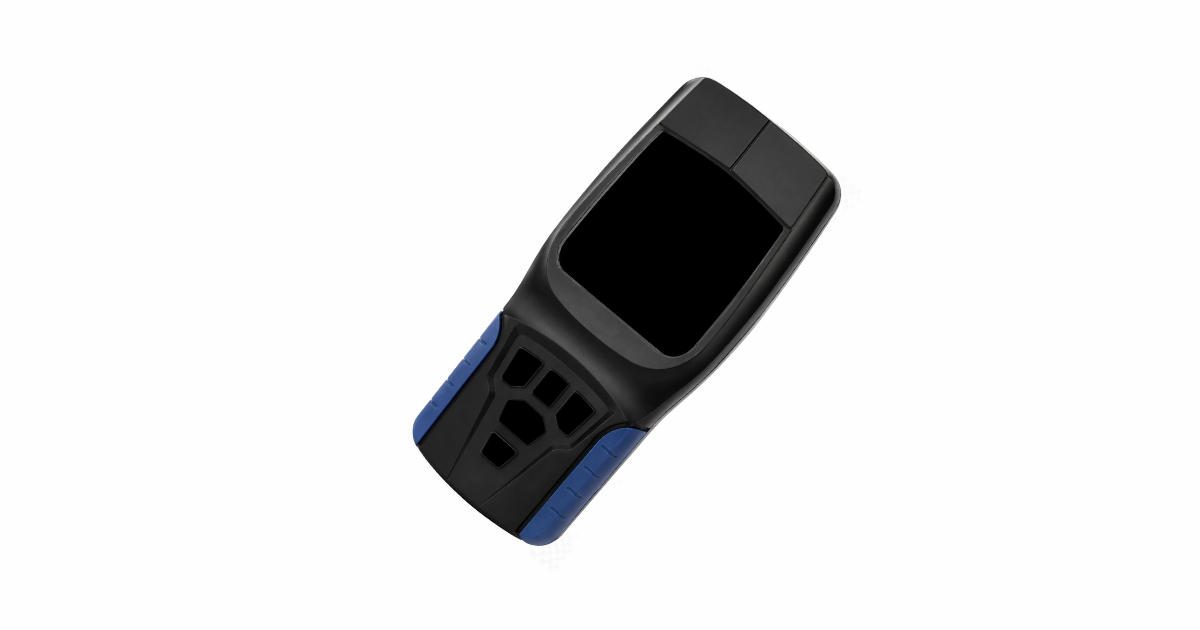
A product development team at a medical device startup has finalized the design of a handheld diagnostic instrument housing — ABS, 95 × 55 × 22 mm, 2.0 mm wall, with snap-fit assembly and a transparent PC window overmolded in a second step. The business plan calls for 500 units for clinical trials in month one, scaling to 2,000 units for initial market launch in month six, and reaching 15,000 units per year by month eighteen. The team has a production budget of ¥180,000 for tooling and an acceptable per-part cost of ¥35 at launch volumes.
The business plan calls for injection molding at 15,000 units per year. But the steel mold costs ¥65,000 and takes five weeks to T1. The clinical trial units are needed in three weeks. The alternatives are: CNC machine the housings from ABS sheet stock (¥220 per part, 3 days lead time), 3D print them (¥85 per part, acceptable cosmetic quality but no snap-fit durability), or urethane cast them (¥45 per part, 10 days for the silicone tool, 20–25 parts per mold per day).
Urethane casting occupies the space between one-off prototyping and production injection molding — from roughly 10 to 5,000 units, where the per-part economics of hard tooling have not yet crossed over but the per-part cost of machining or 3D printing is too high. Like low-volume injection molding, it serves the volume range where the unit economics are the dominant process selection criterion. It is also the standard bridge production method: producing parts in production-equivalent material while the steel injection mold is being built, so that clinical testing, regulatory submission, or market validation can proceed in parallel with tooling. This bridge approach is the companion strategy to rapid tooling — urethane casting covers the 10–500 unit window where even an aluminum prototype mold is not yet justified.
How Urethane Casting Works
The process starts with a master pattern — typically a 3D-printed or CNC-machined part that represents the final geometry. The master is suspended in a mold box, and liquid silicone rubber is poured around it. After the silicone cures (typically 16–24 hours at room temperature), the mold is cut open along a predetermined parting line and the master is removed. The result is a flexible silicone cavity that faithfully reproduces the master’s surface finish and geometry.
To make a part, a two-component liquid urethane resin is mixed, degassed under vacuum, and poured into the silicone mold. The mold is placed in a pressure chamber at 4–6 bar to collapse any remaining air bubbles. The urethane cures — typically 30–90 minutes at 60–80°C — and the part is demolded. The silicone mold is reusable for approximately 20–30 castings before the cavity surface degrades and the dimensional accuracy drifts beyond tolerance.
The process is manual, slow, and produces small quantities per mold per day. A single silicone mold producing 25 parts per day can deliver approximately 500 parts per month — adequate for clinical trials, pilot production, and bridge volumes.
The Cost Crossover — Where Each Process Wins
The economic comparison between urethane casting and injection molding is defined by two curves: the amortized tooling cost per part decreases with volume, and the per-part production cost (material + labor + machine time) is roughly constant.
| Volume (units) | Urethane Casting Cost/Part | Injection Molding Cost/Part | Lower-Cost Process |
|---|---|---|---|
| 10 | ¥180–250 | ¥2,500–4,000 | Urethane casting |
| 100 | ¥80–120 | ¥280–420 | Urethane casting |
| 500 | ¥45–65 | ¥70–95 | Urethane casting |
| 1,000 | ¥40–55 | ¥42–58 | Roughly equal |
| 3,000 | ¥35–50 | ¥18–25 | Injection molding |
| 5,000 | ¥32–48 | ¥11–16 | Injection molding |
| 10,000 | ¥30–45 | ¥7–11 | Injection molding |
| 50,000 | N/A (process not viable) | ¥3–5 | Injection molding only |
The crossover point — where injection molding becomes cheaper per part than urethane casting — is typically between 800 and 1,500 units for parts in the 50–200 g range. Above 5,000 units, urethane casting is rarely economically competitive. Below 500 units, injection molding is rarely economically justifiable unless the part requires material properties that urethanes cannot provide.
The injection molding cost breakdown is dominated by the steel mold amortization at low volumes. A ¥65,000 mold spread across 500 parts adds ¥130 per part in tooling cost alone — more than the total per-part cost of urethane casting. At 10,000 parts, the tooling amortization drops to ¥6.50 per part, and the per-part production cost of ¥4–7 makes injection molding the clear winner.
Material Properties — Urethane vs. Thermoplastic
Urethane casting resins are thermosets — they cure by a chemical reaction that cross-links the polymer chains, rather than by cooling from a melt like thermoplastics. The cross-linked structure gives urethanes excellent toughness and chemical resistance, but the material properties differ from injection-molded thermoplastics in several important ways:
| Property | Cast Urethane (Simulating ABS) | Injection-Molded ABS | Delta |
|---|---|---|---|
| Tensile strength | 45–55 MPa | 40–50 MPa | Comparable |
| Flexural modulus | 1.8–2.4 GPa | 2.0–2.5 GPa | Similar |
| Notched Izod impact | 80–120 J/m | 200–350 J/m | Urethane 50–65% lower |
| Heat deflection temp | 70–85°C | 85–95°C | Urethane ~10°C lower |
| UV resistance | Poor (yellows without additives) | Moderate (UV-stabilized grades available) | ABS superior |
| Colorability | Limited (pigmented resin mix) | Full range (pre-colored pellets or masterbatch) | Injection molding superior |
| Wall thickness capability | 1.5 mm minimum (flow limited) | 0.5–1.0 mm typical | Injection molding superior |
| Shrinkage | 0.1–0.3% (very low) | 0.5–0.7% (ABS) | Urethane lower |
The key material limitation of urethane casting is impact strength. A snap-fit that survives 50 assembly cycles in injection-molded ABS may fail after 10–15 cycles in a cast urethane simulating ABS. The cross-linked structure that gives urethanes their toughness in bulk is brittle at the high-strain, small-cross-section conditions of a snap-fit beam. For applications with snap-fits, living hinges, or other high-strain features, urethane casting is a functional test of geometry but not a reliable predictor of injection-molded durability. The material selection for production should be finalized separately, using injection-molded test specimens for the DFM validation.
The second limitation is heat resistance. Most general-purpose casting urethanes have a heat deflection temperature 10–20°C below their injection-molded thermoplastic counterparts. A medical device that must survive 134°C autoclave sterilization cannot be evaluated with a cast urethane part — the urethane will soften and distort. For high-temperature applications, the only valid process for functional testing is injection molding in the production material.
Mold Cost and Lead Time
| Parameter | Silicone Mold (Urethane Casting) | Steel Mold (Injection Molding) |
|---|---|---|
| Mold material | Silicone rubber (Shore A 30–50) | P20 / 718H / H13 steel |
| Mold cost | ¥3,000–8,000 | ¥35,000–80,000+ |
| Lead time to first part | 5–10 days | 18–30 days (domestic) |
| Mold life | 20–30 castings | 100,000–500,000+ shots |
| Cavities | 1 (typically) | 1–16+ |
| Surface finish reproduction | Excellent — replicates master exactly | Excellent — SPI A-1 to VDI 45 |
| Dimensional tolerance | ±0.15–0.25 mm (mold shrinkage) | ±0.05–0.15 mm (process-dependent) |
| Undercut capability | Excellent — flexible mold releases undercuts without side actions | Requires lifters, slides, or collapsible cores |
| Design changes | New silicone mold (¥3,000–8,000, 5–10 days) | Steel modification or new insert (¥5,000–20,000, 7–21 days) |
The silicone mold’s flexibility is both its advantage and its limitation. The mold releases undercuts without side actions, which means parts with complex snap-fit geometry can be cast without the tooling complexity that injection molding requires — a significant cost and lead time advantage for geometrically complex parts at low volumes. But the mold degrades with each casting — the silicone absorbs urethane resin components, swells, and loses dimensional accuracy. By casting 25–30, the cavity surface shows visible deterioration, and the part dimensions begin to drift by 0.1–0.2 mm.
If the part requires undercuts that would demand side actions in a steel mold, urethane casting’s flexible mold is a cost-effective way to validate the undercut geometry before committing to the injection mold design. It serves as a functional prototype process that simultaneously validates the part design and buys time for the production tooling.
Surface Finish — The Master Pattern Advantage
Urethane casting reproduces the surface finish of the master pattern with exceptional fidelity. If the master is polished to an SPI A-1 finish, the cast parts will have an SPI A-1 finish. If the master is textured, the cast parts will reproduce the texture. This is a significant advantage over machined or 3D-printed prototypes, which require post-processing to achieve cosmetic surface quality.
For the medical device team’s housing — which requires a matte finish on the exterior and a polished transparent window — the master pattern would be built with both finishes applied, and the silicone mold would faithfully reproduce both in every casting. The surface finish standards that apply to injection-molded parts apply equally to the master pattern: the casting reproduces whatever the master provides. The cast parts would be cosmetically indistinguishable from injection-molded production parts — a critical requirement for clinical trial units that will be handled by clinicians who form quality impressions based on the device’s look and feel.
Process Selection Decision Framework
| Criterion | Choose Urethane Casting When… | Choose Injection Molding When… |
|---|---|---|
| Volume | 10–1,500 units total | >1,500 units total or >5,000/year |
| Lead time | Parts needed in <2 weeks | 4–8 weeks available for tooling |
| Material requirements | Mechanical properties not critical; HDT <85°C | Production material properties required; high heat or impact |
| Cosmetic requirements | Production-equivalent surface finish required at prototype volume | Consistent batch-to-batch color and finish required |
| Geometry | Complex undercuts that would require side actions | Thin walls (<1.5 mm), tight tolerances (±0.10 mm or tighter) |
| Budget | <¥10,000 for tooling | Tooling budget available for production mold |
| Functional testing | Form and fit validation; limited functional testing | Full functional, reliability, and regulatory testing |
The medical device team at the opening of this article made the standard bridge production decision: urethane casting for the 500 clinical trial units (¥45/part, 10-day silicone mold, production-equivalent cosmetic quality), followed by a steel injection mold for the 2,000-unit launch build and the 15,000-unit annual production. The silicone mold cost ¥6,000 and delivered parts in 12 days. The clinical trial proceeded on schedule while the steel mold was being built. The per-part cost at 15,000 units with injection molding was ¥6.80 — a factor of 6.6× lower than the urethane casting cost at 500 units.
Urethane casting is not a replacement for injection molding. It is a complement — the process that fills the volume gap between prototype and production, and the time gap between design freeze and T1 delivery. Used strategically, it allows product development and tooling to proceed in parallel rather than in sequence — the same logic that makes rapid tooling valuable for projects where the volume is high enough to justify a steel mold but the lead time cannot wait for one.