Trust & Security
IP Protection & NDA — How We Protect Your Design
How JBRplas protects customer intellectual property — NDA process, file access control, mold ownership, contractual protections, and compliance with China IP laws. ISO 9001 & 13485 certified manufacturer in Shenzhen.
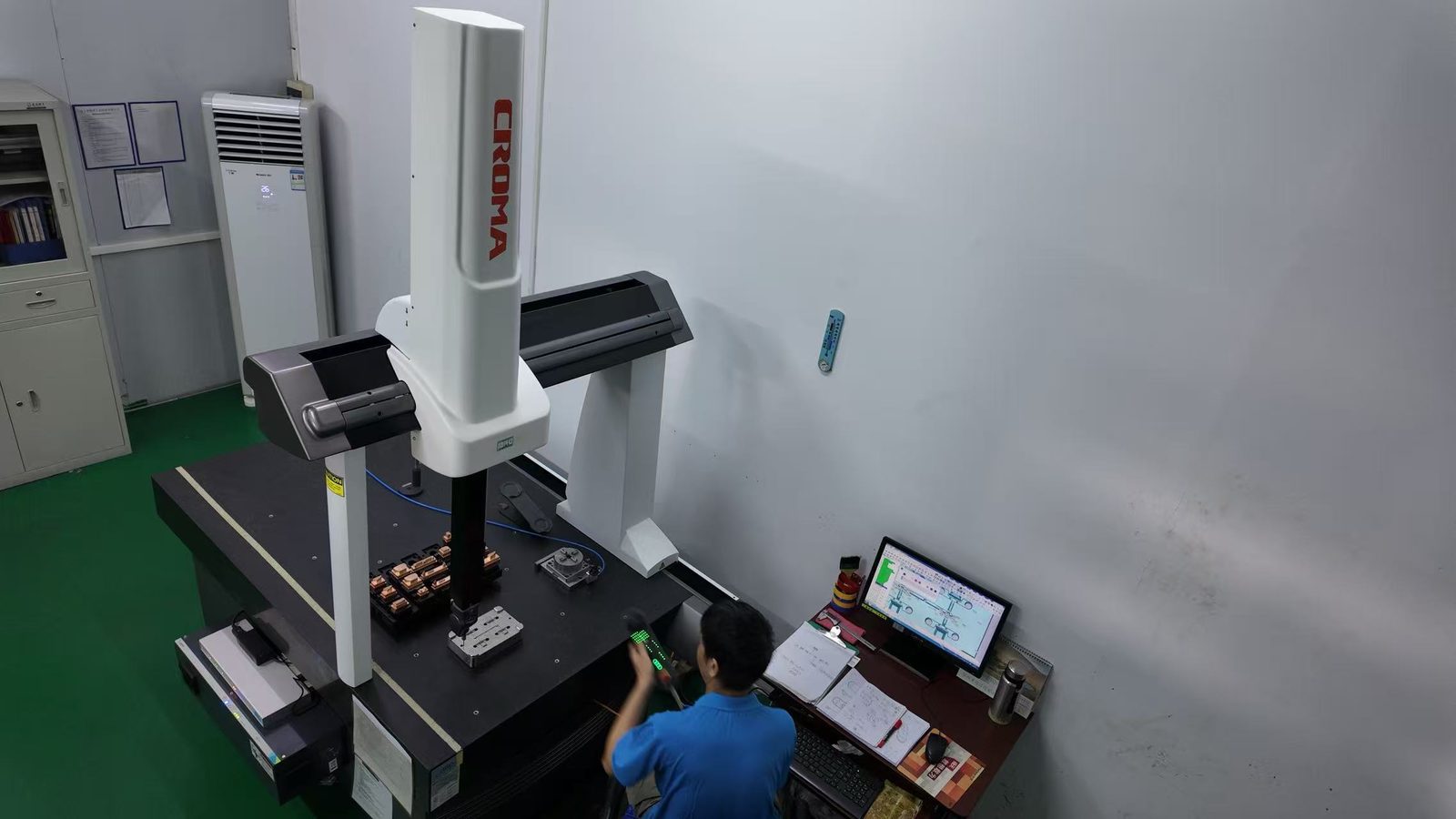
Sending your 3D design files to a manufacturing supplier, particularly one in another country, is a decision that involves real risk. Procurement engineers evaluating Chinese injection molding partners consistently rank intellectual property protection as their primary concern — ahead of price, lead time, and even quality.
We understand why. Every customer who works with JBRplas is trusting us with the physical embodiment of months or years of product development. This page explains exactly how we handle that trust — not with vague assurances, but with specific processes, contractual commitments, and a 30-year track record of serving global OEM clients without a single IP dispute.
1. NDA Process: Signed Before a Single File Is Opened
We sign non-disclosure agreements as standard practice before reviewing any customer design files. The process is straightforward:
- You send us your NDA, or we send you ours. We maintain a standard mutual NDA template — a one-page document in plain English — available for download below. If your organisation has its own NDA, we review and sign it, typically within one business day.
- NDA is signed before files are exchanged. We do not open, download, or distribute your 3D files until a signed NDA is in place. This is policy, not a suggestion. Our engineering team will not begin DFM analysis until the NDA is confirmed.
- Signed copy returned immediately. We return a countersigned PDF within 24 hours. You receive the signed document before any technical review begins.
- NDA covers the full project lifecycle. The confidentiality obligation extends from the initial RFQ through tooling, production, and post-production — and survives the termination of the business relationship for a defined period (typically 5 years).
Download our standard NDA template ->
This is a one-page mutual NDA in standard English. If your legal team prefers your own NDA, email it to info@jbrplas.com — we return a signed copy within 24 hours.
2. File Handling & Storage: Access Control
Once an NDA is in place and we receive your design files, a defined access control framework governs how those files are handled:
Who can access:
- The assigned project engineer (one person) who performs the DFM analysis
- The tooling design engineer (one person) who designs the mold
- The quality manager (one person) who sets up the inspection plan
That is three people — maximum — for a standard project. No other employee has access to your files.
How files are stored:
- Customer design files are stored on an access-controlled network drive, not on individual workstations
- File access is logged: every file open, copy, or export is recorded with timestamp and user ID
- Files are never stored on personal devices, external drives without encryption, or cloud services outside our controlled infrastructure
- After project completion, customer files are archived with access restricted to a single administrative account
What does not happen:
- Your files are never shared with other customers
- Your parts are never shown to other customers during factory tours
- Your mold is never presented in our portfolio without explicit written permission
- Your project is never used as a case study without explicit written consent
3. Mold Ownership: The Customer Owns the Tool, Always
This is the single most important contractual point and we state it without qualification:
The mold is your property. You paid for it. It belongs to you.
This is codified in every manufacturing agreement we sign:
- Legal title to the mold transfers to the customer upon full payment of the tooling invoice — not upon delivery, not upon production start, but upon payment
- The mold is stored at our facility only for the purpose of fulfilling your production orders. This is a bailment relationship: we possess the mold, you own it
- You may remove the mold at any time, with 30 days’ written notice. We will prepare the mold for shipment — cleaned, greased, and crated — at standard cost. No retention fee. No dispute
- We do not claim a lien on the mold for unpaid production invoices. The mold is yours regardless of any separate commercial dispute. Tooling payment and production payment are legally separate transactions
- The mold is insured under our facility insurance while stored on our premises. Insurance certificate available on request
What this means in practice: If your production needs change, if you find a local moulder for higher volumes, if you decide to bring tooling in-house — the mold is yours to move. We have transferred molds to customers’ designated facilities in North America, Europe, and Southeast Asia without incident over 30 years.
4. Production Control: No Unauthorised Manufacturing
Ownership of the mold is only meaningful if it is paired with control over what the mold is used to produce.
- Every production run requires a purchase order. We do not run excess inventory speculatively. If you order 10,000 parts, we mold 10,000 parts plus the agreed overrun percentage (typically 2–3% to cover QC sampling and potential rejects) and no more
- Overrun parts above the agreed percentage are either shipped to you at no additional charge (if acceptable) or destroyed and documented as destroyed
- Your mold is never used to produce parts for any other customer, for our own inventory, or for display or sampling purposes without your explicit written authorisation
- Cavity inserts and spare tooling components produced for your mold are stored with the mold and belong to you. We do not use interchangeable inserts across different customers’ molds — each mold uses dedicated components
5. Contractual Protections: What the Manufacturing Agreement Covers
Every production relationship at JBRplas is governed by a written manufacturing agreement. The IP-related provisions include:
| Provision | What It Means |
|---|---|
| Confidentiality clause | All technical, commercial, and operational information received from the customer is confidential and used only for the purpose of fulfilling the agreement |
| IP ownership | All intellectual property in the customer’s product design, and all IP created in the mold design that derives from the customer’s product design, belongs to the customer |
| Mold ownership | Legal title to the mold transfers to the customer upon payment; the mold is held on bailment only |
| Non-use obligation | The mold may not be used to produce parts for any party other than the customer |
| Non-circumvention | JBRplas will not contact the customer’s end clients or use the customer’s designs to compete with the customer |
| Return of materials | Upon termination, all customer-provided materials — drawings, samples, files, specifications — are returned or destroyed at the customer’s election |
| Survival | Confidentiality, IP ownership, and non-use obligations survive termination of the agreement for a defined period (standard: 5 years) |
These are not hidden in fine print. They are in the main body of the agreement, in plain English. If your procurement team requires specific additional provisions — governing law in your jurisdiction, specific remedies for breach, audit rights — we are open to negotiation. We have signed agreements under US, UK, German, Canadian, Australian, and Hong Kong law.
6. Shop Floor & Physical Security
IP protection is not only a legal and digital question — it is a physical one. A part sitting on a bench in the QC lab is a disclosure risk.
- Customer parts are segregated by project. Molding bays, QC workstations, and assembly lines are dedicated to one customer’s production at a time. Parts from different customers are not co-mingled
- The QC lab is access-controlled. Only QC personnel enter the inspection area. Customer samples, first-off parts, and retained samples are stored in labelled, closed containers — not on open shelving
- Factory tours do not pass through active production areas for customer-confidential projects. The tour route is pre-planned and any project under NDA is not visible
- Photography is restricted on the production floor. All visitor phones are camera-tagged at reception. No photography of tooling, parts, or process documentation is permitted without authorisation
- Employee confidentiality obligations are part of every employment contract. All staff sign confidentiality undertakings covering customer information, designs, and trade secrets. Violation is grounds for immediate termination and legal action under Chinese labour law
7. China Legal Framework: Real Law, Real Enforcement
A common concern among Western buyers is whether Chinese law provides meaningful IP protection. The short answer is yes — and it has been strengthening steadily since China’s accession to the WTO.
Relevant legislation:
| Law | What It Protects | Relevance to Injection Molding |
|---|---|---|
| Patent Law of the PRC (2020 amendment) | Invention, utility model, and design patents | Your product design is protectable by a Chinese design patent or utility model patent |
| Anti-Unfair Competition Law (2019 amendment) | Trade secrets, including technical information and design drawings | Your 3D files and part specifications are trade secrets protected against misappropriation |
| Contract Law / Civil Code | Contractual confidentiality and IP ownership provisions | The manufacturing agreement’s IP clauses are enforceable in Chinese courts |
| Criminal Law (Article 219) | Criminal penalties for trade secret infringement | Knowing misappropriation of trade secrets carries criminal liability, including imprisonment for serious cases |
Practical enforcement: China has specialised IP courts in major cities (including Shenzhen) with judges trained in IP law. Foreign plaintiffs can and do win IP cases in Chinese courts — the narrative that foreign companies cannot enforce IP rights in China is outdated.
Our position: We operate on the assumption that these laws apply and that they will be enforced. We do not rely on legal ambiguity as a business model. Our contractual protections are designed to be enforceable under Chinese law, and we carry professional indemnity insurance that covers IP-related claims.
8. What ISO 9001 & ISO 13485 Mean for IP Protection
Our quality management system certifications are not directly about IP, but they create a control framework that supports IP protection:
- ISO 9001 Clause 7.5 (Documented Information): Requires control of documented information — including customer property such as design files and specifications. This means documented procedures for file access, storage, retrieval, and retention
- ISO 13485 Clause 4.2.4 (Control of Documents): Requires stricter document control for medical devices, including version control, approval workflows, and access restrictions — directly applicable to customer design files
- Both standards require traceability: Every change to a controlled document is logged with who made the change, when, and why. This audit trail provides evidence of proper file handling
- Annual surveillance audits by an accredited certification body (SGS, TÜV, or equivalent) verify that these controls are in place and functioning. Non-compliance results in suspension of certification — a commercially significant consequence
In practice, this means our file handling procedures are not ad hoc. They are documented, audited, and maintained as part of a certified management system.
9. Customer Rights: Summary
When you work with JBRplas, you have the following rights — explicit, contractual, and enforceable:
- Right to an NDA before any files are reviewed — signed and returned within 24 hours
- Right to file confidentiality — your design files are accessed by a maximum of three named personnel and stored on access-controlled infrastructure
- Right to mold ownership — the tool is your property upon payment, held on bailment, removable at any time with 30 days’ notice
- Right to production control — no parts are moulded without your purchase order; your mold is never used for any other customer
- Right to contractual protection — all IP, confidentiality, non-use, and ownership provisions are in a written agreement in plain English
- Right to legal recourse — the agreement is enforceable under Chinese law, and we carry professional indemnity insurance
- Right to audit — qualified customer representatives may audit our facility and records, subject to reasonable notice and confidentiality of other customers’ information
- Right to remove your property — molds, inserts, fixtures, gauges, and all customer-owned tooling may be removed at your direction at any time
Get Started
Ready to discuss your project? The NDA comes first — before any files, before any technical review, before any commitment.
- Download our standard NDA template and return a signed copy
- Or send your organisation’s NDA to info@jbrplas.com — we return a signed copy within 24 hours
- Once the NDA is in place, submit your RFQ with your 3D files for a free DFM report and quotation
IP protection is a top concern for buyers in the US, Germany, and UK — where design file security and contractual IP safeguards are standard vendor qualification requirements. Our NDA and IP framework has been reviewed and accepted by procurement teams at global OEMs across automotive, medical device, and consumer electronics sectors.
Questions about IP protection? Contact Steven Liang directly at steven@jbrplas.com.