Topic Hub
Mold Design Guides
Mold design guides — DFM principles, part geometry, tolerances, surface finish, snap-fits, threaded inserts, overmolding and hot runner selection.
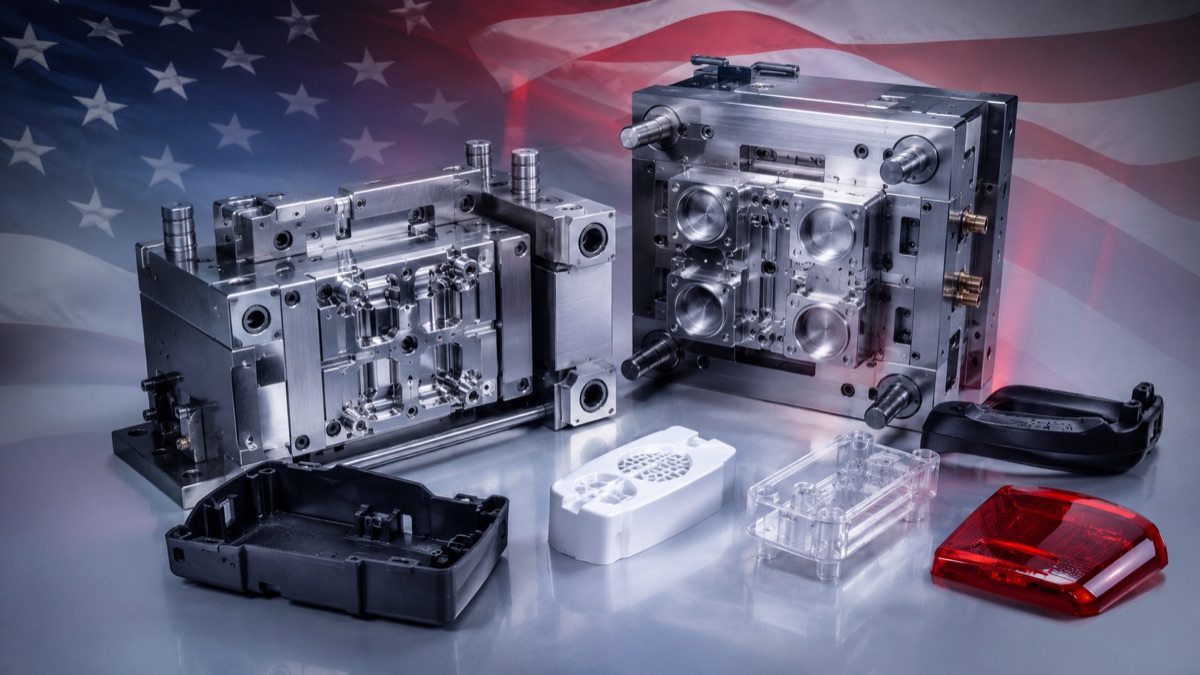
The mold design determines everything downstream — part quality, cycle time, tool life, and per-part cost. These guides cover the design decisions that matter before steel is cut, written for mechanical designers, product engineers, and mold buyers who need to get the design right the first time.
DFM 101: Designing Plastic Parts for Injection Molding — The Engineer’s Checklist →
Wall thickness, draft angles, undercuts, and gate placement — the four decisions that drive mold cost and part quality. Start here before sending your part file for quoting.
Plastic Part Design Guidelines — Wall Thickness, Draft Angles, and Rib Design →
How to design parts that fill, cool, and eject without warpage, sink marks, or sticking. Covers the three rules every plastic part must follow, with material-specific design parameters.
Injection Molding Tolerances — Standards, Capability Data, and How to Specify →
DIN 16901, ISO 20457, and real capability data from the production floor. How to specify tolerances that are achievable in injection molding — and what happens when you over-specify.
Surface Finish & Texture Standards — SPI, VDI 3400, and Mold-Tech Explained →
SPI A-1 through D-3, VDI 3400 texture grades, and Mold-Tech equivalents — with the cost and lead time impact of each specification.
Snap-Fit Design for Injection Molded Parts →
Cantilever and annular snap-fit geometry, material strain limits, and the calculations that predict whether your snap-fit will assemble once or 10,000 times.
Threaded Inserts for Plastic Parts — Design, Installation, and Pull-Out Strength →
Brass, stainless, and self-tapping insert selection. Boss design for insert molding and post-mold installation. Pull-out and torque-out strength data.
Overmolding and Insert Molding — A Technical Guide for Product Designers →
Material compatibility, bond strength, and mold design for multi-material parts. When to overmold and when to assemble.
Hot Runner vs Cold Runner — Cost, Cycle Time, and When Each Makes Sense →
The runner system decision affects material waste, cycle time, and color-change flexibility for the life of the tool. Decision framework with breakeven calculations for 50K–500K volumes.
Related guides: Manufacturing · Materials & Resin