Topic Hub
Materials & Resin Guides
Guides to plastic resin selection — material properties, glass-filled plastics, medical-grade polymers, sustainable materials and metal-to-plastic conversion.
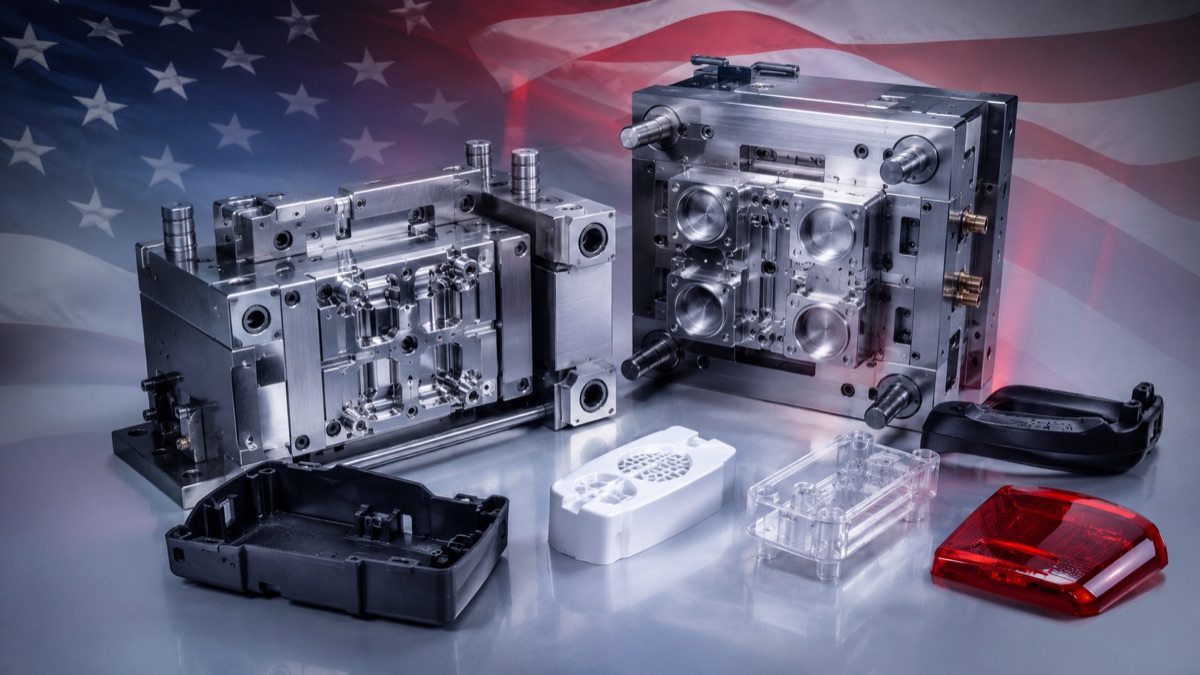
The material is the part. Resin selection drives mold steel grade, cycle time, per-part cost, and whether the part meets its functional requirements in the field. These guides help engineers match materials to requirements — mechanical, thermal, chemical, and regulatory.
Materials Library — Plastics & Mold Steels →
Property tables, grade families, real project data and DFM limits — one page per material. Start with ABS.
How to Choose the Right Plastic Resin for Injection Molding →
Commodity vs engineering vs high-performance thermoplastics — a structured approach to narrowing the field from 85,000+ commercial resin grades to the one that fits your part’s function, cost, and processing requirements.
PC vs ABS vs PC+ABS — Material Comparison for Electronic Housings →
PC, ABS and PC+ABS compared across 12 engineering dimensions — strength, impact, thermal, chemical resistance, finish, flame retardancy and cost.
PP vs ABS — Choosing Between the Two Workhorse Resins →
PP and ABS are roughly half of all molded parts but are not interchangeable. Density, impact, chemical resistance, cost and process behaviour compared.
Nylon PA66 and PA6 Injection Molding Guide →
How to mold nylon PA66 and PA6 — moisture conditioning, glass fibre reinforcement, processing parameters, mold design and material selection.
POM (Acetal / Delrin) Injection Molding Guide →
Homopolymer vs copolymer, processing parameters, mold design for gears and sliding parts, and off-gassing.
PEEK, PPS, PEI and LCP — High-Performance Plastics →
How to mold PEEK, PPS, PEI and LCP high-performance plastics — processing up to 400°C, specialized mold steel, and material selection by application.
Glass-Filled Plastics in Injection Molding — When and How to Use Them →
PA66-GF30, PP-GF30, PBT-GF30, and beyond — how glass fiber changes mechanical properties, mold wear, warpage behavior, and design rules.
FDA-Compliant Materials for Medical Injection Molding — USP Class VI and ISO 10993 →
USP Class VI, ISO 10993, and FDA master file requirements for medical device resins. Material documentation, biocompatibility, and change control in regulated injection molding.
Sustainable Plastic Injection Molding — Trends and Practical Steps for 2026 →
Bio-based resins, post-consumer recyclate, energy reduction, and regrind management. What works, what does not, and how to specify sustainability without compromising part quality.
Overmolding and Insert Molding — A Technical Guide for Product Designers →
Material compatibility between substrate and overmold — TPE on PP, TPU on PC/ABS, LSR on PA. Bond strength mechanisms, processing parameters, and the design rules that prevent delamination in multi-material parts.
Metal-to-Plastic Conversion Guide — Cost, Weight, and Design Considerations →
When to replace a machined or die-cast metal part with an injection-molded engineering plastic. Strength comparison, rib design for stiffness compensation, and real conversion economics.
Related guides: Mold Design · Manufacturing