FAQ
Injection Molding FAQ | Plastic Mold Manufacturing | JBRplas
Answers to common questions about plastic injection molding, mold manufacturing, DFM, pricing, lead times, quality, shipping, and working with JBRplas in Shenzhen.
General
Where is JBRplas located?
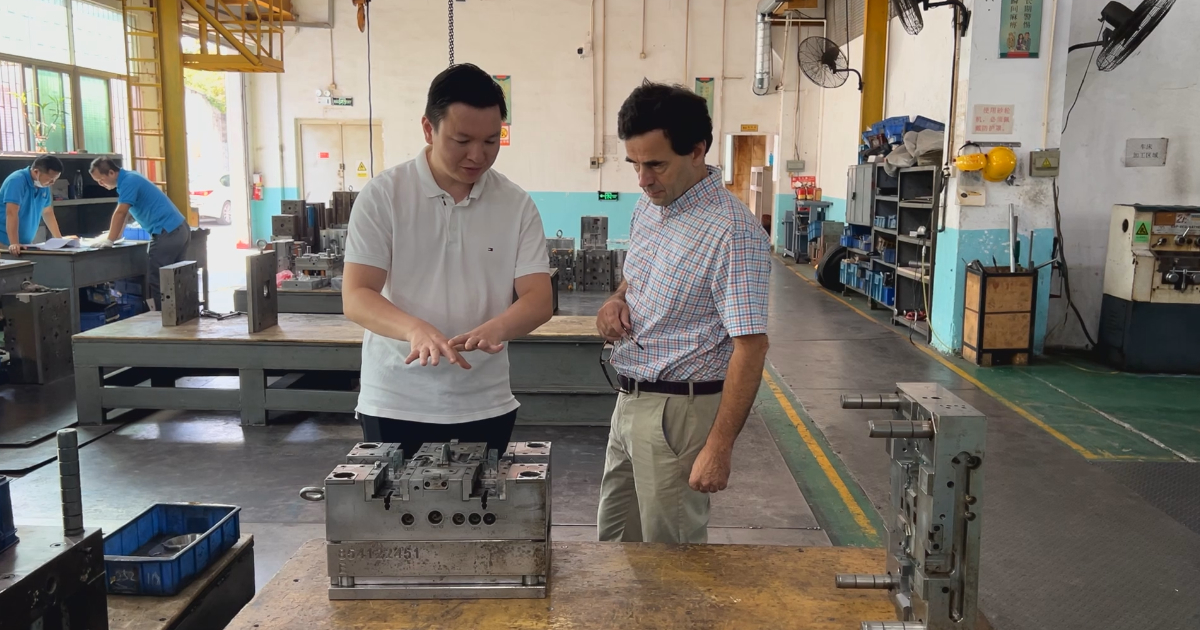
Our factory is in Shenzhen, Guangdong, China — one of the world’s largest manufacturing hubs. Our facility is 10,000 m² with 150+ employees, 27 injection molding machines, and a fully equipped toolroom with 9 CNC machining centers.
What certifications does JBRplas hold?
ISO 9001:2015 (Quality Management System) and ISO 13485:2016 (Medical Devices Quality Management System). We also work with RoHS, REACH SVHC, FDA, USP Class VI, EN71, and ASTM F963 compliant materials.
What languages do your engineers speak?
Our engineering team communicates in English, Mandarin, and Cantonese. All technical documentation — DFM reports, FAI reports, quality documents — is provided in English.
Do you sign NDAs?
Yes. We routinely work under NDA and treat all customer technical information as strictly confidential. We do not share or display customer tooling designs, part drawings, or program details with any third party.
What industries do you serve?
Automotive, medical device, health care consumer products, smart home / IoT, consumer electronics, financial / payment devices, branded toys, and industrial equipment. We serve OEM clients across North America, Europe, and Southeast Asia.
RFQ & Getting Started
How do I get a quote?
Submit your 3D part file (STEP preferred) and 2D drawing to info@jbrplas.com or through our Get a Quote page. We return a quotation and free DFM report within 24 hours. There is no charge and no obligation.
What file formats do you accept?
STEP (.stp / .step), IGES (.igs), SolidWorks (.sldprt / .sldasm), UG NX (.prt), Pro/E (.prt). 2D drawings in PDF or DWG. STL files are accepted for reference only — they lack the geometric precision needed for mold design.
What information do you need for an accurate quote?
3D part file, 2D drawing with tolerances, target annual volume, material preference (or we can recommend), surface finish and colour requirements, and any regulatory constraints (UL, FDA, EN71, etc.).
Do you charge for DFM analysis?
No. DFM review is free with every quotation. You receive a written report identifying potential issues with wall thickness, draft angles, undercuts, gate location, and surface finish — before any commitment.
Mold Design & Manufacturing
What is your typical T1 lead time?
12–18 business days from design approval. The complete process — DFM, mold design, manufacturing, and T1 sampling — typically takes 5–8 weeks from file receipt to first parts in hand, depending on part complexity and mold type.
Can I supply my own mold design?
Yes. We accept customer-supplied tooling designs. We perform a manufacturing review before machining begins and will flag any concerns. We do recommend a design validation step regardless of the source.
What steel grades do you use?
P20 (718H) for general-purpose production tooling, H13 for high-temperature and abrasive resins, S136 stainless for corrosive resins and optical parts, NAK80 for mirror-finish applications, and 2344 for high-pressure automotive tooling. We recommend the appropriate grade based on your resin, volume, and cosmetic requirements during DFM.
Who owns the mold?
You own the mold. JBRplas manufactures it to your specification. If you choose to move production to another facility, the mold is exported to you.
Do you store molds?
Yes. We store customer molds in temperature- and humidity-controlled storage at no charge for the duration of the production program. Preventive maintenance is performed after every 50,000 shots as standard.
What is your mold warranty?
All JBRplas molds are warranted against manufacturing defects for the full guaranteed shot life. If a mold fails to meet the agreed shot count due to workmanship issues, we repair or replace the affected components at no charge. Warranted shot life: P20 — 300,000 shots minimum; H13 / S136 — 1,000,000 shots minimum; prototype / bridge tooling — 50,000 shots minimum.
Do you export molds to customers?
Yes. We regularly export molds to the US, Europe, and Australia. Molds are shipped in wood crates with rust-prevention coating. All export documentation — commercial invoice, packing list, HS code — is included.
Production & Quality
What is your minimum order quantity?
No formal MOQ. We regularly produce prototype batches of 500–2,000 pieces for product validation. Production economics improve significantly above 10,000 pieces per year.
What is your defect rate?
Below 0.3% for established production programs. New program ramp-up targets less than 1% within the first 90 days of production.
How do you handle quality issues?
When a non-conformance is identified, we follow a structured corrective action process: immediate containment and quarantine, root cause analysis (8D or 5-Why) within 48 hours, corrective action implemented and verified, preventive action documented in the control plan, and a written CAPA report provided to the customer.
Can you match an existing part from another supplier?
Yes. Provide a sample part and 2D drawing. We can reverse-engineer and produce a matching mold. A dimensional scan of the reference part is recommended to establish a measurement baseline.
Do you offer consignment / Kanban supply?
Yes. We can hold a finished goods buffer and ship on a Kanban call-off for customers with steady monthly demand.
Low Volume & Prototyping
Can you do prototype or low volume production?
Yes. We offer aluminum tooling (500–5,000 shots, 12–18 days to T1), P20 soft tooling (5,000–100,000 shots, 18–22 days to T1), and bridge tooling for programs transitioning to production volumes. See our Low Volume Manufacturing page for details.
How does low volume compare on per-part cost?
Per-part cost is higher than high-volume production because tooling cost is amortized over fewer parts and cycle times are longer. However, total program cost is significantly lower — you invest $3,000–$12,000 in aluminum or P20 tooling rather than $30,000–$100,000+ in a hardened multi-cavity production tool. For programs under 100,000 total parts, low volume tooling is almost always the more economical choice.
Can I upgrade from aluminum to P20 or H13 tooling later?
Yes. This is a common path. Because we retain all process data, mold designs, and dimensional records, the transition to production tooling is efficient. The production tool design incorporates everything learned during the low volume phase.
Is part quality the same as high-volume production?
Yes. P20 soft tooling produces parts that are dimensionally and cosmetically identical to those from a hardened production tool. Aluminum tooling can match production quality for non-abrasive, non-corrosive resins.
Can you do low volume with glass-filled or abrasive materials?
Glass-filled materials (PA66-GF30, PBT-GF30, etc.) require P20 steel tooling minimum. Aluminum tooling wears too quickly with glass-filled or mineral-filled grades. We advise on tooling material during the DFM phase.
Do you offer insert molding and overmolding at low volume?
Yes. Insert molding requires P20 tooling minimum due to the additional complexity of insert loading. Overmolding at low volume is typically done via insert-overmold or two-step molding rather than a dedicated 2K rotary tool.
Materials & Capabilities
What materials do you mold?
We process over 500 resin grades, including ABS, PC, PC/ABS, PP, PA6/PA66, POM, PBT, PMMA, PPO/PPE, PEEK, TPE, TPU, HDPE, LDPE, GPPS, HIPS, SAN, and PVC. Specialty grades include flame retardant (UL 94 V-0), glass-filled (GF10–GF50), UV-stabilized, FDA food-contact, USP Class VI medical, and carbon-filled ESD-safe. See our Materials Guide for the full reference.
What is your press capacity?
27 injection molding machines ranging from 90 to 650 tonnes clamping force. All presses are servo-hydraulic with real-time process monitoring. Automated part removal robots are installed on 80% of presses. We also operate a dedicated ISO 8 (Class 100,000) clean room molding cell for medical and high-purity applications.
What secondary processes do you offer?
Assembly (manual and semi-automated), ultrasonic welding, heat staking, pad printing (up to 4 colours), spray painting (RAL / Pantone matched), chrome plating, laser engraving, and custom packaging (blister, clamshell, retail box, bulk tray, anti-static).
What tolerances can you hold?
Standard: ±0.15mm. Precision: ±0.05mm (connector housings, snap-fit enclosures). High precision: ±0.02mm (optical, medical, automotive ADAS components). Mold machining tolerance is ±0.005mm on cavity and core dimensions.
Payment & Shipping
What payment terms do you accept?
Standard terms are 50% deposit with order, 50% before shipment. For established customers with regular production programs, we can discuss net terms. We invoice in USD, EUR, or RMB.
What shipping methods do you use?
Air freight (DHL, FedEx, UPS) — 2–5 business days. Sea freight (LCL or FCL) — 15–30 business days depending on destination. Rail freight to Europe — 12–18 business days. We coordinate all outbound logistics.
What Incoterms do you offer?
EXW, FOB Shenzhen, CIF, and DDP — as agreed at order. All export documentation is prepared in-house, including commercial invoice, packing list, and country-of-origin certificate.
Do you handle customs documentation?
Yes. We prepare all export documentation in-house. HS code classification assistance is included. For DDP shipments, we manage the full import process through our freight forwarder network.
Related
- Manufacturing glossary: Technical terms explained
- How we work: Step-by-step process from RFQ to delivery
- All services: Explore our full range of manufacturing services