Project Overview
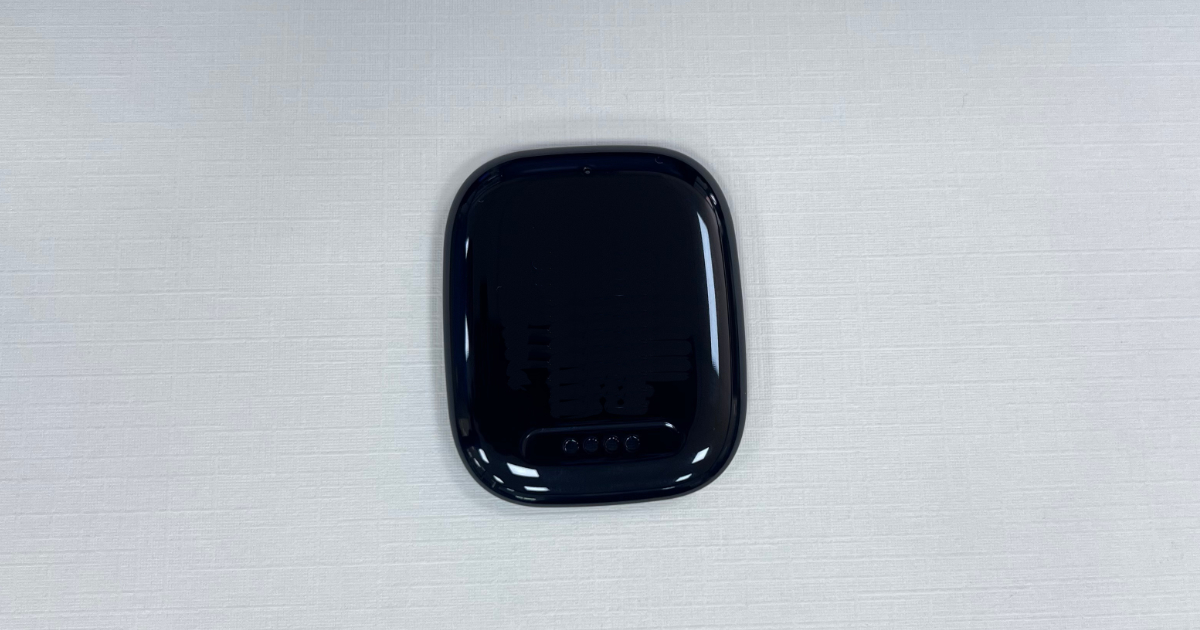
A consumer electronics manufacturer developing a next-generation smartwatch required a production mold for the device back cover — a precision injection-molded shell measuring 39 × 48 × 6.3 mm with a uniform 2.0 mm wall thickness. At a sleek 2.5 grams per piece, the back cover serves as both a structural enclosure and a cosmetic surface, requiring a glossy black spray finish that meets consumer-grade visual standards.
The component sits against the wearer’s wrist throughout the product’s daily-use lifecycle. Unlike a disposable electronics accessory, a smartwatch back cover must withstand sweat, skin oils, occasional impacts, and thousands of charging cycles without cosmetic degradation or dimensional drift. The glossy black finish — the first thing a consumer sees when they turn the device over — must be flawless under retail lighting.
With projected volumes exceeding 2 million units per year, the mold needed to deliver multi-cavity consistency across 8 cavities while maintaining a cycle time that made the per-part economics viable for a cost-sensitive consumer product.
Part Specifications
| Parameter | Specification |
|---|---|
| Product | Smartwatch back cover |
| Dimensions | 39.0 × 48.0 × 6.3 mm |
| Weight | 2.5 g |
| Material | PC/ABS (engineering grade) |
| Wall thickness | 2.0 mm nominal |
| Surface finish | High-gloss black spray painting |
| Tolerance | ±0.2 mm |
| Annual volume | 2,000,000+ pieces |
Engineering Approach
Material Selection — PC/ABS for the Wearable Environment
The client initially considered standard ABS for the back cover. Our material selection review identified two concerns:
Impact resistance. A smartwatch back cover is subject to daily handling, occasional drops, and compression against the wrist during physical activity. Standard ABS has adequate but not exceptional impact strength — a 1.2 m drop onto a hard surface can crack a thin ABS shell at the corners. PC/ABS blend increases notched Izod impact strength from approximately 20 kJ/m² (standard ABS) to 45–55 kJ/m², providing the impact margin the application demands.
Paint adhesion. The back cover receives a high-gloss black spray finish — a cosmetic treatment that requires the substrate to provide reliable paint adhesion without a separate primer step. PC/ABS offers inherently better paint adhesion than standard ABS, particularly with the acrylic and polyester-based spray coatings specified for consumer wearables. The polycarbonate component in the blend provides polar surface groups that bond with the coating at the molecular level.
As an alternative, LCP (liquid crystal polymer) was evaluated for applications requiring both structural performance and EMI shielding — a consideration for smartwatch models with wireless charging where the back cover must not interfere with the charging coil’s electromagnetic field. For the standard model, PC/ABS provided the optimal balance of impact resistance, paintability, and material cost at the target production volume.
8-Cavity Mold with Balanced Runner System
An 8-cavity layout demands that every cavity fills identically. A flow imbalance of 5% between the best-filled and worst-filled cavity produces parts with different weights, different shrinkage, and different dimensions — unacceptable for a wearable device where the back cover snap-fits into a precisely machined metal frame.
The solution was a naturally balanced H-pattern runner system with equal flow length, equal cross-section, and equal pressure drop to every cavity. Natural balance — as opposed to artificial balance achieved by restricting some runner branches — ensures that all 8 cavities receive plastic at the same temperature and the same shear history. Artificially balanced runners, which narrow certain branches to equalize flow resistance, create shear heating in the restricted sections that raises the melt temperature and degrades the polymer differently in different cavities.
A center gate was positioned on the underside of each back cover — the non-cosmetic surface that faces the watch internals — ensuring the gate vestige was hidden inside the assembled device.
Wall Thickness Control for Cosmetic Consistency
At 2.0 mm nominal wall, the back cover is thin enough to cool efficiently but thick enough to fill reliably across the 48 mm flow length. The key challenge was maintaining uniform wall thickness across the entire part — any local thickening near the edges or at the snap-fit tabs would produce a sink mark visible through the glossy black paint.
The snap-fit features at the perimeter were designed with a base thickness of 1.0–1.2 mm (0.5–0.6× nominal wall), and all internal ribs were kept at 1.0 mm maximum base thickness. The glossy black paint — unforgiving of subsurface defects — meant that the 0.5:1 rib-to-wall ratio was non-negotiable.
Optimized Cooling for 18–22 Second Cycle
With 8 cavities producing 8 parts per cycle, the cooling system was designed to extract heat uniformly from all cavities simultaneously. Cooling channels were positioned to maintain a 10–12 mm standoff from each cavity surface, with the cavity side running 5°C cooler than the core side to bias part shrinkage toward the non-cosmetic inner surface.
The target cycle time of 18–22 seconds — equivalent to 2,400–2,900 shots per day — required the mold temperature to stabilize at 70–80°C, warm enough for the PC/ABS melt to pack the cavity surface fully before the skin froze but not so warm that the cooling phase extended beyond the target window.
Mold Design Details
| Parameter | Detail |
|---|---|
| Mold type | Two-plate injection mold |
| Cavities | 8 cavities |
| Mold steel | P20 (core & cavity) |
| Runner system | H-pattern, naturally balanced, center gate |
| Cooling | Optimized water cooling, cavity side biased 5°C cooler |
| Ejection | Ejector pins + draft angle compound solution |
| Gate type | Center gate on non-cosmetic underside |
| Surface | SPI B1 on cavity face (paint-ready substrate) |
| Mold life | 500,000 shots |
Pneumatic-assisted ejector pins were specified to minimize ejection stress on the thin-walled parts. The combination of multiple small-diameter ejector pins with a 1.5° draft angle on all vertical surfaces ensured parts released cleanly from the cavity without distortion, drag marks, or stress whitening — defects that would telegraph through the glossy paint finish.
Injection Molding Process
| Parameter | Value |
|---|---|
| Material | PC/ABS, engineering grade |
| Barrel temperature | 220–250°C (zoned heating) |
| Mold temperature | 70–80°C |
| Injection pressure | 80–120 MPa |
| Holding pressure | 60–80 MPa |
| Cycle time | 18–22 seconds |
| Screw speed | 40–60 rpm |
| Material drying | 80°C × 4 hours, moisture <0.02% |
The zoned barrel heating profile was critical for PC/ABS: the feed zone at 220°C to initiate melting without thermal degradation, the compression zone at 240°C for homogeneous melt temperature, and the metering zone at 245–250°C for stable injection viscosity. The screw speed was limited to 60 rpm maximum to prevent shear overheating, which can cause the polycarbonate fraction of the blend to thermally degrade — producing yellowing, reduced impact strength, and surface splay.
Spray Painting Process
The high-gloss black finish was achieved through a production-scale spray painting line:
| Step | Process | Specification |
|---|---|---|
| 1 | Washing | Deionized water rinse to remove dust and static charge |
| 2 | Drying | 60°C forced air, 15 min |
| 3 | Spray painting | Acrylic/polyester plastic-grade paint, 15–25 µm thickness |
| 4 | Curing | 60–80°C, 2–4 hours |
| 5 | Quality inspection | 100% visual under 800 lux lighting |
The spray thickness of 15–25 µm was controlled through automated spray parameters — nozzle distance, atomization pressure, and conveyor speed — to ensure uniform coverage without runs, sags, or orange peel. The acrylic/polyester paint chemistry was selected for its high adhesion to PC/ABS without a separate primer step, reducing process complexity and per-part finishing cost.
The curing temperature of 60–80°C was deliberately kept below the heat deflection temperature of the PC/ABS substrate to prevent thermal distortion of the molded part during the paint curing cycle.
Quality Control
Each production batch underwent a structured inspection protocol:
- Dimensional inspection — CMM sampling at 1:100 frequency; all critical snap-fit and frame-interface dimensions verified against ±0.2 mm tolerance
- Surface appearance — 100% visual inspection under 800 lux for gloss consistency, paint defects, and cosmetic blemishes
- Paint adhesion test — Tape peel test (cross-hatch method), adhesion grade ≥4 on a 5-grade scale
- Impact resistance — Drop test from 1.2 m onto concrete, 6 orientations; no cracking or paint delamination
- Ingress protection — IP rating verification with the assembled watch to confirm the back cover seal integrity
- SPC monitoring — Critical dimensions tracked throughout production per quality control protocol
Results
| Metric | Target | Achieved |
|---|---|---|
| Cavity weight variation (8 cavities) | <2.0% | 1.2% |
| Dimensional tolerance | ±0.2 mm | Cpk = 1.55 |
| Surface gloss level | ≥85 GU at 60° | 87–92 GU |
| Paint adhesion grade | ≥Grade 4 (5-grade scale) | Grade 5 (no delamination) |
| Drop test (1.2 m) | No crack | ✅ Pass, all orientations |
| Cycle time | ≤22 s | 19.5 s average |
| Annual production capacity | 2,000,000+ | ✅ Achieved |
| Per-part cost (incl. finishing) | ≤¥1.20 | ¥1.15 |
The 8-cavity mold entered stable production and has reliably delivered over 2 million back covers annually. The balanced runner system maintained cavity-to-cavity weight consistency within 1.2% — tighter than the 2.0% typical for 8-cavity consumer electronics molds. The per-part cost of ¥1.15, including material, injection molding, spray painting, and quality inspection, met the aggressive target required for a cost-sensitive consumer wearable product.
This case study demonstrates JBRplas’s capability for high-volume consumer electronics components — including 8-cavity balanced tooling, PC/ABS material selection for wearable environments, high-gloss spray painting, and integrated quality control for 2M+ annual production.