Project Overview
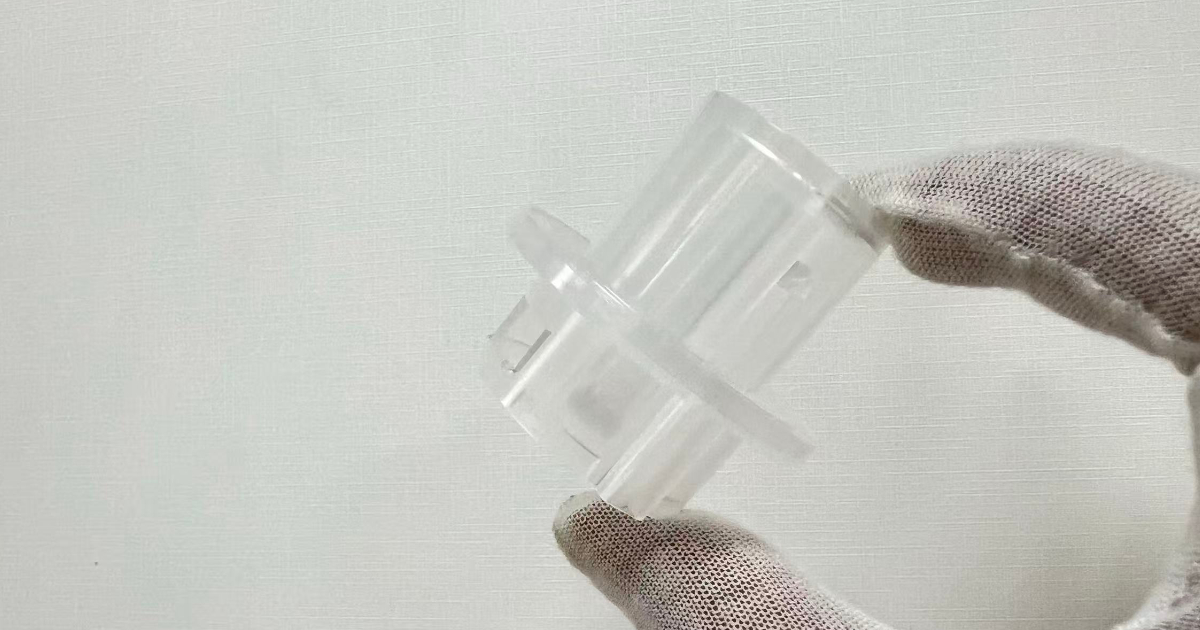
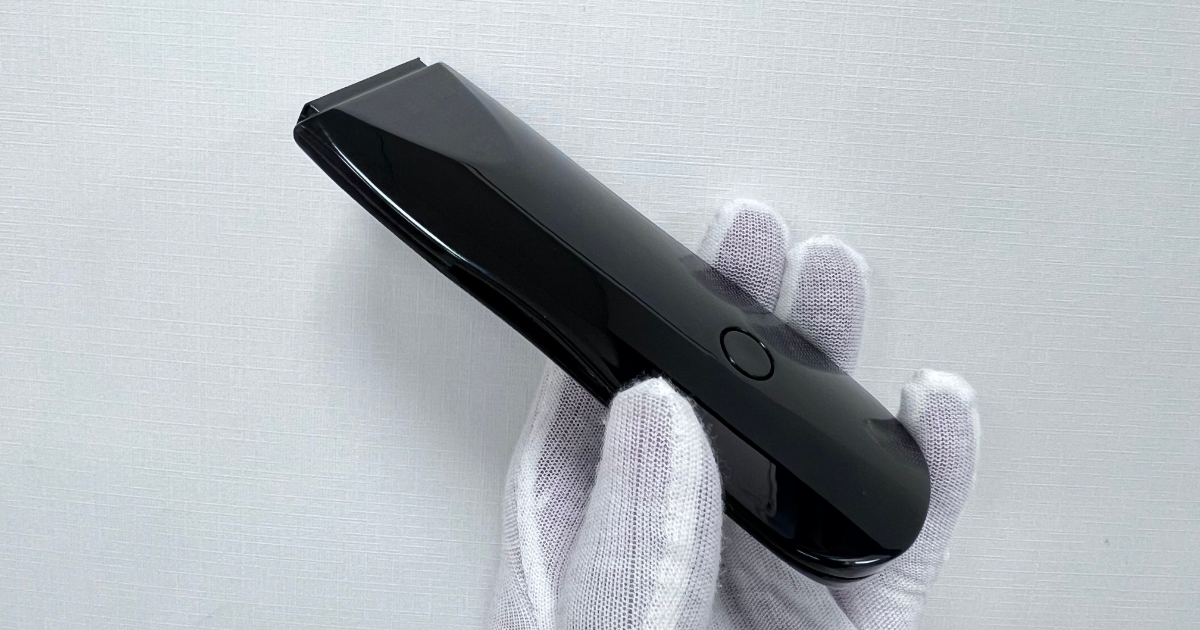
A European beauty device manufacturer required a premium plastic housing for a handheld facial pore cleansing device. The product features a slim ergonomic profile — 127 × 53 × 15.8 mm — with a high-gloss piano black cosmetic finish and a two-piece clamshell structure. The housing needed to deliver a flawless Class A appearance under retail display lighting while maintaining dimensional stability, reliable assembly, and consistent surface quality across mass production volumes.
Unlike an industrial enclosure where function dominates form, a beauty device housing is evaluated visually before the user ever turns it on. A 0.02 mm sink mark invisible on a textured part becomes a visible defect under high-gloss UV coating. A weld line that a matte finish would hide is reflected as a gloss discontinuity under directional light. Every cosmetic decision — gate location, steel polish, painting process — must be correct before the first shot.
JBRplas provided a complete turnkey solution: DFM analysis, precision mold manufacturing, injection molding, high-gloss spray painting with UV topcoat, quality inspection, and final assembly support — all under one roof.
Part Specifications
| Parameter | Specification |
|---|---|
| Product | Facial pore cleansing device housing |
| Structure | Two-piece clamshell (front + rear) |
| Dimensions | 127 × 53 × 15.8 mm |
| Part weight | 26.8 g (per half) |
| Material | ABS, cosmetic grade |
| Wall thickness | 1.6 mm nominal |
| Surface finish | High-gloss spray painting (primer + UV topcoat) |
| Color | Piano black |
| Cosmetic standard | Class A on all visible exterior surfaces |
| Assembly | Screw fastening + snap-fits |
| Market | Europe |
Manufacturing Challenges
1. Class A Cosmetic Surface Under High-Gloss Paint
The exterior housing carries a piano black high-gloss UV coating — the most unforgiving finish in injection molding. Every subsurface defect that a textured or matte finish would absorb becomes amplified:
| Defect | Matte/Textured Surface | High-Gloss Piano Black |
|---|---|---|
| Sink mark, 0.02 mm | Invisible — texture masks it | Visible as a circular gloss change |
| Weld line | Visible as a faint line | Amplified — paint follows surface contour, creating a ridge |
| Flow mark | Partially masked by texture | Visible as a local gloss variation |
| Gate vestige, 0.03 mm high | Flush-trimmed, texture masks remnant | Visible as a local gloss discontinuity |
To achieve the required surface, the mold cavity was mirror polished to SPI A1 finish before any steel was cut for texturing in non-cosmetic areas. The gate position was validated through Moldflow analysis to ensure the primary weld line fell on the parting line or on a non-visible internal surface. Every cavity surface that would form a Class A exterior face was polished to eliminate tool marks that could telegraph through the 1.6 mm wall.
2. Thin-Wall Filling at 1.6 mm
At 1.6 mm nominal wall — thin for a cosmetic ABS part with a 127 mm flow length — the filling window was narrow. ABS at 225–245°C melt temperature flows well at 1.6 mm, but the margin between complete fill and premature freeze-off at the farthest point from the gate was approximately 3–4 seconds. A balanced runner system and a tightly controlled processing window — injection velocity, melt temperature, mold temperature held within ±3°C — ensured stable filling across both housing halves without short shots, warpage, or gloss variation.
The mold temperature was held at 55–65°C — warm enough to allow the melt to pack the cavity surface fully before the skin froze (producing a smooth, glossy substrate for painting), but not so warm that the cycle time became uneconomical.
3. Slender Geometry with Variable Cross Sections
The product has a long, slim profile — 127 mm long, 53 mm wide, only 15.8 mm tall — with varying cross sections along its length. The center section around the battery compartment is thicker in cross section than the tapered ends. This geometry creates a natural tendency toward differential shrinkage: the thicker center cools more slowly than the thin ends, producing internal stress that can bow the housing along its length.
Key design countermeasures:
- Cooling channels were positioned to extract heat more aggressively from the thicker center section, reducing the cooling differential
- The rib-to-wall thickness ratio was maintained at 0.5–0.6:1 — ribs at 0.8–1.0 mm base thickness on the 1.6 mm nominal wall — preventing sink marks while providing structural rigidity
- The gate was positioned near the geometric center of the part, making the flow path symmetric and reducing anisotropic shrinkage
4. Internal Assembly Features Without Exterior Witness
The interior of each housing half integrates multiple functional features: screw bosses for assembly fastening, reinforcing ribs for structural stiffness, PCB locating features for accurate board placement, battery compartment supports, and button positioning structures. Each feature represents a local thickness increase that, if not properly designed, would produce a sink mark on the Class A exterior.
Every boss was cored and isolated from the exterior wall, with gussets providing lateral stability without creating thick sections. Ribs were designed to the 0.5–0.6:1 ratio and positioned so that the cosmetic surface was on the opposite side of the mold from the rib roots — the sink-prone side faces the non-cosmetic interior.
Mold Solution
| Parameter | Detail |
|---|---|
| Mold type | Two-plate injection mold |
| Cavities | 2 cavities |
| Mold steel | P20 (core & cavity) |
| Mold base | S50C |
| Mold life | 300,000 shots |
| Gate type | Submarine gate |
| Ejection | Ejector pins |
| Cooling | Optimized water cooling channels, balanced for slender geometry |
| Cavity finish | Mirror polish (SPI A1) on cosmetic surfaces, texture on non-cosmetic areas |
The submarine gate was selected to achieve automatic gate separation during ejection — eliminating the manual degating operation that would leave a witness mark on the cosmetic surface. The gate was positioned on an internal, non-visible surface where the vestige would be hidden inside the assembled device.
The cavity surface required mirror polishing because every tool mark on the steel transfers to the plastic substrate, and the high-gloss paint follows the substrate contour exactly. A 0.005 mm tool mark on the steel produces a 0.005 mm surface ripple on the painted part — invisible on a textured part, visible as a local gloss anomaly on piano black.
Injection Molding Process
| Parameter | Value |
|---|---|
| Material | ABS, cosmetic grade |
| Melt temperature | 225–245°C |
| Mold temperature | 55–65°C |
| Injection machine | 180 Ton servo-driven |
| Cycle time | ~30 seconds |
| Drying condition | 80°C × 3–4 hours |
Painting Process
The high-gloss piano black finish was achieved through a two-stage spray painting process:
- Primer layer — Applied to the molded substrate to fill micro-porosity, promote adhesion, and create a uniform base for the topcoat. The primer was formulated to bond with ABS without attacking the surface (solvent compatibility verified with the resin grade).
- UV-cured topcoat — A high-gloss clear topcoat applied over the black base color, then cured under UV lamps. The UV curing crosslinks the coating at a molecular level, producing a harder, more scratch-resistant surface than thermally cured coatings. The resulting finish achieves a gloss level of >90 GU at 60° — the deep, reflective piano black appearance specified by the customer.
Between each stage, parts were inspected under standardized 1,000 lux directional lighting. Parts with any visible substrate defect — even if the defect met dimensional specifications — were rejected before painting. It is cheaper to regrind an unpainted part than to paint, inspect, and reject a painted part.
Quality Control
Each production batch underwent a comprehensive inspection protocol:
- Dimensional inspection — Critical dimensions held to ±0.05 mm, verified by CMM
- Surface appearance inspection — 100% visual inspection under 1,000 lux standardized lighting for gloss consistency, paint defects, and cosmetic imperfections
- Paint adhesion test — Cross-hatch test (ISO 2409) to verify coating adhesion to the ABS substrate
- Assembly verification — Functional fit test of both housing halves with screw fastening and snap-fit engagement
- Button operation test — Mechanical function check of the button mechanism through the housing aperture
- Drop test — 1.0 m drop onto concrete, 6 faces, to verify housing integrity
- AQL sampling — All cosmetic parts inspected according to AQL 1.0 (normal) before shipment
The SPC process monitoring tracked critical dimensions throughout mass production, ensuring long-term process capability and early detection of any tool wear or process drift.
Results
| Metric | Target | Achieved |
|---|---|---|
| Cosmetic surface quality | Class A, no visible defects | ✅ Class A, zero Class A rejects after painting |
| Paint adhesion (cross-hatch) | ISO 2409 Class 0–1 | Class 0 (no delamination) |
| Gloss consistency | >90 GU at 60° | 92–95 GU across all batches |
| Dimensional tolerance (critical) | ±0.05 mm | Cpk = 1.48 |
| Housing gap uniformity | ≤0.15 mm | 0.08–0.12 mm |
| Assembly yield | >99% | 99.4% |
| Drop test | 1.0 m, 6 faces, no crack | ✅ Pass |
The molds entered production and successfully delivered premium piano black housings to the European customer. The one-stop integration — tooling, molding, painting, and assembly under JBRplas’s quality system — shortened overall lead time, improved consistency between production lots, and eliminated the coordination overhead of managing separate tooling, molding, and finishing suppliers.
This case study demonstrates JBRplas’s capability for high-cosmetic beauty device enclosures — including mirror-polished cavity finishing, thin-wall ABS molding at 1.6 mm, high-gloss UV coating, and Class A surface quality control for premium consumer brands.