Project Overview
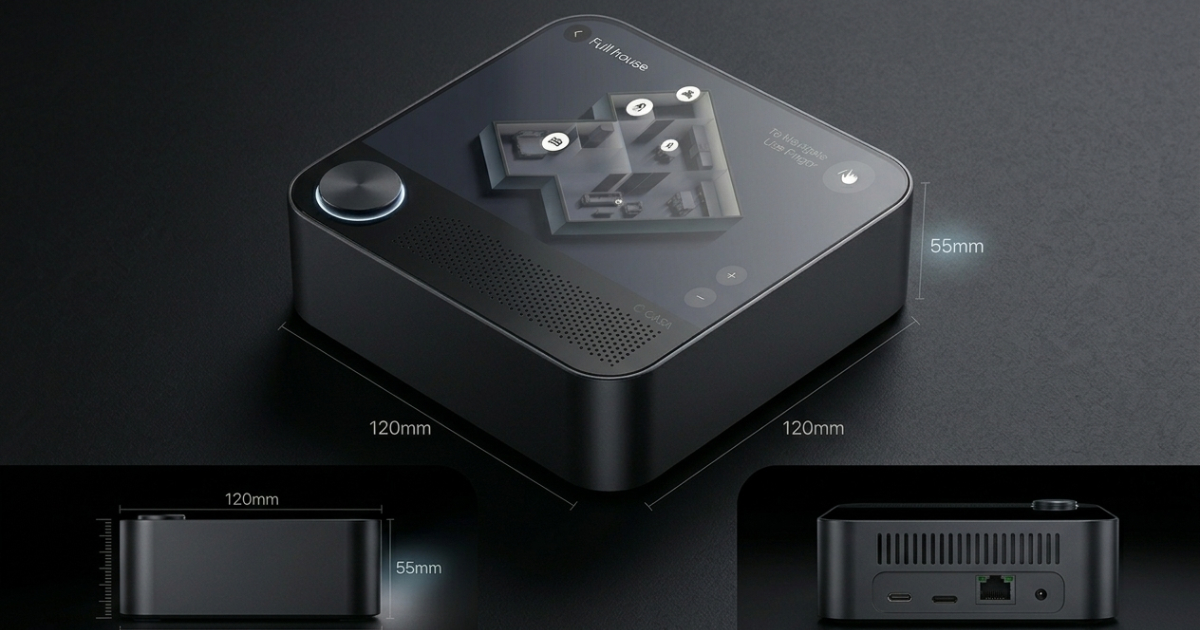
A consumer electronics brand developing a new smart home hub required a production mold for the device enclosure — a two-tone ABS shell with a matte textured top surface and gloss side panels. The enclosure is a mains-powered device, requiring UL 94 V-0 flame retardant rating. The client required 1.2 million enclosures per year, demanding a high-cavitation solution with cycle time under 30 seconds.
Part Specifications
| Parameter | Specification |
|---|---|
| Part | Smart home hub enclosure body (single piece) |
| Dimensions | 120 × 120 × 55mm |
| Wall thickness | 1.8mm nominal |
| Material | ABS FR, UL 94 V-0 rated |
| Exterior finish | VDI 27 matte texture (top), SPI B1 semi-gloss (sides) |
| Cosmetic standard | Class A on all visible exterior surfaces |
| Colour | RAL 9003 Signal White |
| Flame retardancy | UL 94 V-0 at 1.6mm wall thickness |
| Annual volume | 1,200,000 pieces |
| Target cycle time | <30 seconds |
Engineering Approach
Cavity Count and Cycle Time Analysis
At 1.2 million pieces per year and a 30-second target cycle time, the production requirement calculates to:
- 1,200,000 ÷ (2 shots/minute × 60 min × 20 hrs × 250 days) = 2.0 cavities minimum
We recommended a 4-cavity mold to build in schedule flexibility, allow for planned maintenance downtime, and provide redundancy if one cavity requires attention during production.
With a 4-cavity mold at 28-second cycle time on a 350T press:
- Production rate: 514 shots/hour × 4 cavities = 2,056 parts/hour
- Annual capacity: 2,056 × 20 hours × 250 days = 10.3 million parts (4.3× safety margin over requirement)
Flame Retardant ABS Selection
FR-grade ABS resins contain halogenated or halogen-free flame retardant additives that complicate mold design:
- FR additives typically reduce melt flow — gate sizing must be increased
- Halogenated FR resins produce corrosive hydrogen chloride or hydrogen bromide gas at processing temperatures — mold steel must be corrosion-resistant
- Burn-in tendency is higher with FR resins — venting is critical
We selected CHIMEI PA-758A, a halogen-free FR ABS achieving V-0 at 1.5mm, with higher melt flow than halogenated alternatives. UL Yellow Card was confirmed with the client before order placement.
For steel, we used 718H (P20 equivalent, pre-hardened to 33 HRC) with chrome-plated gate inserts to protect against the mild corrosion associated with FR off-gassing.
Texture and Draft Angle Management
The client specified VDI 27 texture per surface finish standards on the top surface — a medium-grain texture that requires a minimum of 2.5° draft to release cleanly. Our DFM review of the client’s design found the draft on the textured faces was 1.5° — insufficient.
We issued a DFM report recommending a draft increase on 4 faces. The client revised their design files within 3 days, avoiding what would have been persistent drag marks on every part — a molding defect caused by texture tearing on ejection.
Runner Balance for 4-Cavity Tool
With 4 cavities arranged in a 2×2 layout, achieving balanced fill across all 4 cavities is critical for consistent part weight and dimensions. We designed an H-pattern cold runner (naturally balanced, equal path length to every gate) and sized the runners at 6mm diameter — a standard balance between fill pressure and material efficiency.
Final runner system: 4 submarine gates at Ø1.6mm, placed on the bottom inside face of the enclosure where the gate witness is hidden when the hub sits on a surface.
Tooling Details
| Parameter | Detail |
|---|---|
| Mold type | 4-cavity cold runner, submarine gate |
| Mold base | LKM, 560 × 560mm |
| Steel | 718H pre-hardened, 33 HRC |
| Gate inserts | Chrome-plated Ø1.6mm submarine gate |
| Runner | H-pattern, 6mm diameter |
| Cooling | 8mm diameter water lines, 20mm from cavity surface |
| Ejection | 12× Ø4mm ejector pins per cavity (on base flange, non-cosmetic) |
| Texture | VDI 27 matte on top face; SPI B1 on side faces |
| Mold weight | 1,350kg |
Cycle Time Optimisation
Achieving the <30 second cycle time required optimizing three phases:
| Phase | Time | Optimisation |
|---|---|---|
| Injection | 1.8s | Hot barrel, optimized gate diameter |
| Pack / hold | 4.5s | Minimum required to prevent sink at boss locations |
| Cooling | 18.0s | 8mm cooling lines at 20mm standoff; mold temperature 30°C |
| Ejection / open/close | 3.5s | Fast ejection stroke, servo-driven press |
| Total cycle | 27.8s | ✅ Under 30s target |
Results
| Metric | Target | Achieved |
|---|---|---|
| Cycle time | <30s | 27.8s |
| UL 94 V-0 | Required | ✅ Confirmed (PA-758A, UL Yellow Card) |
| Cosmetic rejects (Class A) | <0.5% | 0.22% |
| Cavity balance (weight variation) | <2% | 0.8% |
| T1 lead time | 25 days | 22 days |
| Colour match to RAL 9003 | ΔE < 1.5 | ΔE = 0.9 |
| Annual capacity (4-cavity) | 1.2M minimum | 10.3M (4× safety margin) |
The mold entered volume production in week 8 from project kickoff. The enclosure passed UL certification on first submission. The client’s product launched on schedule.
This case study demonstrates JBRplas’s high-volume production capability for consumer electronics enclosures — from flame-retardant material selection and UL compliance, to Class A cosmetic surfaces, balanced multi-cavity tooling, and aggressive cycle time targets.