Project Overview
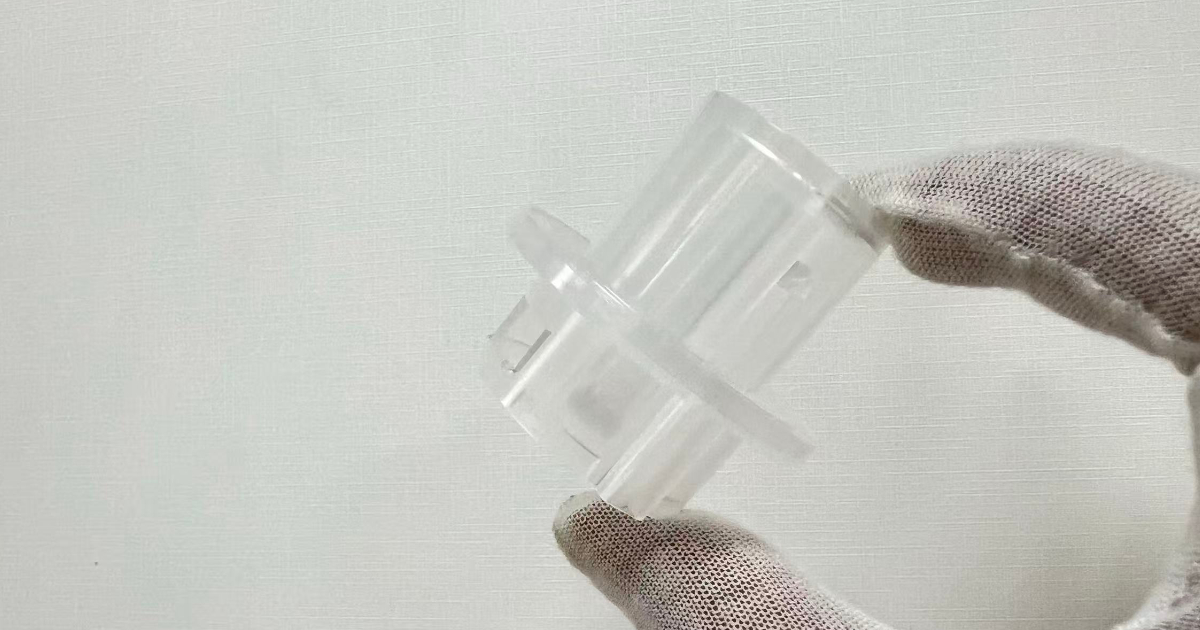
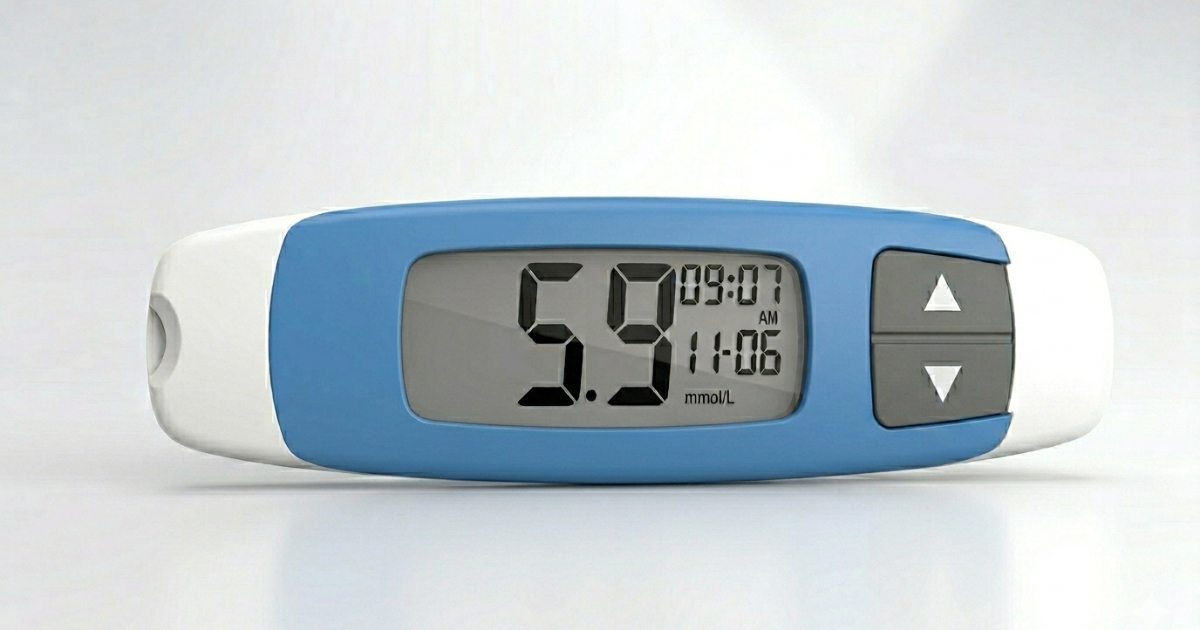
A diagnostics company developing a next-generation blood glucose monitoring system required a production mold for the meter enclosure — a two-piece handheld housing consisting of a front shell (display window, button apertures, test strip slot) and a rear shell (battery compartment, data port opening). The device is an over-the-counter Class II medical device requiring FDA 510(k) clearance, which meant the plastic enclosure and its manufacturing documentation had to support the regulatory submission.
The enclosure must be handled daily by patients with varying dexterity, withstand regular cleaning with 70% isopropyl alcohol wipes, and incorporate a precision test strip slot that reliably guides the strip into the electrical contacts — a feature where 0.05mm of dimensional drift can mean the difference between a successful reading and a strip error.
Challenge: The test strip slot aperture measured 6.10 × 2.50mm with a tolerance of ±0.03mm on the width — a molded-in feature formed at the parting line that could not be machined post-mold without compromising the cosmetic surface. Achieving this repeatedly across production required precision insert grinding, balanced cooling, and locked process parameters.
Part Specifications
| Parameter | Front Shell | Rear Shell |
|---|---|---|
| Dimensions | 92 × 48 × 8mm | 92 × 48 × 6mm |
| Wall thickness | 1.8mm nominal | 1.8mm nominal |
| Material | ABS, medical grade, USP Class VI | ABS, medical grade, USP Class VI |
| Exterior finish | SPI B1 semi-gloss per surface finish standards | SPI B1 semi-gloss |
| Cosmetic standard | Class A on all exterior faces | Class A on exterior face |
| Test strip slot | 6.10 × 2.50mm, ±0.03mm width | — |
| Display window aperture | 38 × 32mm, with 0.5mm recess for lens gluing | — |
| Button apertures | 2× Ø8mm ±0.08mm position | — |
| Battery compartment | — | 2× AAA, with snap-fit cover retention |
| Disinfectant resistance | IPA 70%, daily wipe-down | IPA 70% |
| Annual volume | 220,000 meters (440,000 parts) | — |
Engineering Approach
Medical-Grade Material Selection
The client initially considered standard ABS for the enclosure. Our material review identified two problems:
- Standard ABS does not carry USP Class VI certification. While the meter enclosure is not an implant or fluid-path component, the client’s regulatory affairs team required all patient-contact surfaces to be USP Class VI rated for their 510(k) submission.
- Standard ABS has limited resistance to repeated IPA 70% exposure. Over months of daily disinfection, standard ABS can develop surface micro-cracking (ESC — environmental stress cracking) that degrades appearance and creates crevices for contamination.
We recommended LG Chem LUMAX HF-5301W medical-grade ABS — a USP Class VI certified grade with improved chemical resistance to alcohol-based disinfectants. The material’s UL Yellow Card and USP Class VI certificate were provided to the client for inclusion in their 510(k) Design History File.
Test Strip Slot Precision
The test strip slot is the most dimensionally critical feature on the part. Blood glucose test strips are typically 5.5–6.0mm wide and 0.5–0.7mm thick. The slot must guide the strip smoothly into the internal connector while preventing insertion at incorrect angles that could damage the contacts.
The slot is formed by two precision-ground S136 insert blocks — one in the cavity half, one in the core half — that meet at the parting line:
- Insert material: S136 stainless, hardened to 50 HRC, wire-EDM finished to ±0.002mm
- Slot width: 6.10mm ±0.03mm (0.10mm clearance per side on a 5.9mm nominal strip)
- Slot entry chamfer: 20° ±1° lead-in on both top and bottom edges
- Slot depth: 3.5mm from the exterior surface to the internal connector
The inserts are precision-ground in matched pairs. After grinding, each insert pair is measured on CMM before mold assembly. In production, 3 parts per shift are measured on CMM for slot width. A Go/No-Go plug gauge check is performed on every shot at the press — 5-second check, operator-performed.
Display Window and Button Alignment
The front shell incorporates a clear display window (sourced by the client, glued into a recessed aperture) and two button apertures. Dimensional requirements:
- Display window recess: 38.20 × 32.20mm ±0.08mm — sized for a 0.10mm adhesive gap around the lens perimeter
- Button aperture positions: ±0.08mm relative to the display window datums — ensures buttons align with the membrane switches on the PCB beneath
- Recess depth: 0.50mm ±0.03mm — controls the lens-to-display distance for optical clarity and prevents the lens from sitting proud of the enclosure surface
ISO 13485 Quality and Traceability
As an ISO 13485 certified manufacturer, JBRplas applied the full medical device quality protocol to this program:
| Requirement | Implementation |
|---|---|
| Lot traceability | Lot traveller per production batch; resin lot number traceable to finished parts |
| Material certification | USP Class VI certificate per resin lot; CoA from resin manufacturer |
| Process validation | IQ/OQ/PQ protocol for the production mold; parameters locked after validation |
| First Article Inspection | Full dimensional report — all 34 drawing dimensions measured and recorded |
| Certificate of Conformance | Per shipment, signed by Quality Manager |
| Change control | Formal change notification required for any process or material change |
| Record retention | All quality records retained for minimum 10 years per ISO 13485 |
The documentation package was structured to support the client’s 510(k) submission, with each document referenced by document number, revision, and date for traceability in the Design History File.
Tooling Details
| Parameter | Front Shell | Rear Shell |
|---|---|---|
| Mold type | 2-cavity cold runner, side gate | 2-cavity cold runner, side gate |
| Mold base | LKM, 450 × 400mm | LKM, 450 × 400mm |
| Steel | S136, 50 HRC | S136, 50 HRC |
| Test strip slot inserts | S136, 52 HRC, wire-EDM ±0.002mm | N/A |
| Runner | H-pattern, 4mm diameter, naturally balanced | H-pattern, 4mm diameter |
| Gate | Side gate per cavity, 1.5 × 1.0mm | Side gate per cavity, 1.5 × 1.0mm |
| Cooling | 8mm lines, 18mm from cavity | 8mm lines, 18mm from cavity |
| Ejection | 6× Ø3mm ejector pins (on internal face) | 6× Ø3mm ejector pins (on internal face) |
| Surface | SPI B1 on exterior cavity face | SPI B1 on exterior cavity face |
| Mold weight | 820kg | 780kg |
S136 stainless steel was specified for both molds. Medical-grade ABS is non-corrosive, but S136 provides the best surface finish consistency over the production life of the tool and eliminates any risk of surface oxidation affecting cosmetic quality on a patient-facing device.
Results
| Metric | Target | Achieved |
|---|---|---|
| Test strip slot width | 6.10mm ±0.03mm | Cpk = 1.61 |
| Display window recess | ±0.08mm | ±0.04mm |
| Button aperture positions | ±0.08mm | All within ±0.05mm |
| Cosmetic rejects (Class A) | <0.5% | 0.28% |
| T1 lead time | 25 days | 24 days |
| USP Class VI compliance | Required | Certified (LUMAX HF-5301W) |
| IPA 70% resistance (500 cycles) | No visible change | Pass — no ESC observed |
| ISO 13485 documentation | Full package | Delivered and accepted |
| Cavity weight variation | <1.5% | 0.7% |
The molds entered production 8 weeks from project kickoff. The client’s 510(k) submission was filed with the JBRplas documentation package included in the Design History File. FDA clearance was received, and the product launched commercially. JBRplas continues to supply production quantities under a quarterly forecast agreement.
This case study demonstrates JBRplas’s precision molding capability for home diagnostic medical devices — including test strip slot precision, USP Class VI material selection, ISO 13485 quality documentation, and full lot traceability for FDA regulatory submissions.