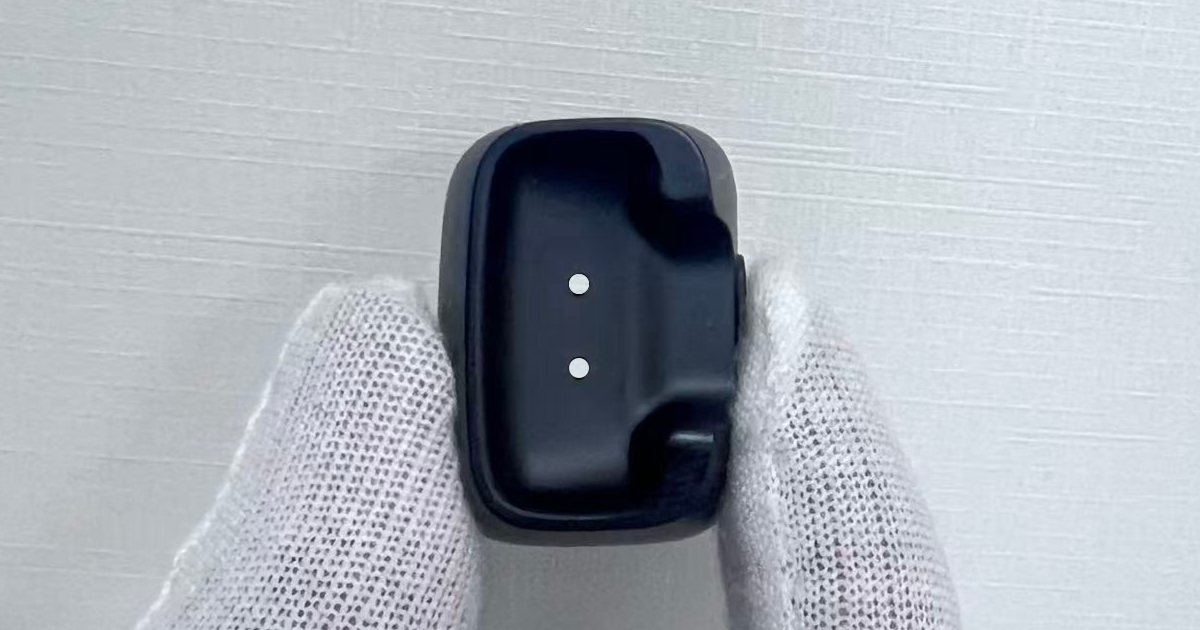
Project Overview
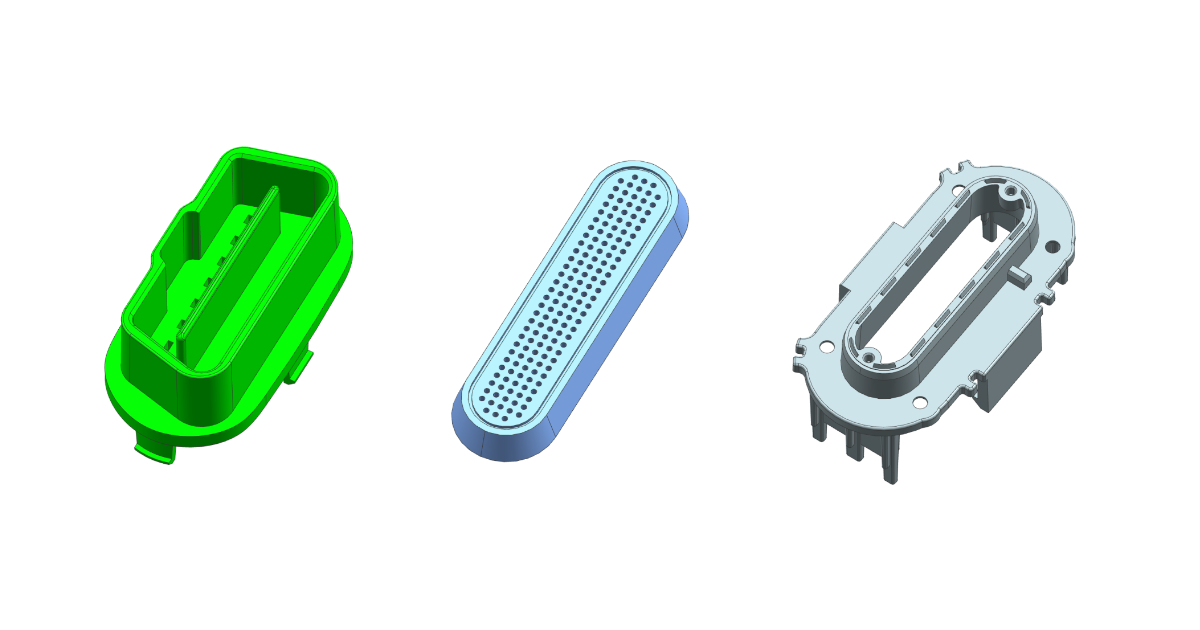
For an automotive OBD diagnostic device, JBRplas developed an injection molding solution for three critical plastic components: the OBD connector, rear housing cover, and internal support bracket.
Rather than manufacturing each component with a separate mold, the project was designed as a 1+1+1 multi-part mold, allowing the three components to be produced within the same mold system.
The project was developed as a trial mold with a target mold life of 50,000 shots. The main objective was to achieve reliable molding performance while addressing several challenging part-design and moldability issues identified during the DFM review.
Part Specifications
The three components have different sizes and functional requirements:
- OBD connector: approximately 7 g
- Rear cover: approximately 1 g
- Support bracket: approximately 2.5 g
- Wall thickness: approximately 1.56 mm, 0.98 mm and 0.5 mm
- Materials: black PC+ABS and translucent blue PC
- Mold configuration: 1+1+1 cavities
- Mold size: approximately 200 × 250 × 306 mm
- Injection machine: 120T
- Mold standard: LKM
- Mold surface: MT11005 texture
- Target mold life: 50,000 shots
The combination of different components, materials, wall thicknesses and functional structures made moldability analysis particularly important before mold manufacturing.
The Main Challenge: Making Three Different Parts Work in One Mold
The biggest challenge was not simply building the mold, but balancing the molding requirements of three different components within one mold system.
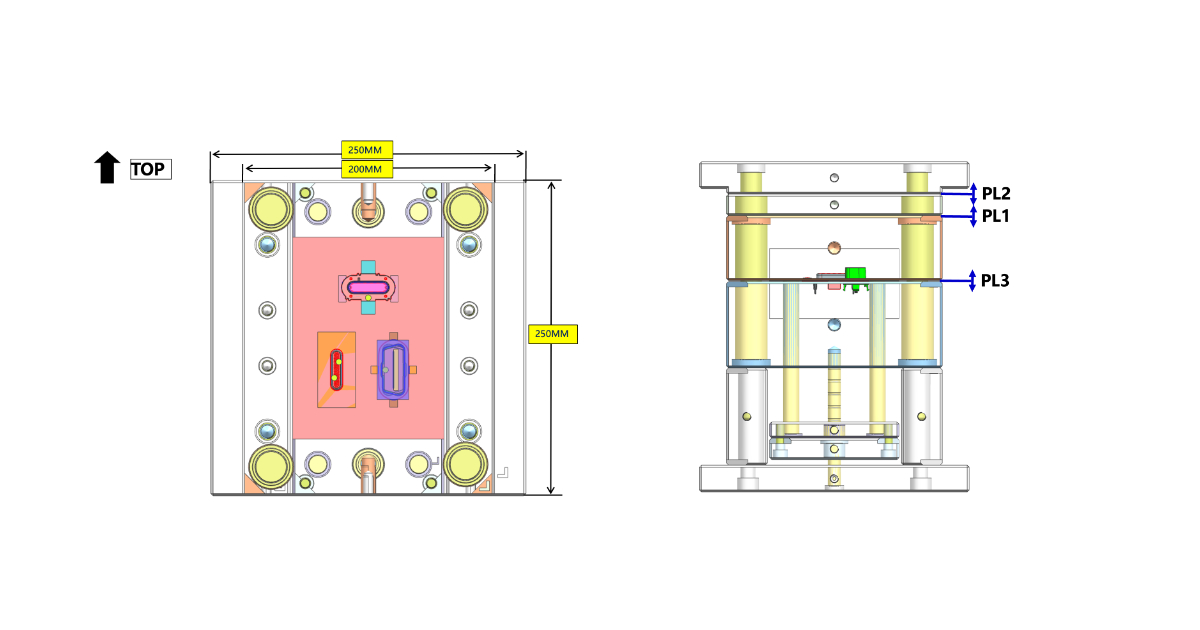
During the DFM review, several areas were identified that could potentially cause part damage, cosmetic defects or manufacturing difficulties.
1. Insufficient Draft Angle on Textured Surfaces
Several product surfaces had 0° or only 0.3° draft.
Because these surfaces require an MT11005 texture, insufficient draft could cause the molded parts to stick to the mold surface during ejection, resulting in texture damage, drag marks or scratches.
JBRplas therefore recommended increasing the draft angle by approximately 1° on the relevant surfaces.
For one core-side area, where the surface was also related to a shut-off condition, a 3° draft modification was recommended to improve release reliability.
These modifications were made during the DFM stage rather than after mold completion, reducing the risk of repeated mold modifications during trials.
2. Uneven Wall Thickness and Shrinkage Risk
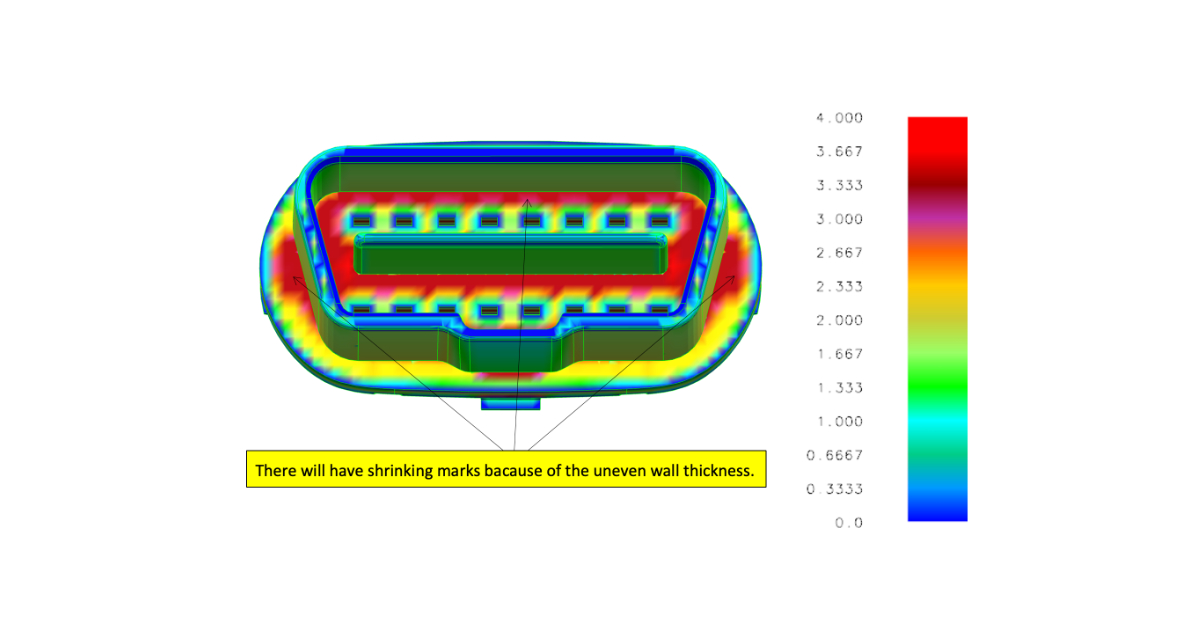
The DFM analysis also identified several areas with uneven wall thickness.
Uneven material thickness can create different cooling and shrinkage behavior during injection molding, increasing the risk of visible sink marks.
For the OBD housing components, this was particularly important because some surfaces have cosmetic requirements.
The DFM report specifically identified areas where uneven wall thickness could lead to shrinkage marks and recommended design review before mold construction.
3. Extremely Small Holes and Thin Steel
Another challenging area involved small holes.
One area had a hole diameter of only approximately 0.5 mm, while the spacing between two holes was only around 0.3 mm.
This would leave very limited steel between the holes and create a difficult mold-insert condition. It could also make plastic filling more difficult.
JBRplas recommended increasing the small hole size to approximately 0.8 mm, adding approximately 5° draft, and increasing the spacing between the holes to at least 0.5 mm.
Depending on the functional requirements, alternative solutions included moving the holes farther apart or reducing the number of holes.
This type of design adjustment is important for trial molds because it reduces the risk of fragile mold steel and improves long-term molding stability.
4. Ejection and Local Structure Optimization
A separate area required a flat ejector because of the available ejection space.
The original corner radius created a potential conflict with the ejector arrangement. JBRplas therefore recommended modifying the local R structure and adding approximately 0.5 mm of material to create sufficient space for a 1 × 2 flat ejector.
This allowed the ejection system to be integrated more reliably without compromising the surrounding mold structure.
Mold Development Strategy
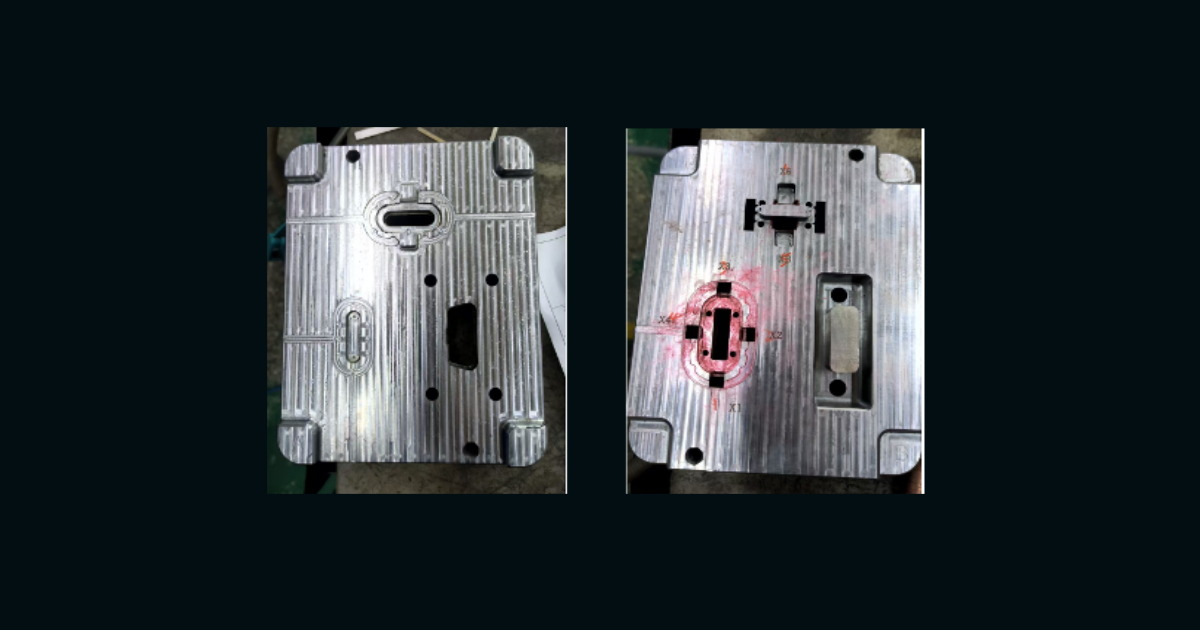
Considering the project requirements, JBRplas focused on three priorities:
DFM optimization → mold manufacturability → stable trial molding
The mold uses a 1+1+1 cavity configuration, allowing the OBD connector, rear cover and support bracket to be produced in the same mold system.
The mold design incorporates standard LKM mold components, S136 steel for the cavity/core inserts, and a cold-runner configuration according to the DFM documentation.
The project was developed as a trial mold with a target life of 50,000 shots, providing a practical solution for the product development and validation stage.
Results
By identifying potential problems during the DFM stage, JBRplas was able to address several high-risk areas before mold manufacturing:
- Improved part release on textured surfaces
- Reduced risk of drag marks and texture damage
- Reduced potential sink-mark areas caused by uneven wall thickness
- Improved manufacturability of small holes
- Reduced risk associated with extremely thin mold steel
- Optimized the local structure for reliable ejection
- Integrated three different OBD plastic components into one mold system
The project demonstrates that successful automotive injection molding is not only about machining the mold accurately. Early DFM analysis is critical for identifying part-design risks, protecting mold reliability and reducing trial-and-error during mold development.
Why JBRplas
For automotive electronics and diagnostic-device components, JBRplas provides an integrated process covering DFM analysis, mold design, mold manufacturing, injection molding and subsequent assembly or surface treatment.
For this OBD diagnostic device project, the combination of multi-part mold design and detailed DFM analysis allowed potential molding problems to be identified before mold construction.
This approach helps OEMs and product engineers reduce unnecessary mold modifications, shorten development cycles and build more reliable plastic components for production validation.
Project Type: Automotive OBD Diagnostic Device Components: Connector + Rear Cover + Support Bracket Mold Configuration: 1+1+1 Material: PC+ABS / PC Target Mold Life: 50,000 Shots Mold Type: Trial Mold Key Technology: DFM Analysis + Multi-Part Mold Development